
| DESCRIPTION | HISTORY |
Please Click On Any Picture for a Larger Version
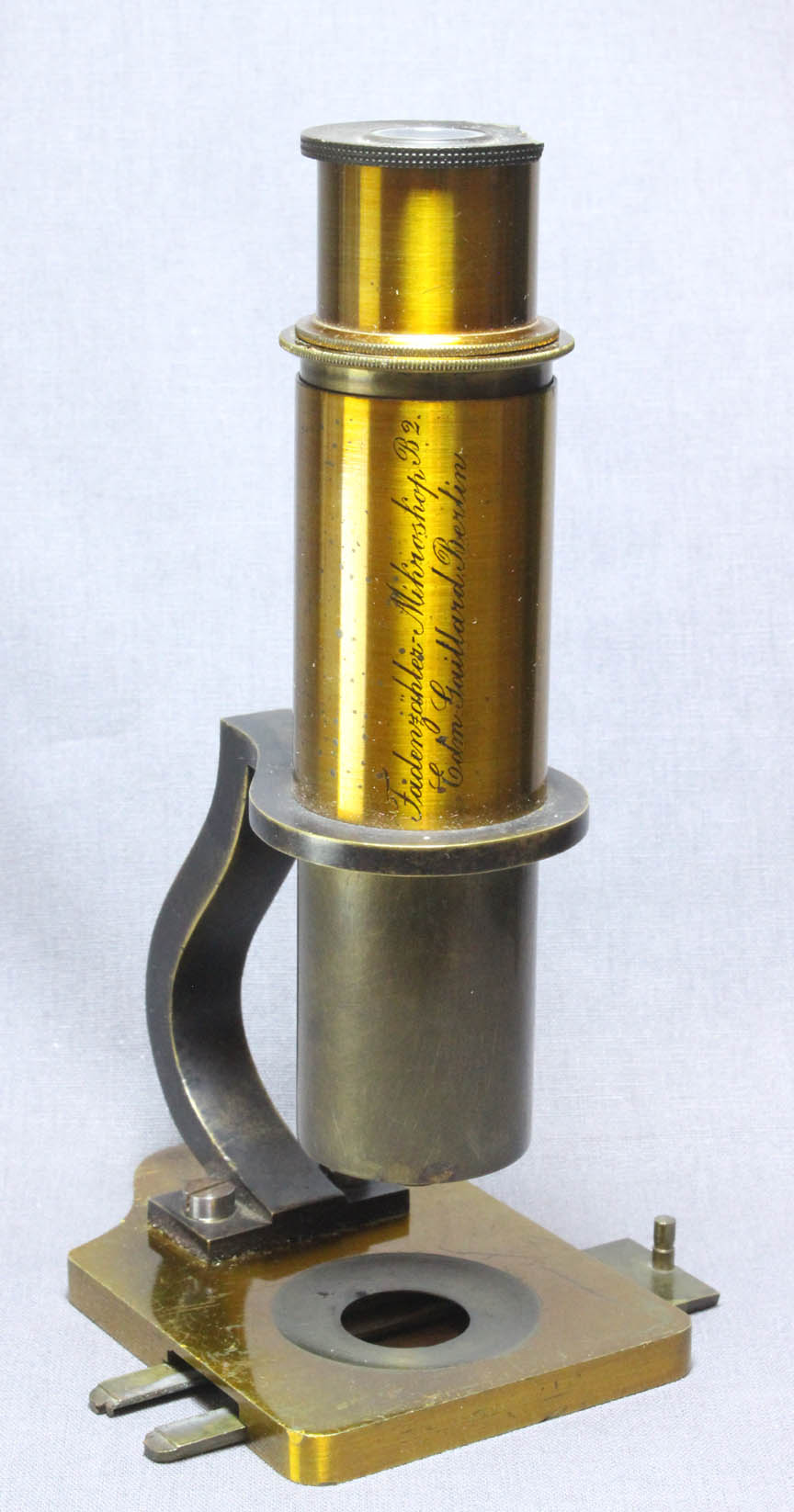
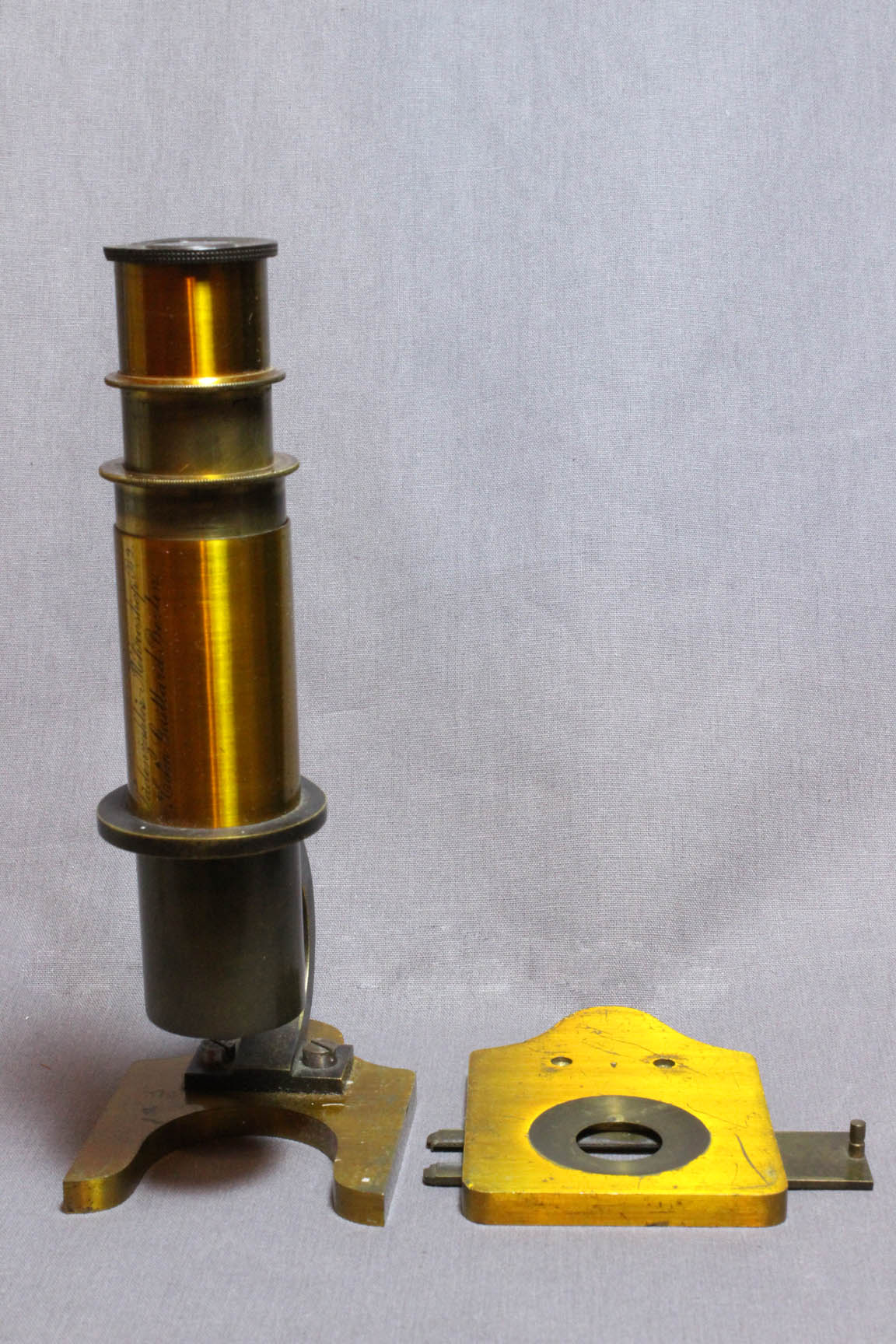
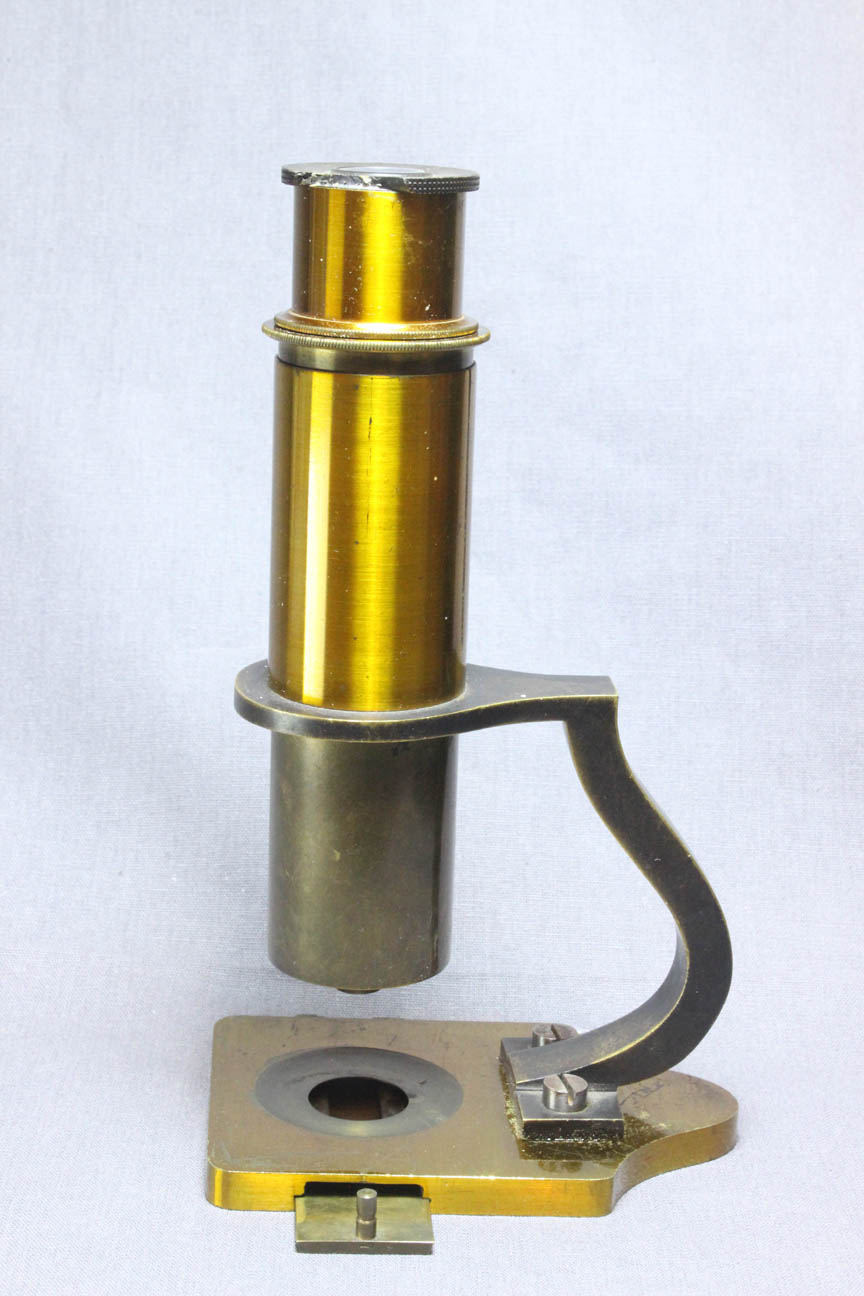
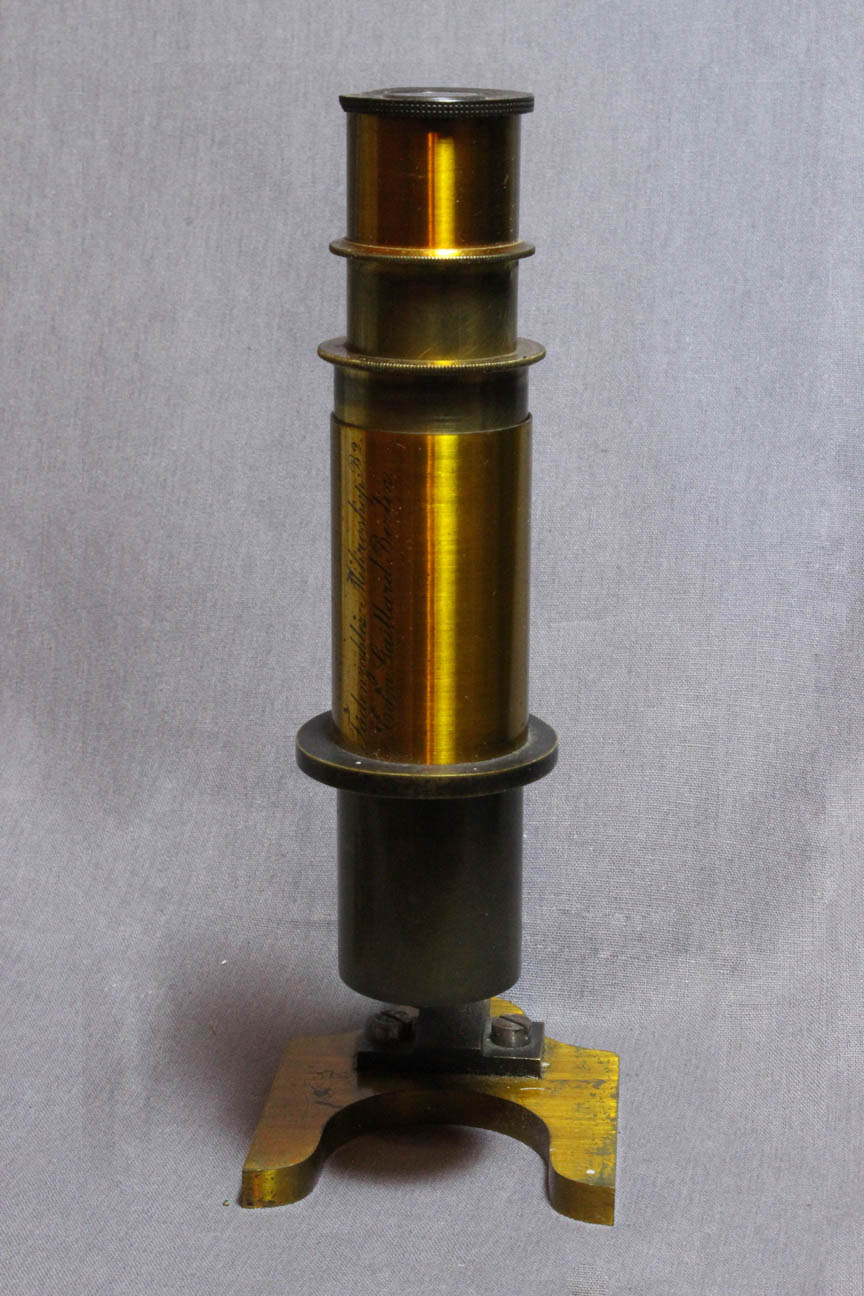
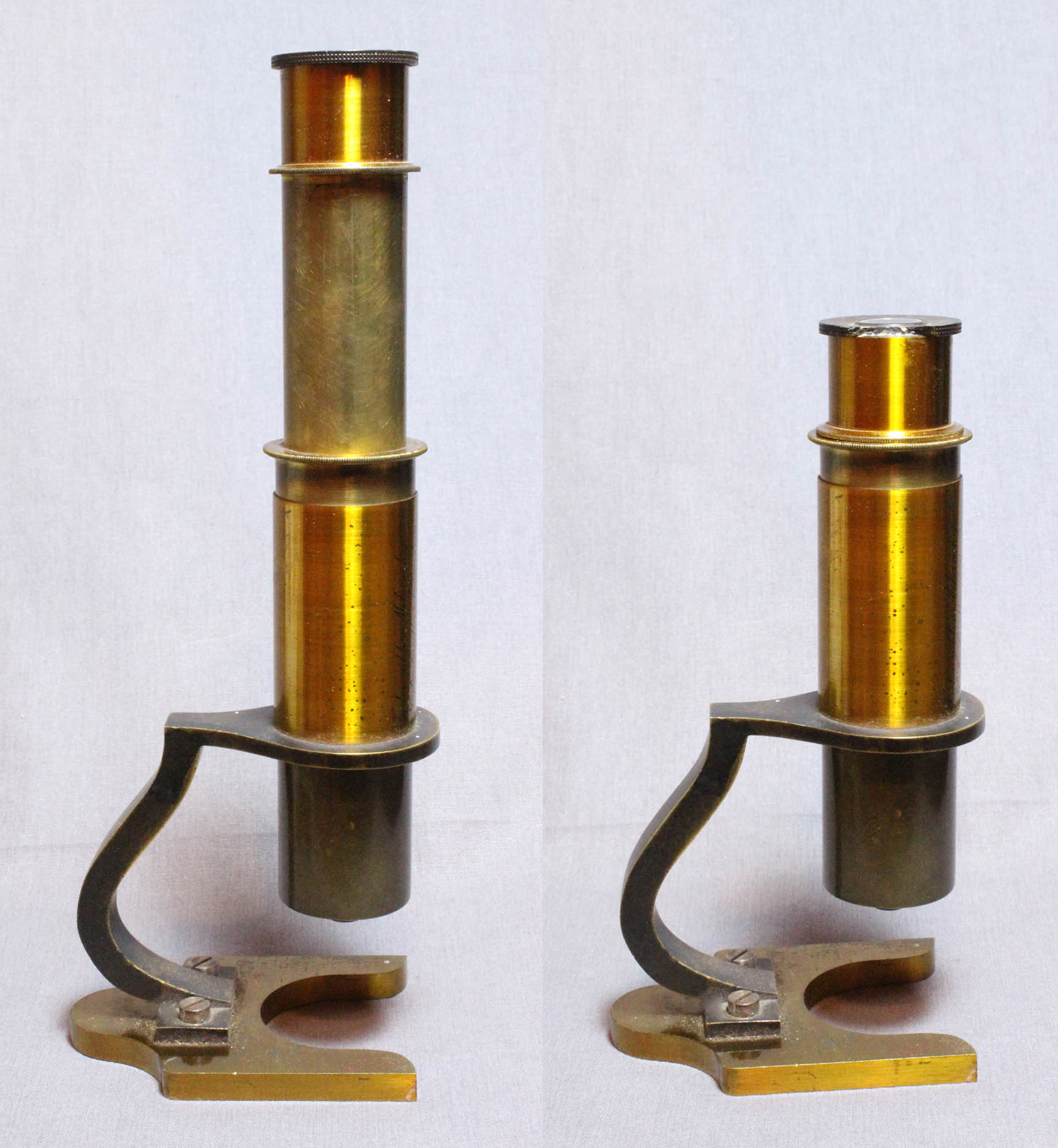
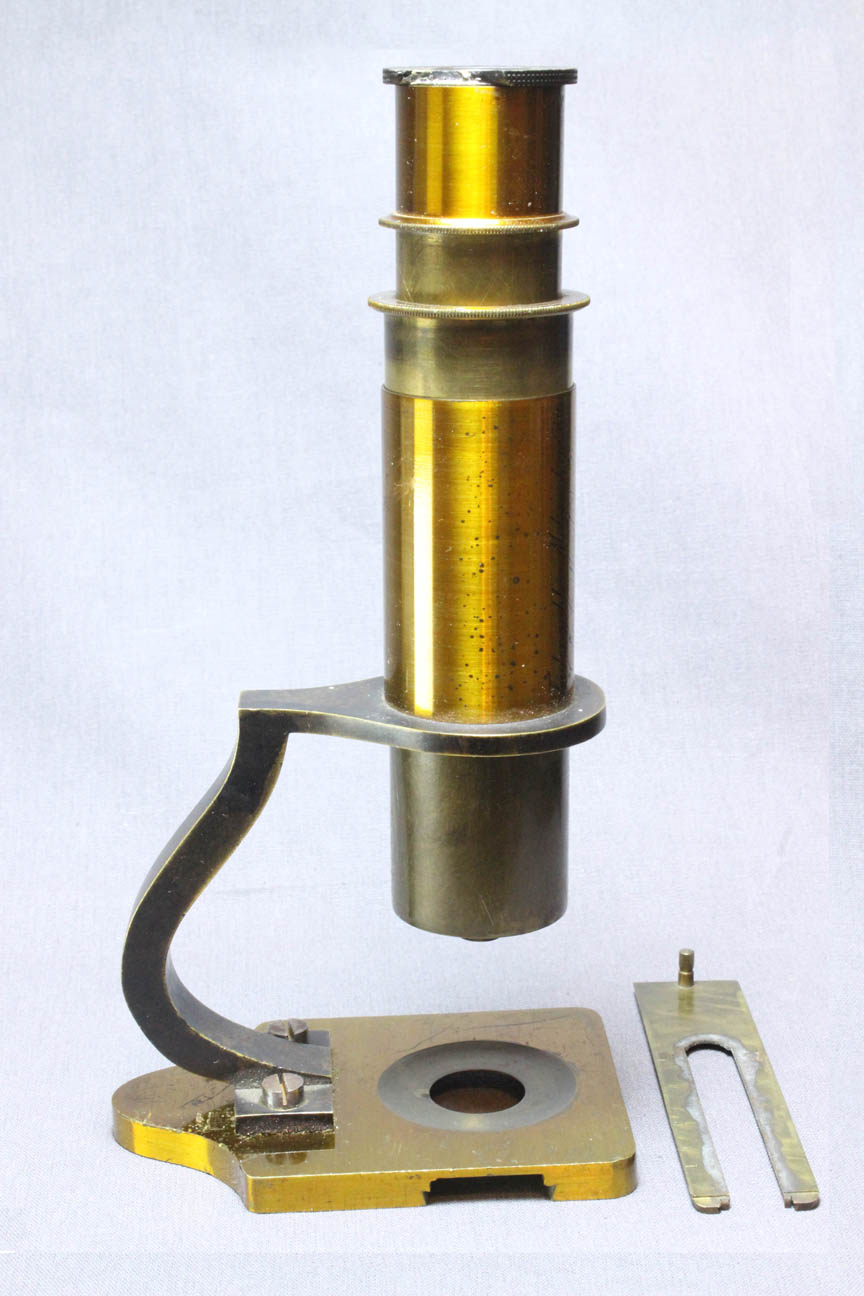
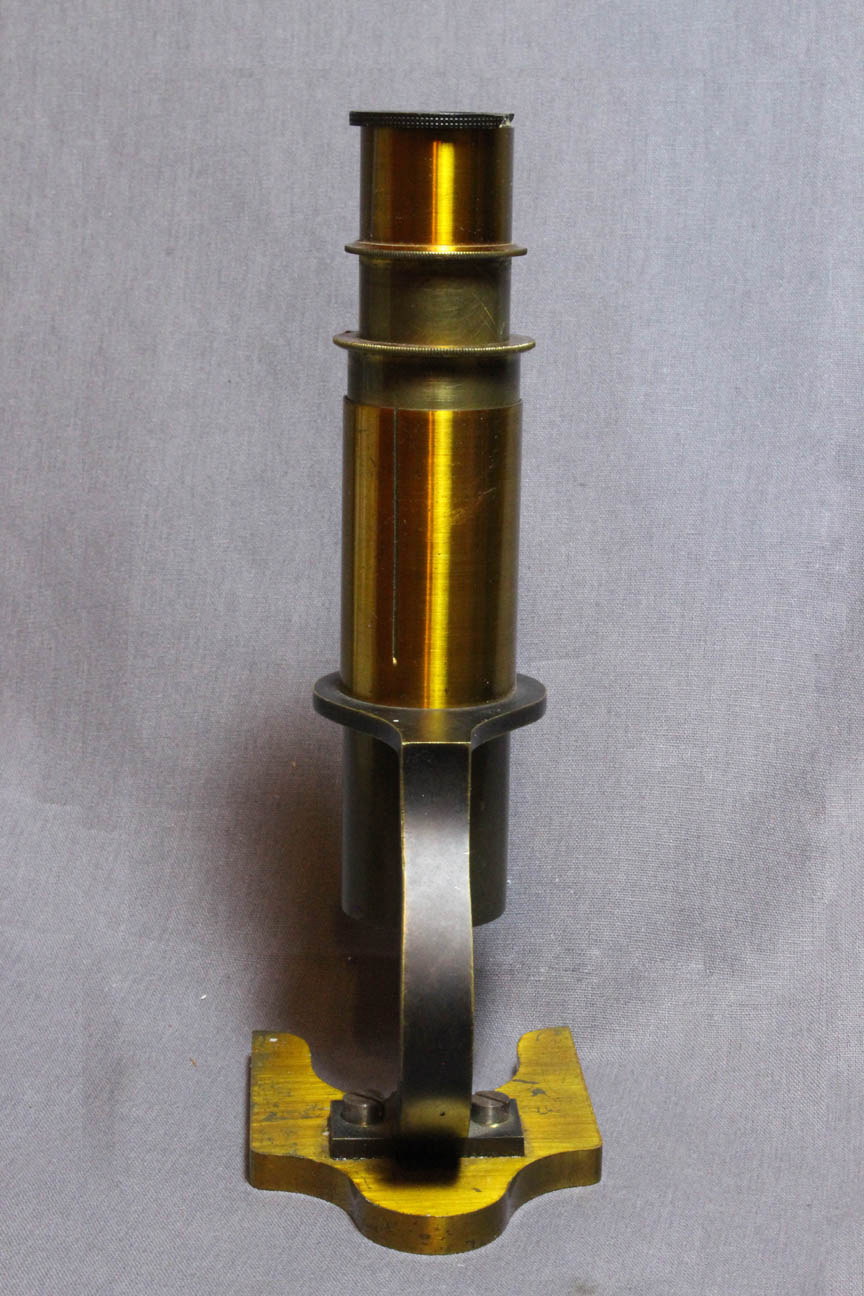
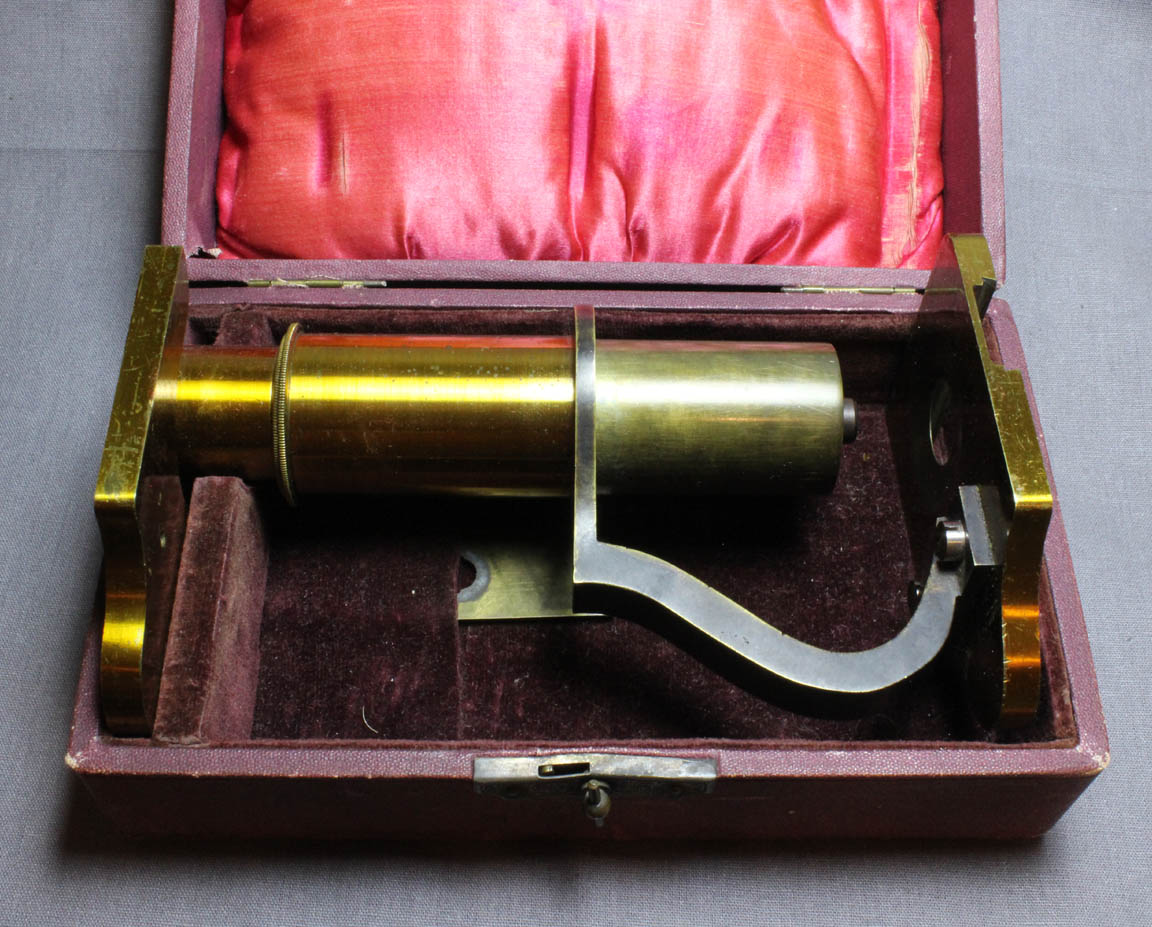
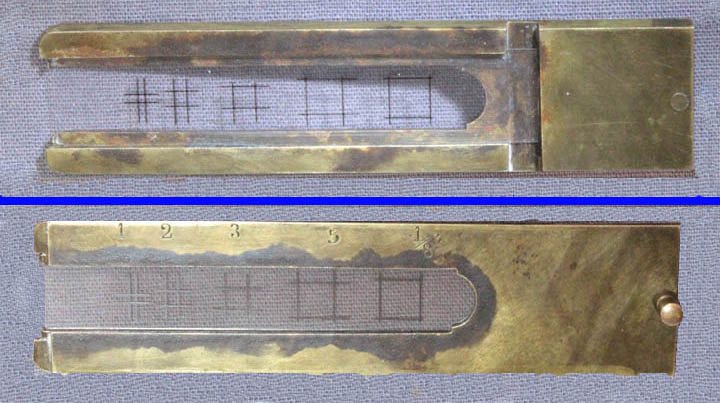 The foot for use in thread counting has a brass slider which fits into a dovetail. This has a transparent insert(shown to the left) with various standard square outlines, with numbers corresponding to each, 1,2,3,5, and 1/8. The insert fits into a very narrow slot, which is recessed in the brass slider, and is held in place by two tiny stops at the far end, and the square part at the other. The 1,2,3,and 5 are apparently mm measurements, but the fractional size is of unknown units(at least to me). The scale is on a modern replacement material, the scales copied from an original example. The slider has a small knob to move it right or left.
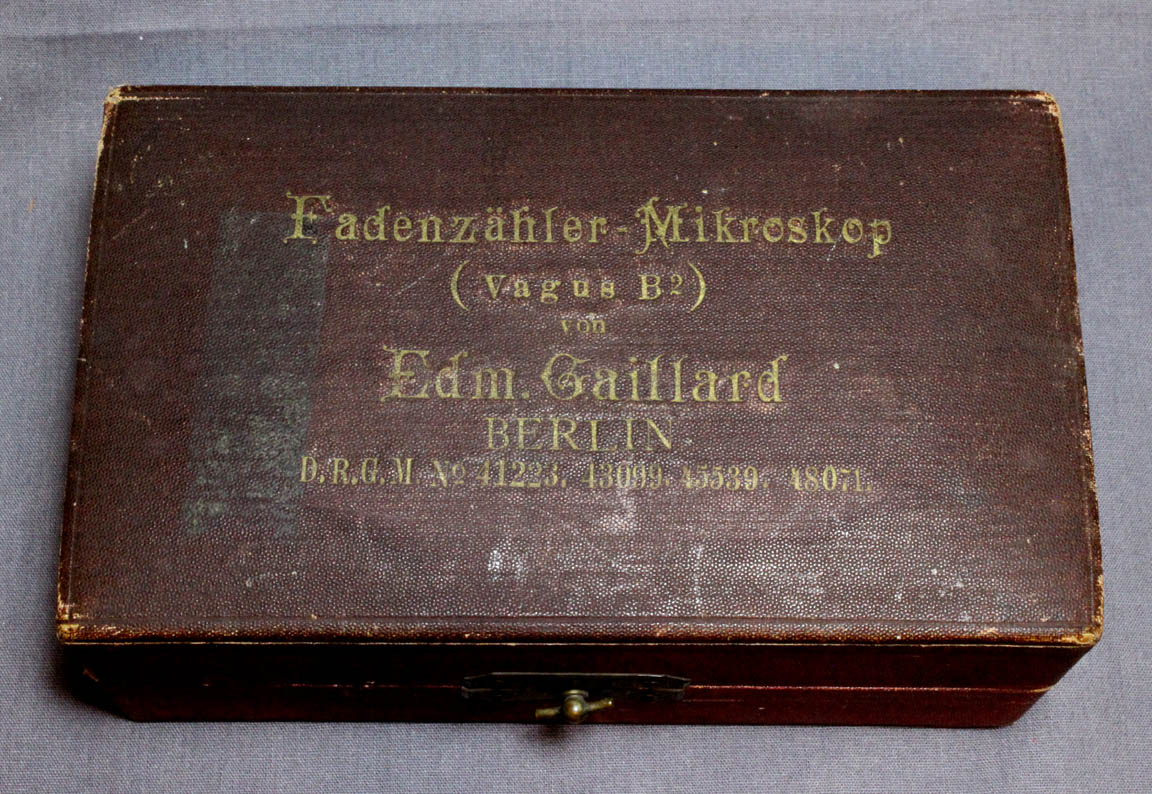
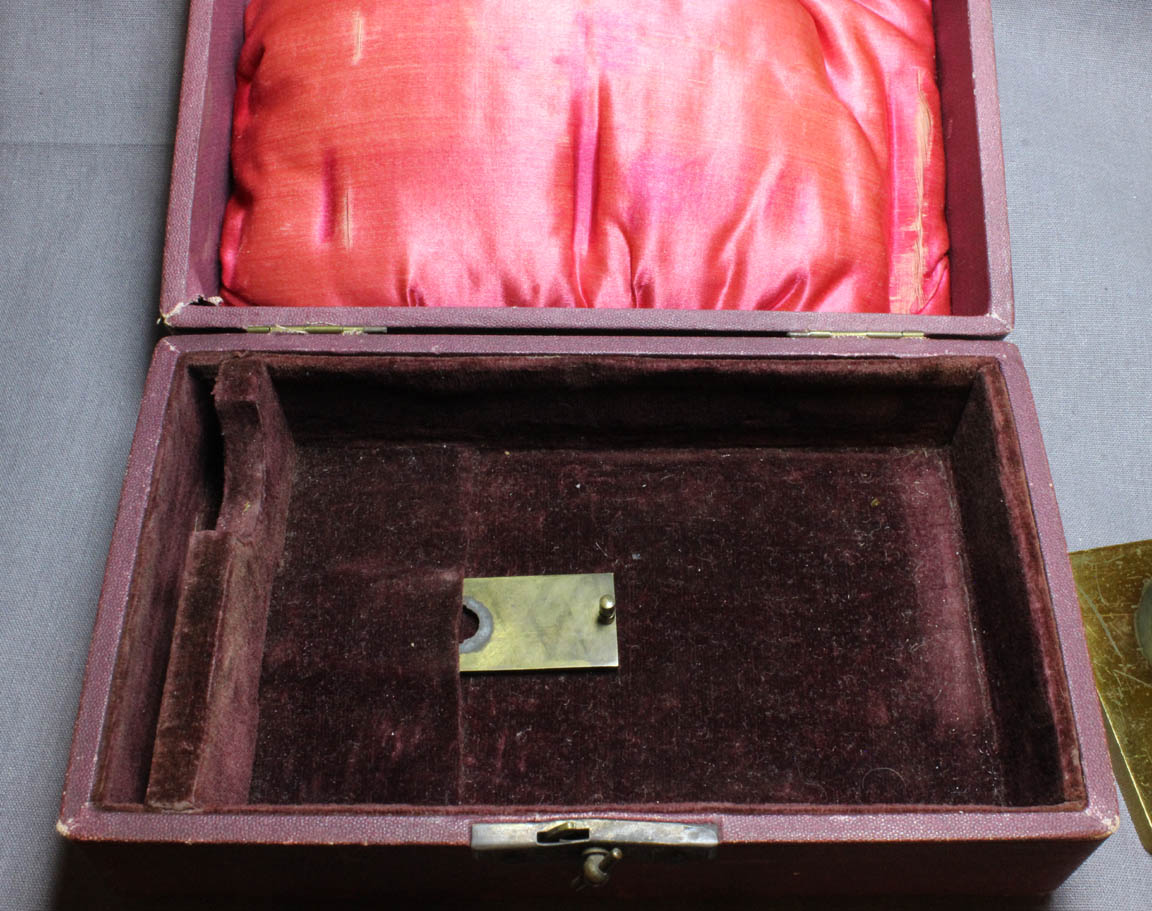
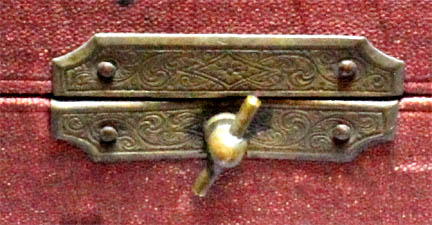 The instrument fits into a plush lined case covered with red-dyed fishskin outside and gold lettering. The case closes with a hook controlled by a T-rod in front(right). The slide fits into a cuff on the bottom of the case. The extra stage-foot stores in a slot to the left, as can be seen in the images.
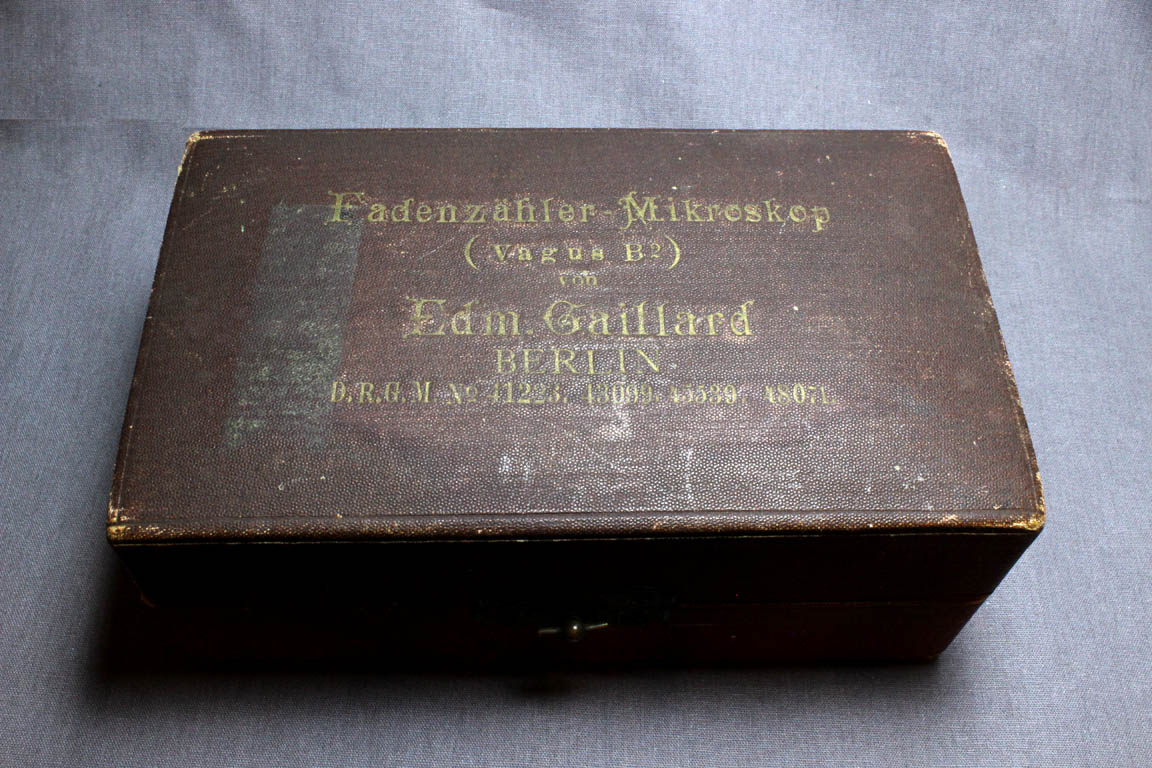
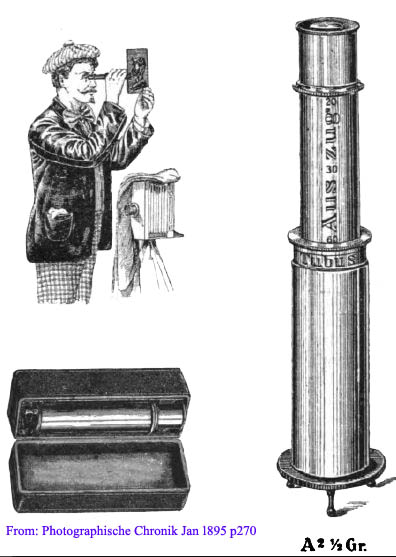
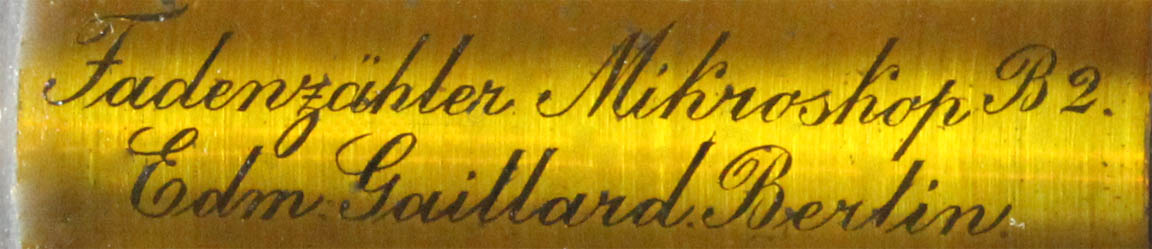
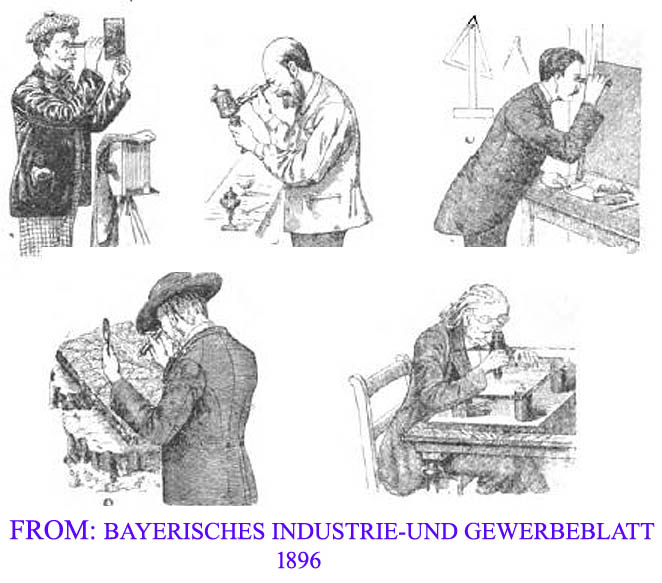 Edmund Gaillard of Berlin was a famous photographer, inventor, and maker of photographic and photoengraving supplies. He claimed his firm was founded in 1863, He apparently supplied his 'Vagus' line of microscopes as a spin off from the photographic supply business, as his first example was intended to be used as a photographic magnifier for examining photographic plates and the like(left). The first Vagus models were compound microscopes on short tripods. They came in two sizes, the Vagus A1 and the Vagus A2. It seems they were first announced about 1895. They were initially considered 'admirably adapted to the examination of screens and for photo-mechanical focussing purposes...' Apparently he soon discovered these portable microscopes, (vagus means 'wanderer'), could be used for other purposes, and promoted them for, among other things, the cloth trade where they could be used to inspect cloth quality and provide a thread count if used with a scale. But soon they were promoted for many uses(right)