| DESCRIPTION | HISTORY |
Please Click On Any Picture for a Larger Version
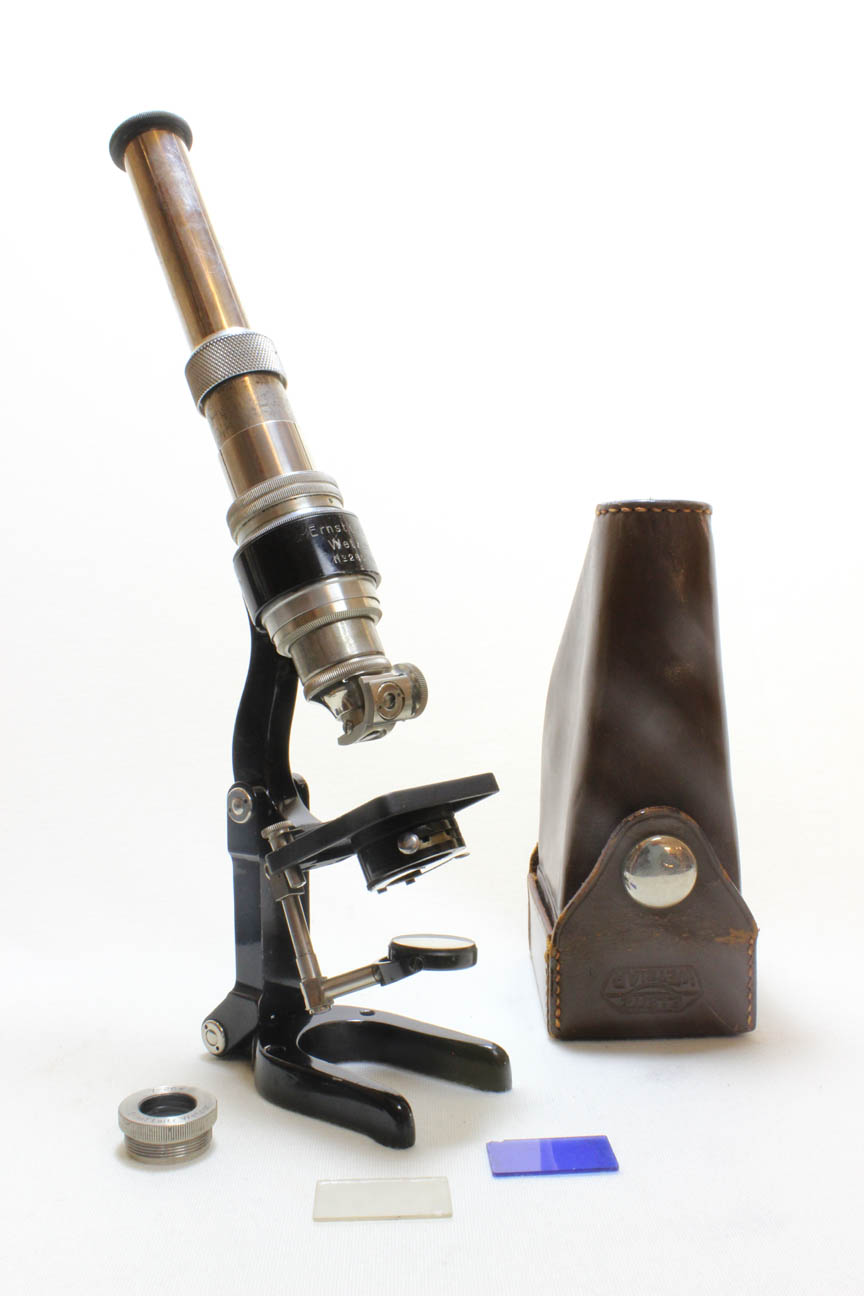
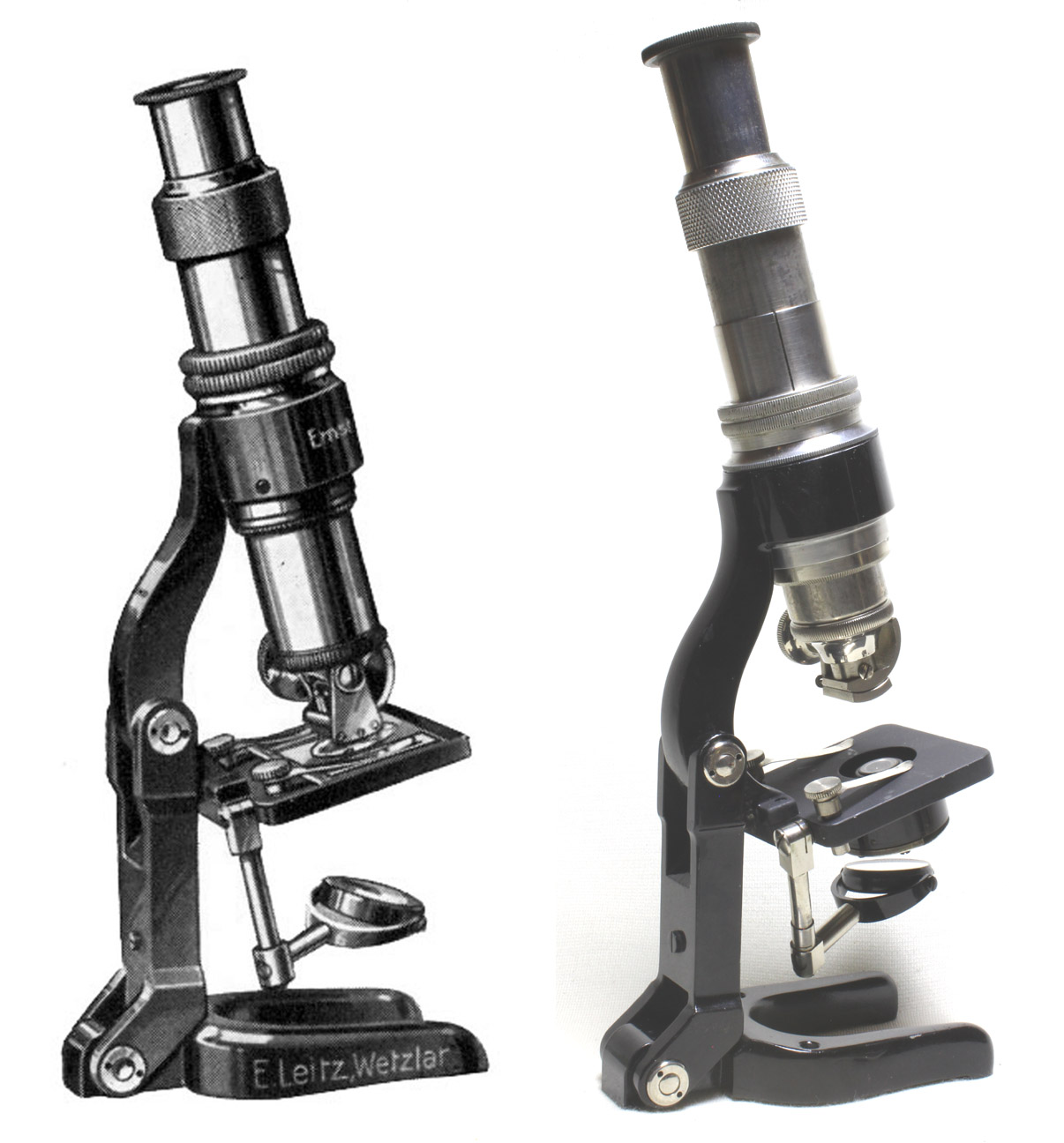
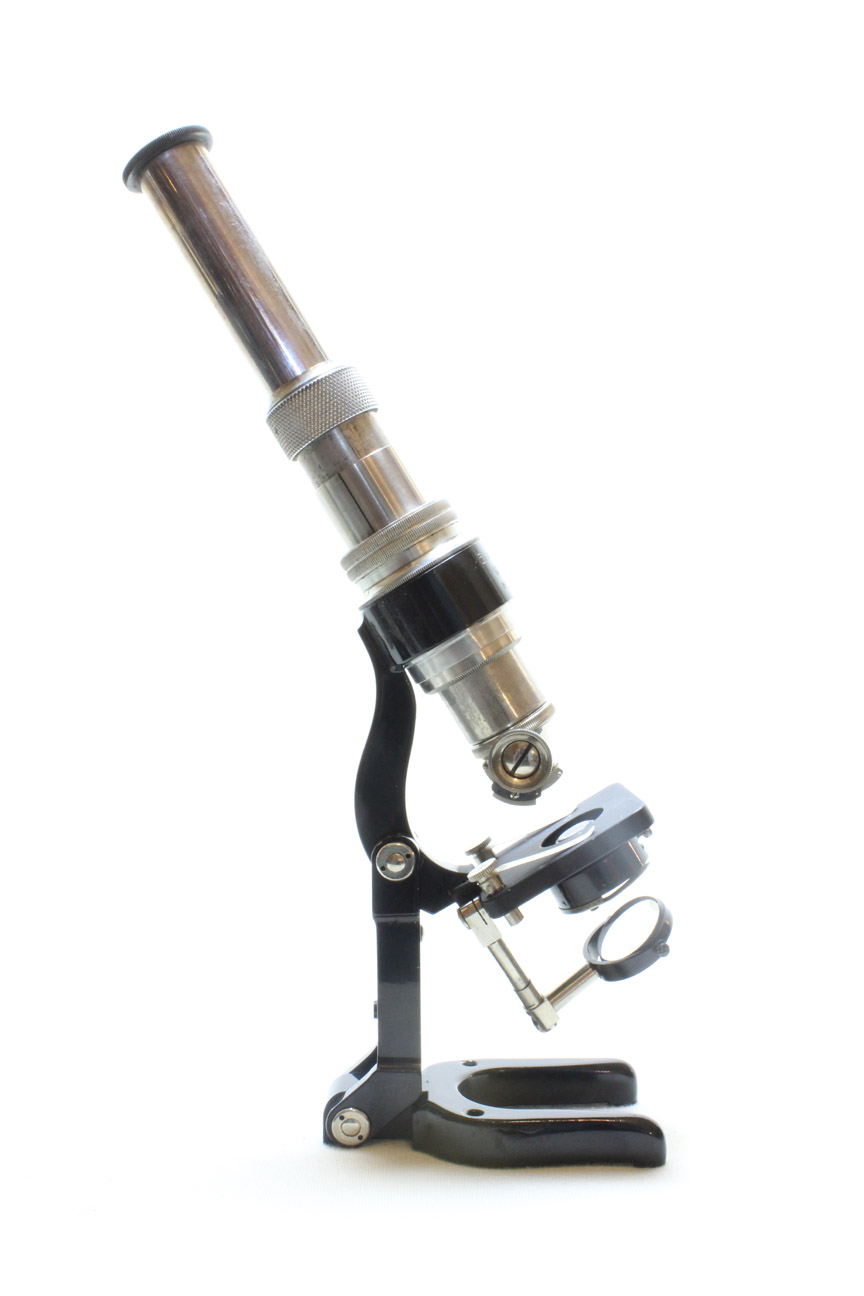
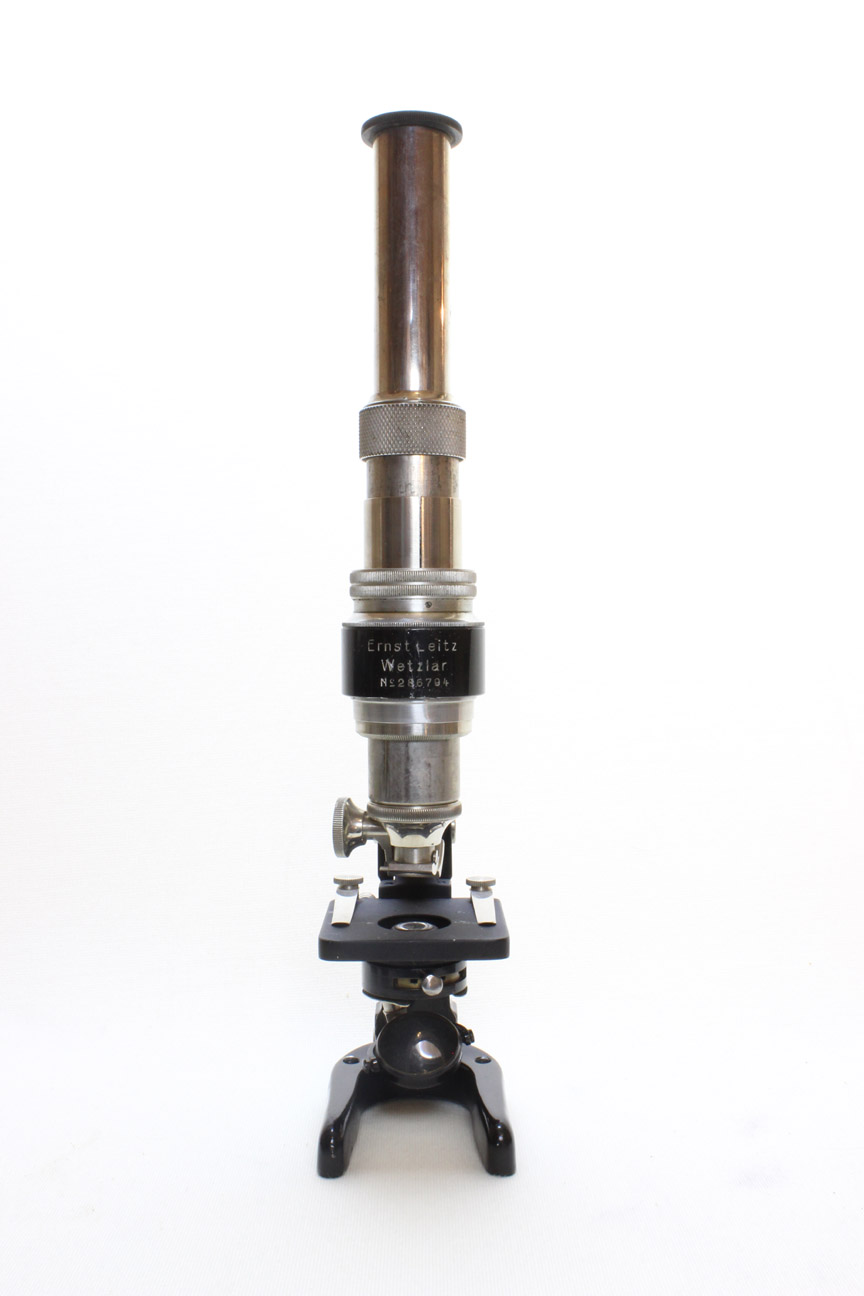
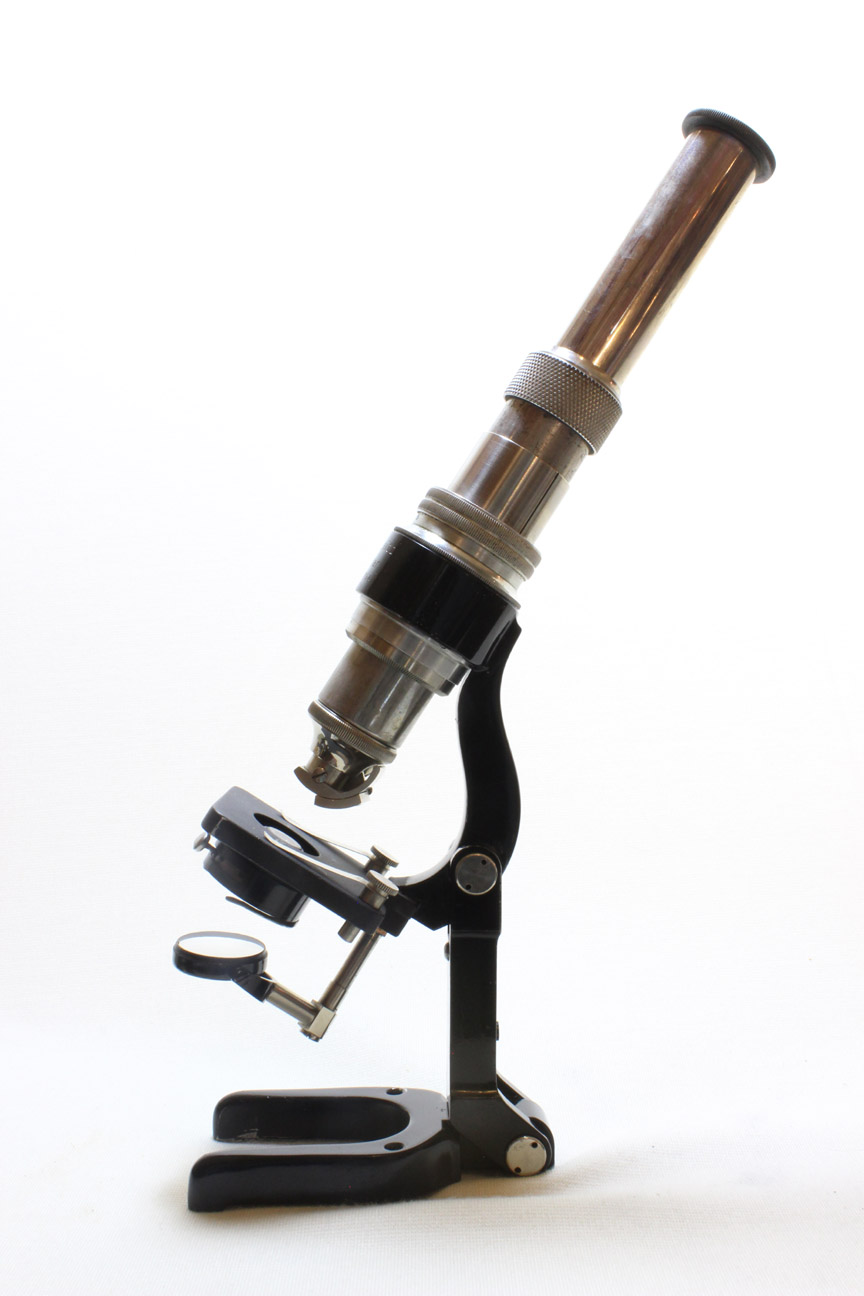
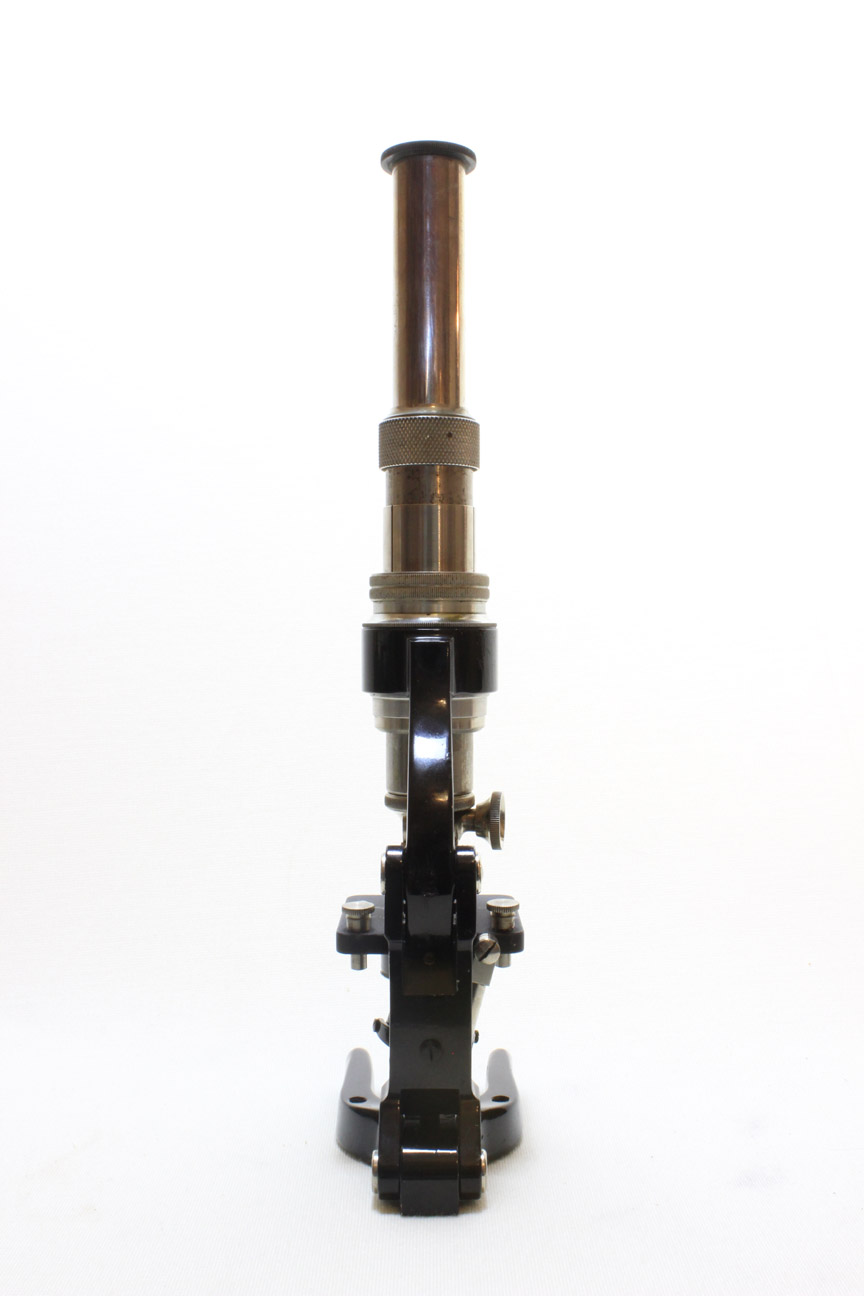
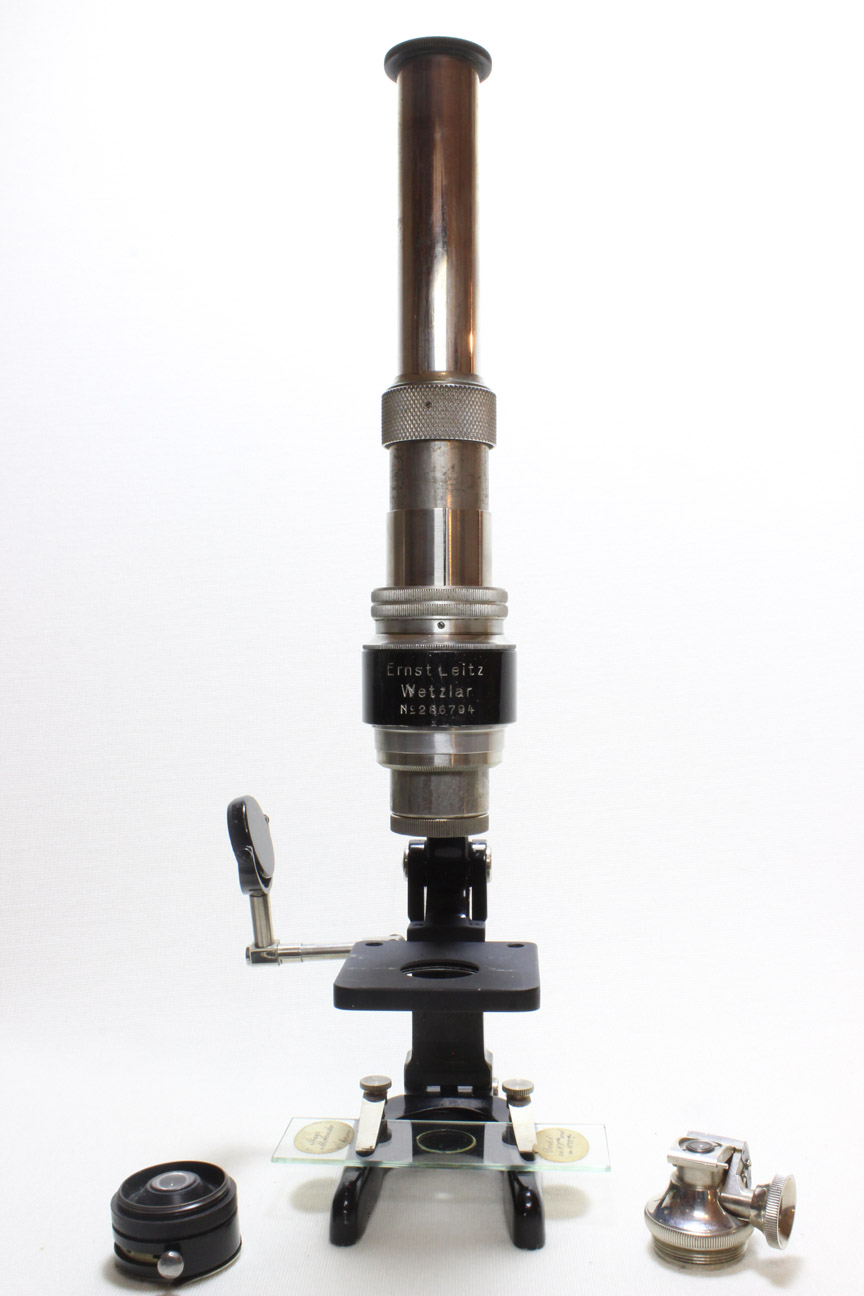
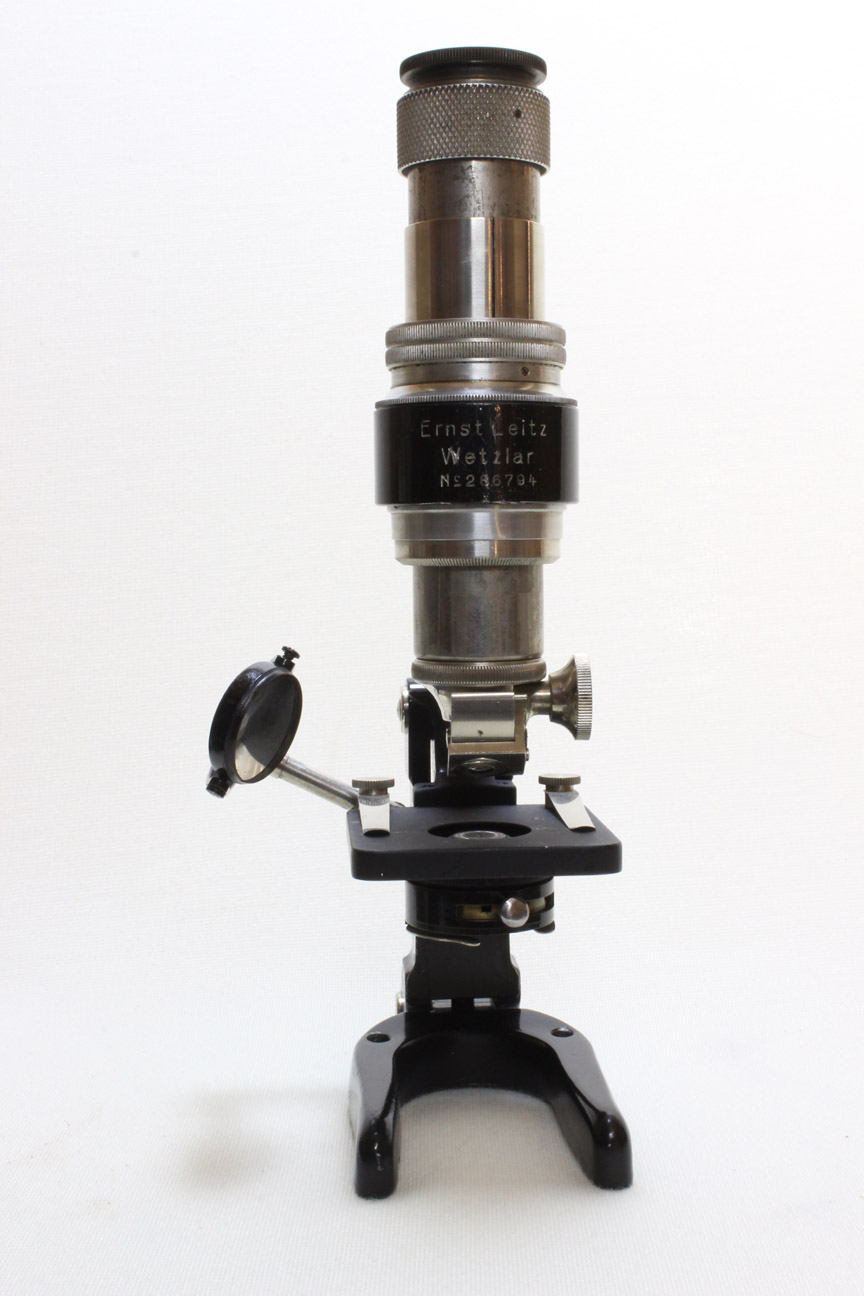 This is a well made, folding, highly portable microscope from the 2nd quarter of the twentieth century. It is signed 'Ernst Leitz, Wetzlar, No 286794'.
It arises from a horseshoe foot to an inclination joint. There is a
swiveling substage mirror which is concave and can be brought around to
the top of the stage for illumination of opaque objects. Under the
stage is a miniature detachable Abbe condenser with iris diaphragm and
clips to accommodate a substage filter. The condenser is threaded to
screw into the the hole in the stage. There are two removable stage
clips. Coarse focus is by push-pull and fine is by a knurled ring just
above the arm which moves the sleeve holding the main tube. There is a
draw tube. The main objective assembly provides two powers with the
higher power achieved by turning the knurled knob to bring an extra
bottom lens into place.
This is a well made, folding, highly portable microscope from the 2nd quarter of the twentieth century. It is signed 'Ernst Leitz, Wetzlar, No 286794'.
It arises from a horseshoe foot to an inclination joint. There is a
swiveling substage mirror which is concave and can be brought around to
the top of the stage for illumination of opaque objects. Under the
stage is a miniature detachable Abbe condenser with iris diaphragm and
clips to accommodate a substage filter. The condenser is threaded to
screw into the the hole in the stage. There are two removable stage
clips. Coarse focus is by push-pull and fine is by a knurled ring just
above the arm which moves the sleeve holding the main tube. There is a
draw tube. The main objective assembly provides two powers with the
higher power achieved by turning the knurled knob to bring an extra
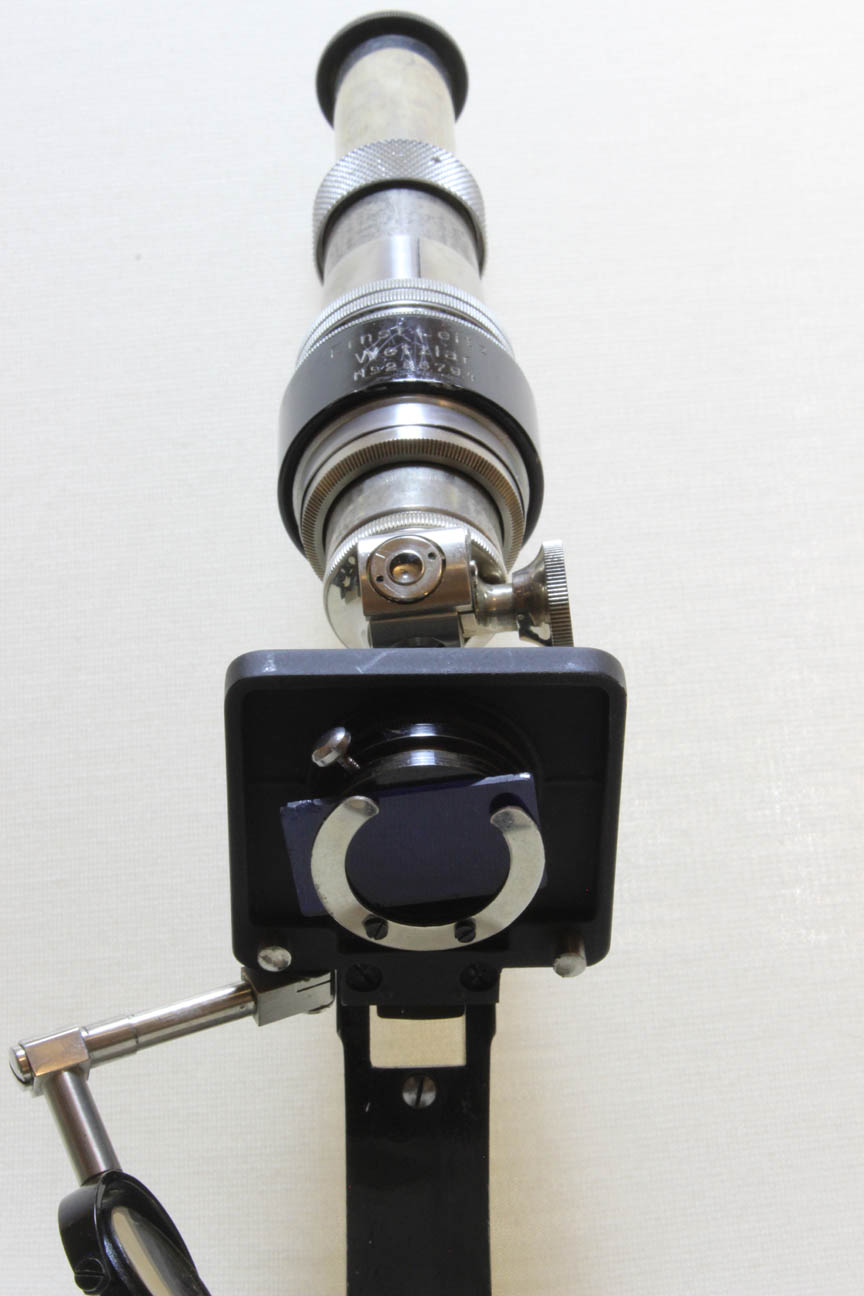
bottom lens into place. 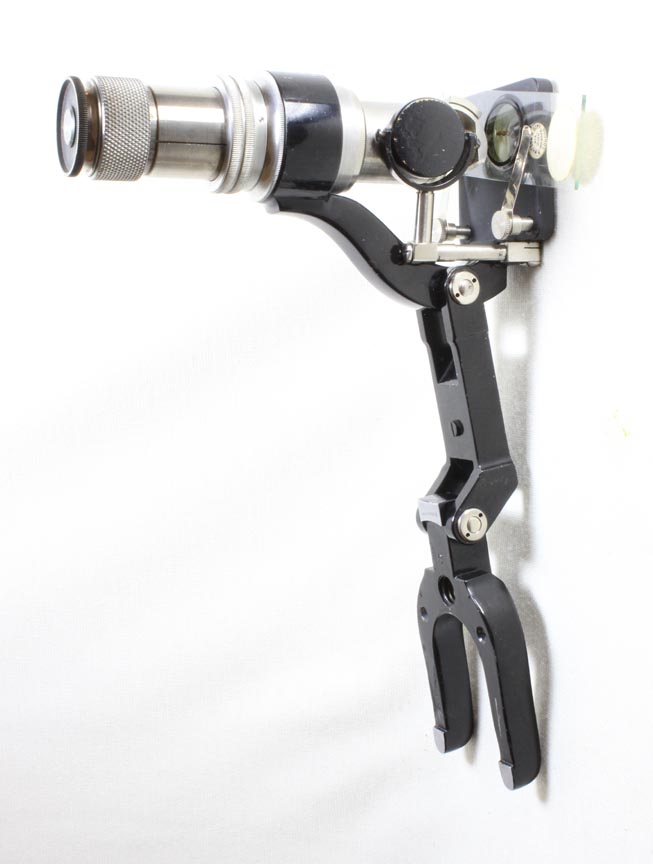 The objective assembly can be exchanged for a
special low power objective which, after removal of the condenser,
allows inspection of a solid surface through the foot; it can also be
used for low power views of slides, using the foot as an accessory
stage with the stage clips moved to the foot, which has holes to
accommodate the stage clips. For low power views of transparent objects
placed on the foot, illumination would be by holding the instrument up
towards a light source. Another way to use this microscope is as a
demonstration microscope, with a slide on the stage, using the folded
foot as a handle. With the low power objective attached and the foot
and pillar as a handle, it could also be used as a handheld microscope
to observe stationary subjects, as shown in the illustration on the
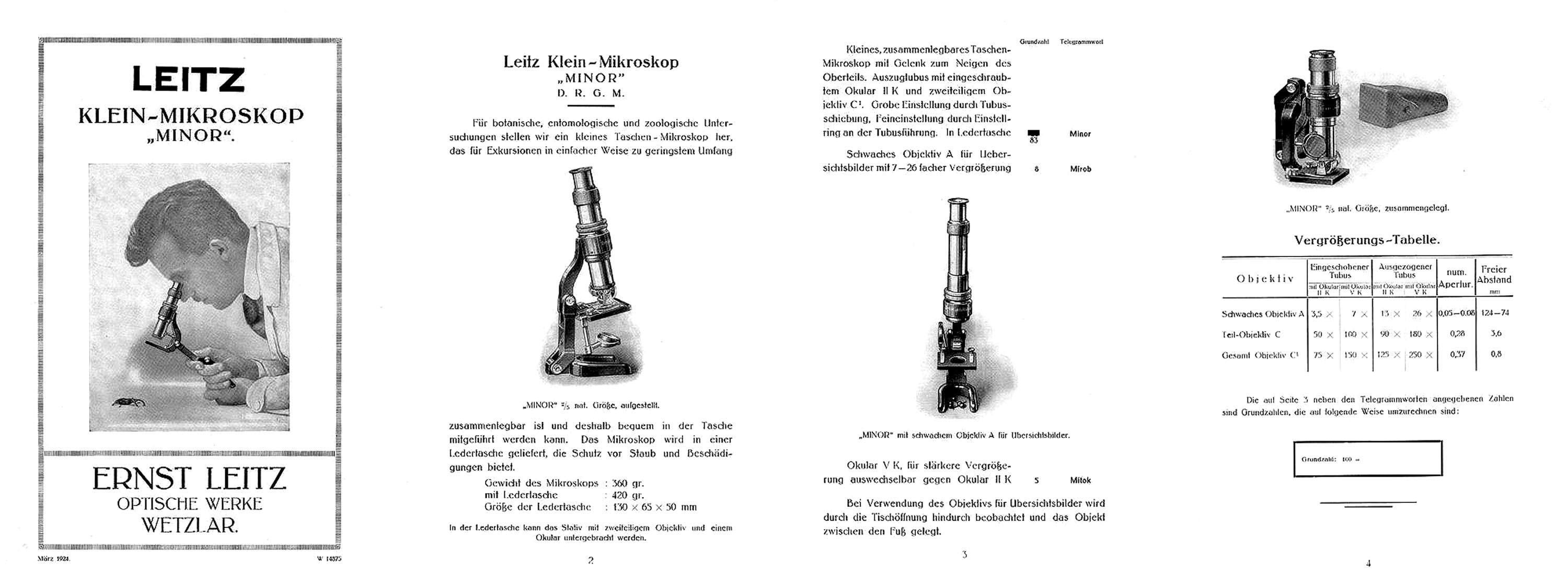
front page of a Leitz Brochure, which
can be seen at the bottom of this web page. As shown in the image to the left, its foot and upright can be used as a handle to pass around the instrument as a 'Demonstration Microscope.' When used as a demonstration instrument, each user would hold it up to the eye with the understage pointed towards a room light or window. Additional accessories
include a choice of blue filter or a ground glass, to be placed under
the condenser, using the clips on the bottom of the condenser provided
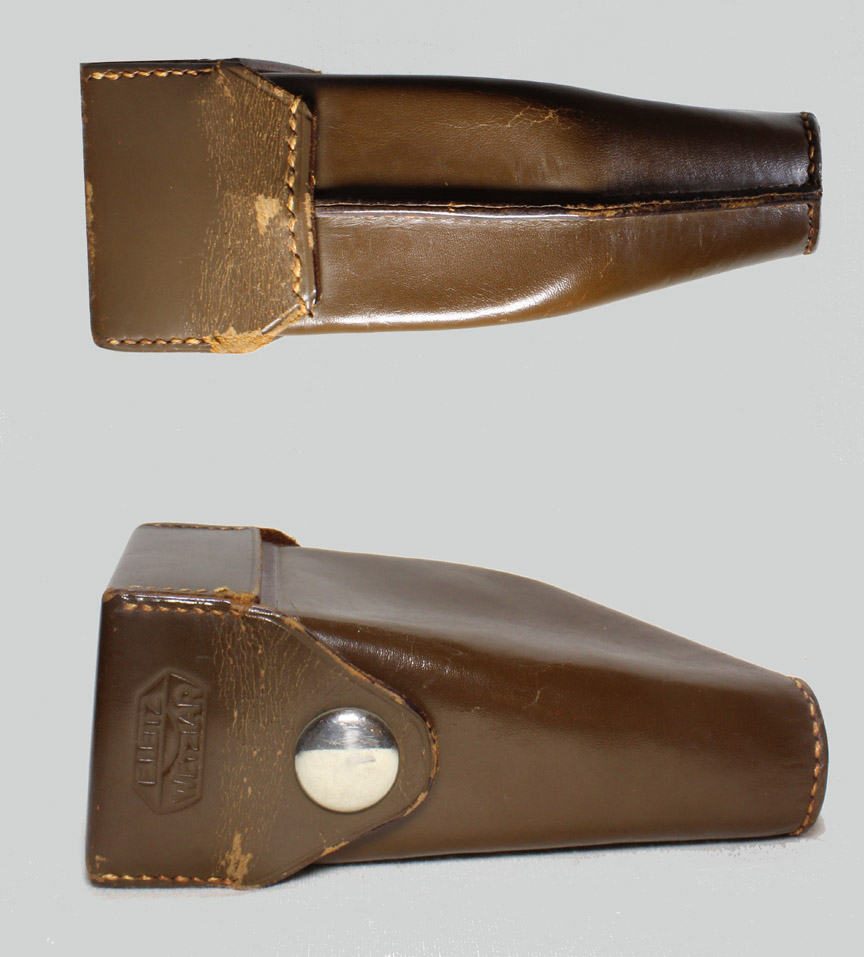
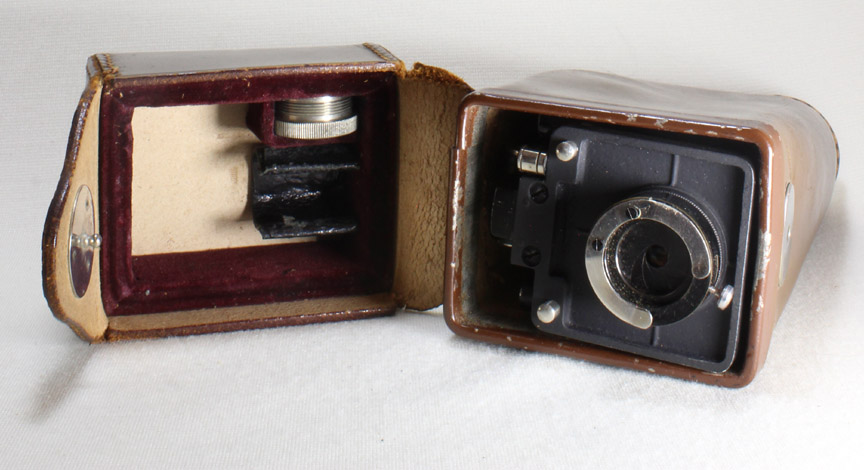
for the purpose. There is a leather carrying case. The case does not
have a belt loop. The biggest defects of this design are that it is
relatively light and that the horseshoe support is just not wide enough
to prevent tipping the scope right or left. It provides very low to
moderate power; it always lacked an oil immersion high power objective.
In my example, I do note slight image shift when using the fine focus.
The objective assembly can be exchanged for a
special low power objective which, after removal of the condenser,
allows inspection of a solid surface through the foot; it can also be
used for low power views of slides, using the foot as an accessory
stage with the stage clips moved to the foot, which has holes to
accommodate the stage clips. For low power views of transparent objects
placed on the foot, illumination would be by holding the instrument up
towards a light source. Another way to use this microscope is as a
demonstration microscope, with a slide on the stage, using the folded
foot as a handle. With the low power objective attached and the foot
and pillar as a handle, it could also be used as a handheld microscope
to observe stationary subjects, as shown in the illustration on the
front page of a Leitz Brochure, which
can be seen at the bottom of this web page. As shown in the image to the left, its foot and upright can be used as a handle to pass around the instrument as a 'Demonstration Microscope.' When used as a demonstration instrument, each user would hold it up to the eye with the understage pointed towards a room light or window. Additional accessories
include a choice of blue filter or a ground glass, to be placed under
the condenser, using the clips on the bottom of the condenser provided
for the purpose. There is a leather carrying case. The case does not
have a belt loop. The biggest defects of this design are that it is
relatively light and that the horseshoe support is just not wide enough
to prevent tipping the scope right or left. It provides very low to
moderate power; it always lacked an oil immersion high power objective.
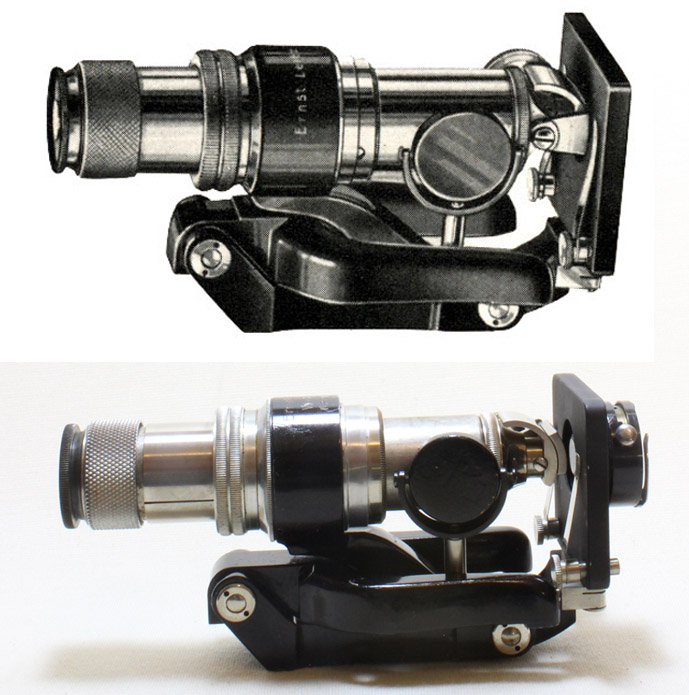
In my example, I do note slight image shift when using the fine focus. 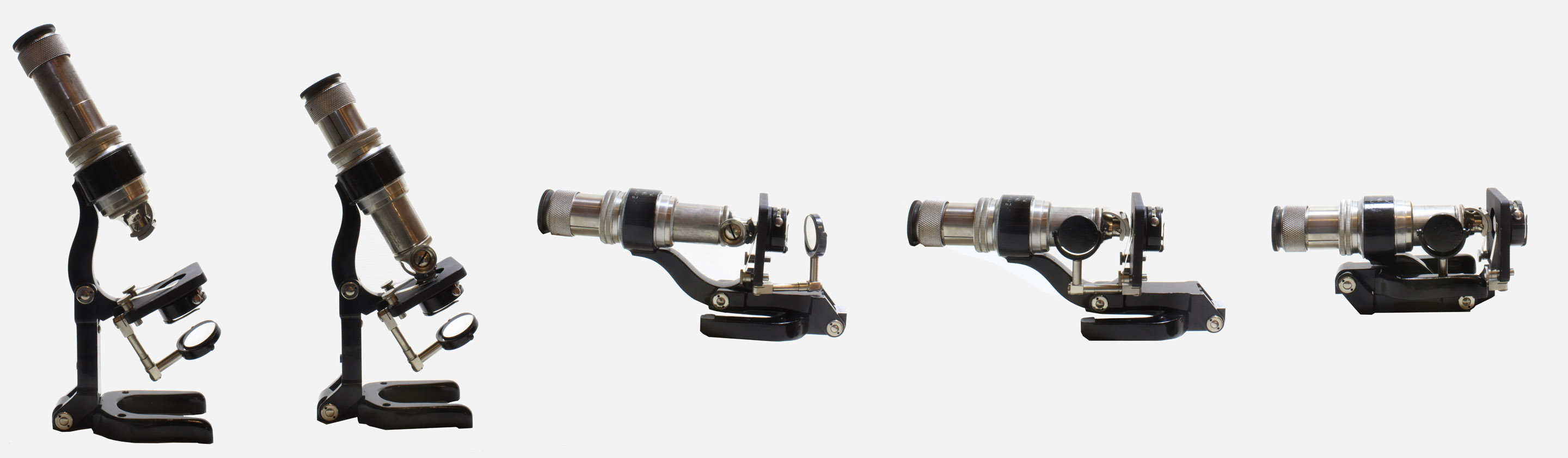 To fold up the microscope for storage, first the tube and draw tube are
pushed all the way towards the stage. Then the foot is folded back on
the pillar. The mirror stem then is raised up parallel with the body
tube. Then the pillar, (with the foot folded on top of it), is then
folded backward on the inclination joint.
To fold up the microscope for storage, first the tube and draw tube are
pushed all the way towards the stage. Then the foot is folded back on
the pillar. The mirror stem then is raised up parallel with the body
tube. Then the pillar, (with the foot folded on top of it), is then
folded backward on the inclination joint. 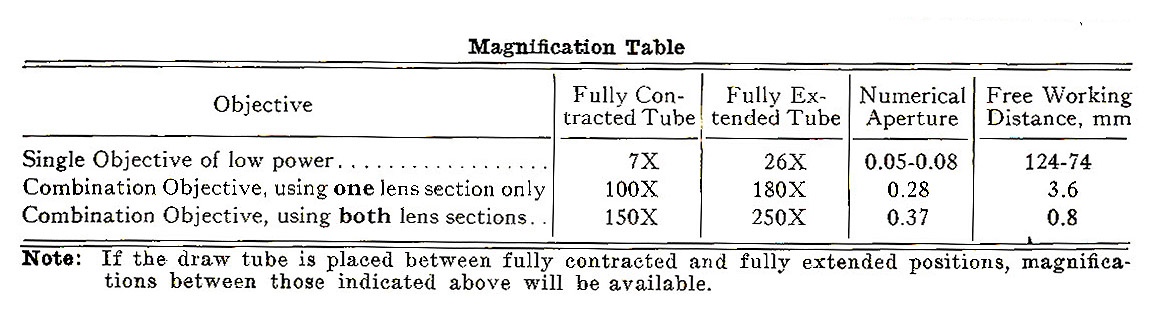 The table, from the 1929 catalog, shows the range of magnification and working distances for this instrument.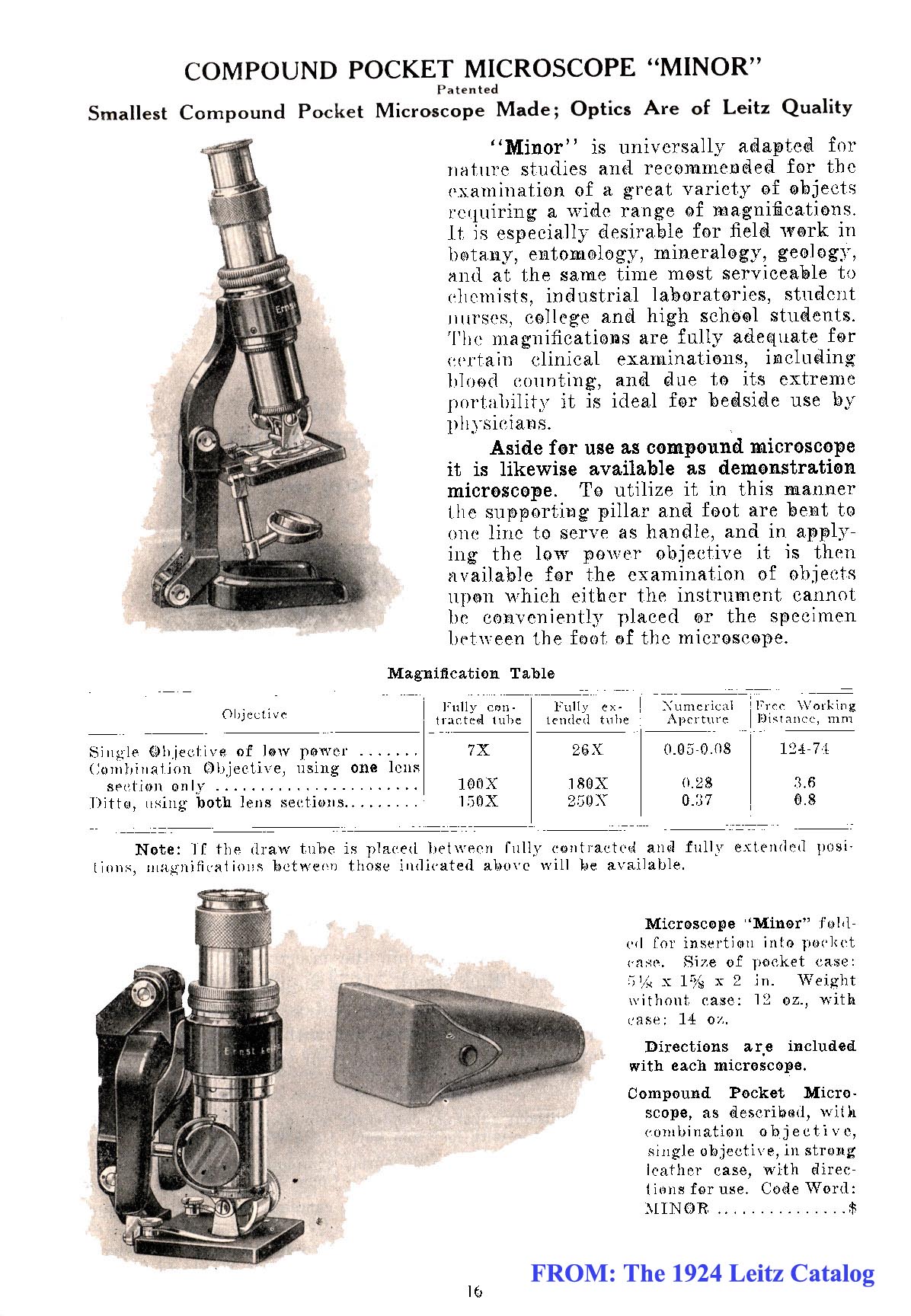
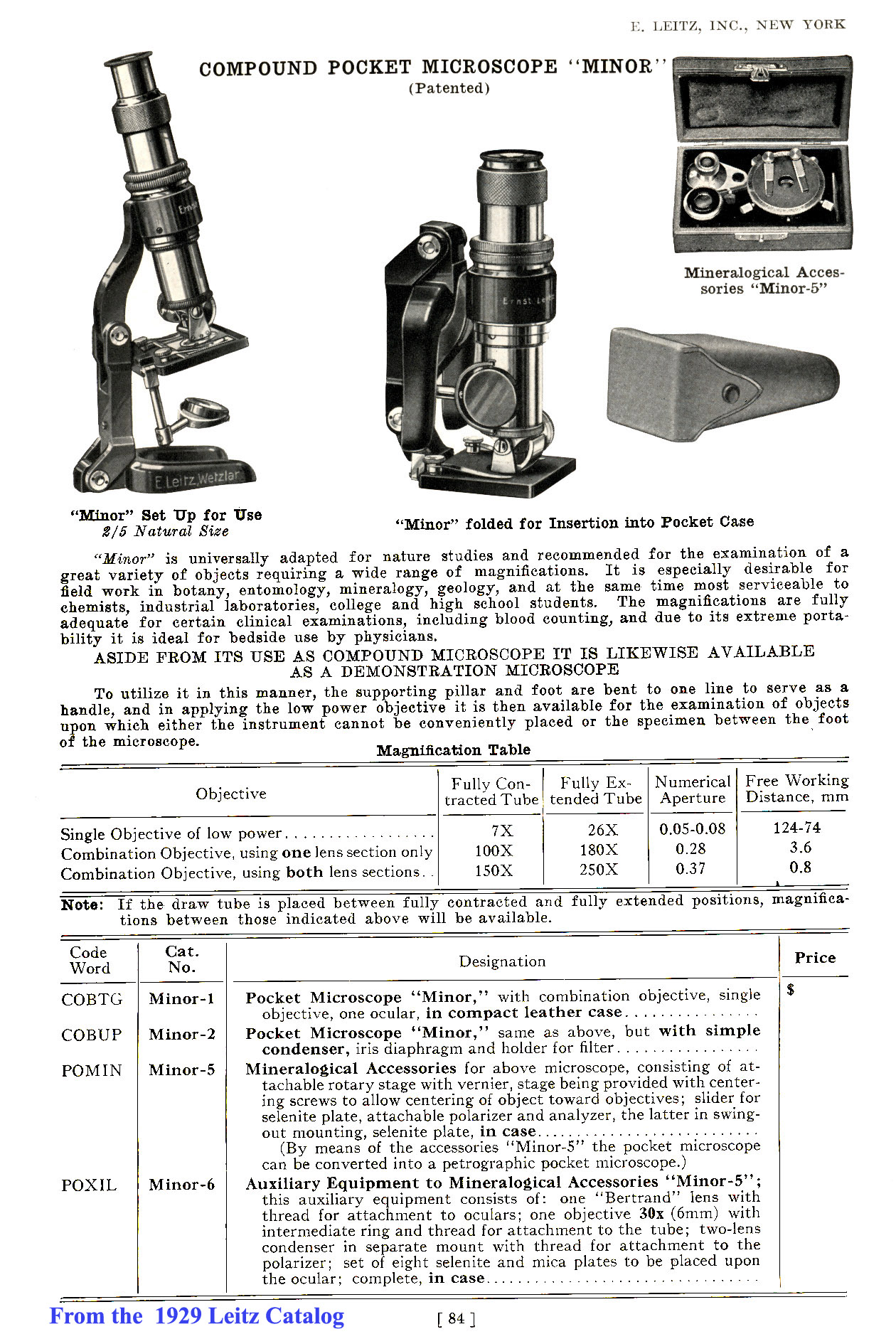 High quality portable microscopes became popular during the 1920's, and the Leitz Minor was one of the best of these. In 1924 it was offered only as one model without a condenser, but by 1929, it could be ordered with the removable substage condenser seen here, and called the 'Minor 2'.