
| DESCRIPTION | HISTORY |
Please Click on any Image for a Larger Version
Please Click on any Image for a Larger Version
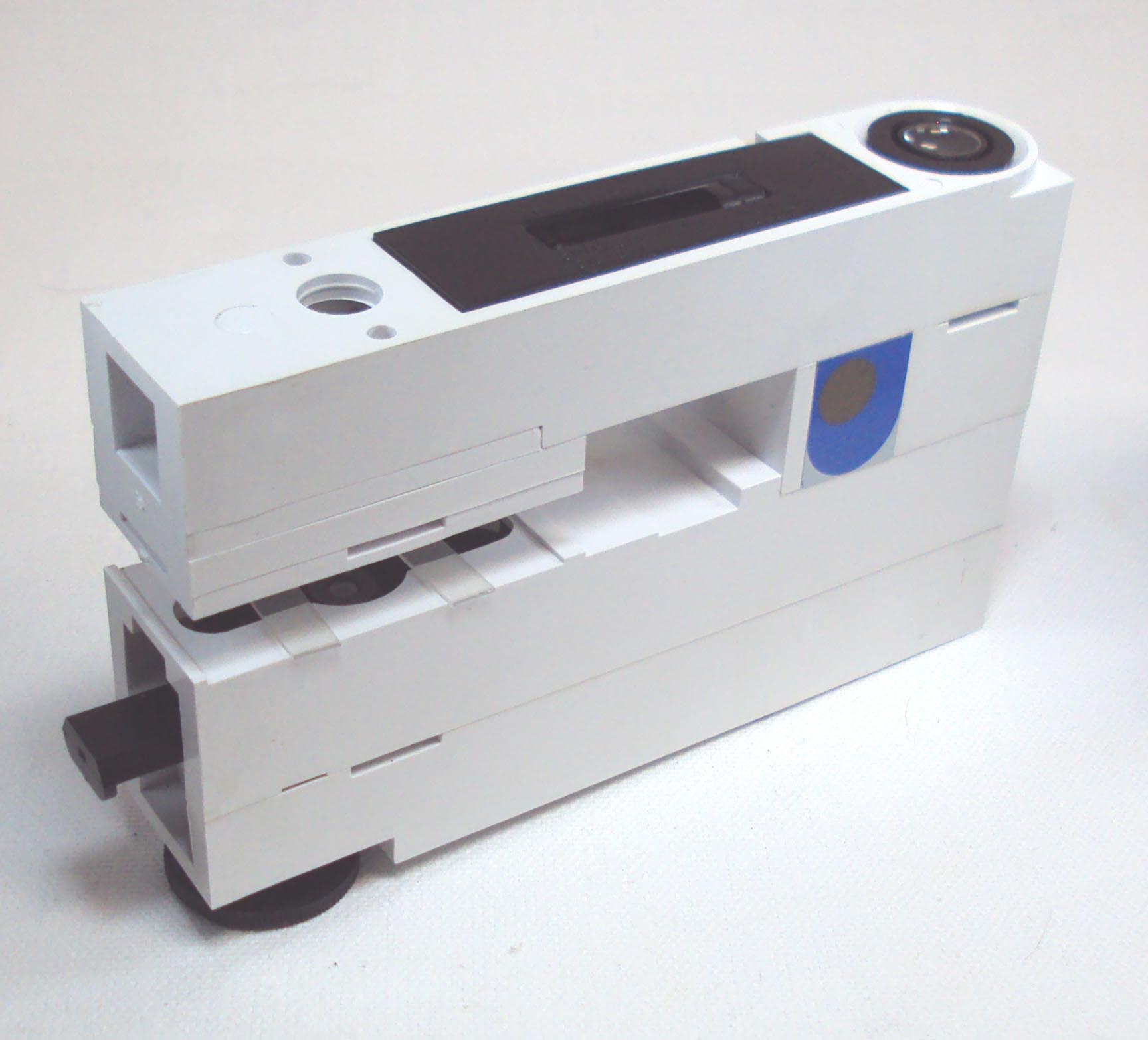
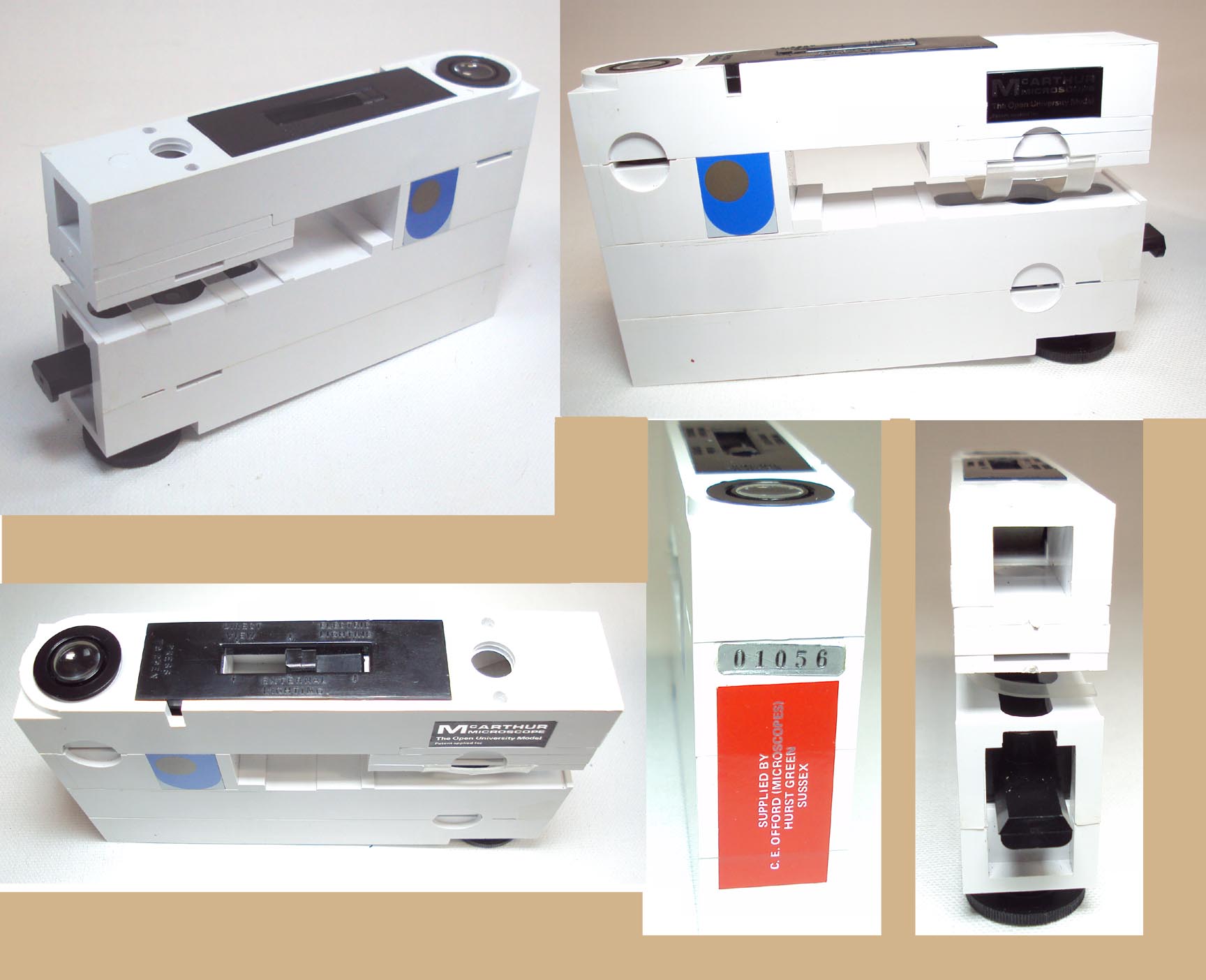 This instrument, made almost entirely of plastics, measures 5 inches X 3 inches X 1 inch.
It has glass optics. Other than the inverted design, it has several features which differ from the other McArthur
microscopes. The eyepiece is fixed and not removable, as are the objectives. There is no extension of the stage to
either side as in the usual contemporary McArthur microscopes; indeed a slide could be viewed with its long axis
parallel to the microscope's long axis. There are plastic pieces permanently affixed to the condenser arm, curving
downward to act like stage clips. The condenser is also permanently in place. It usually came with two objectives,
but there was also a three-objective model. There was also a polarized light version.
This instrument, made almost entirely of plastics, measures 5 inches X 3 inches X 1 inch.
It has glass optics. Other than the inverted design, it has several features which differ from the other McArthur
microscopes. The eyepiece is fixed and not removable, as are the objectives. There is no extension of the stage to
either side as in the usual contemporary McArthur microscopes; indeed a slide could be viewed with its long axis
parallel to the microscope's long axis. There are plastic pieces permanently affixed to the condenser arm, curving
downward to act like stage clips. The condenser is also permanently in place. It usually came with two objectives,
but there was also a three-objective model. There was also a polarized light version. 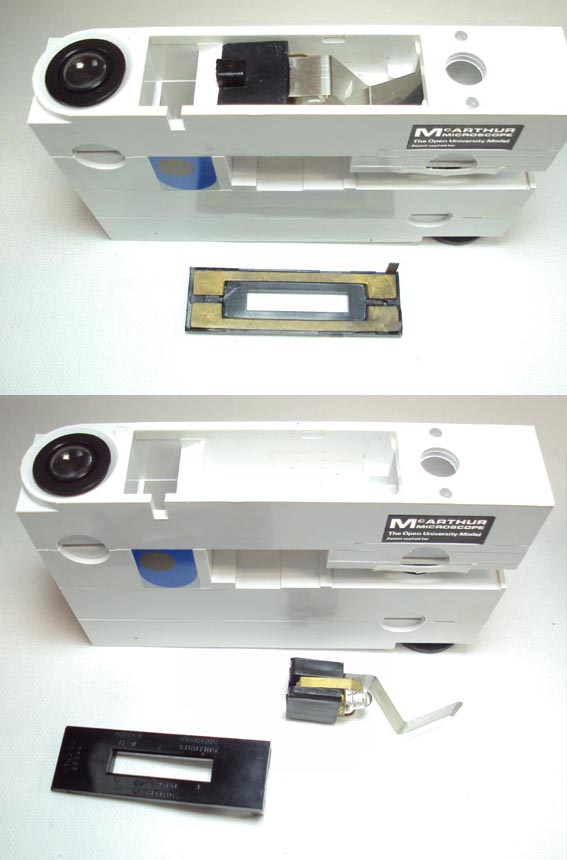
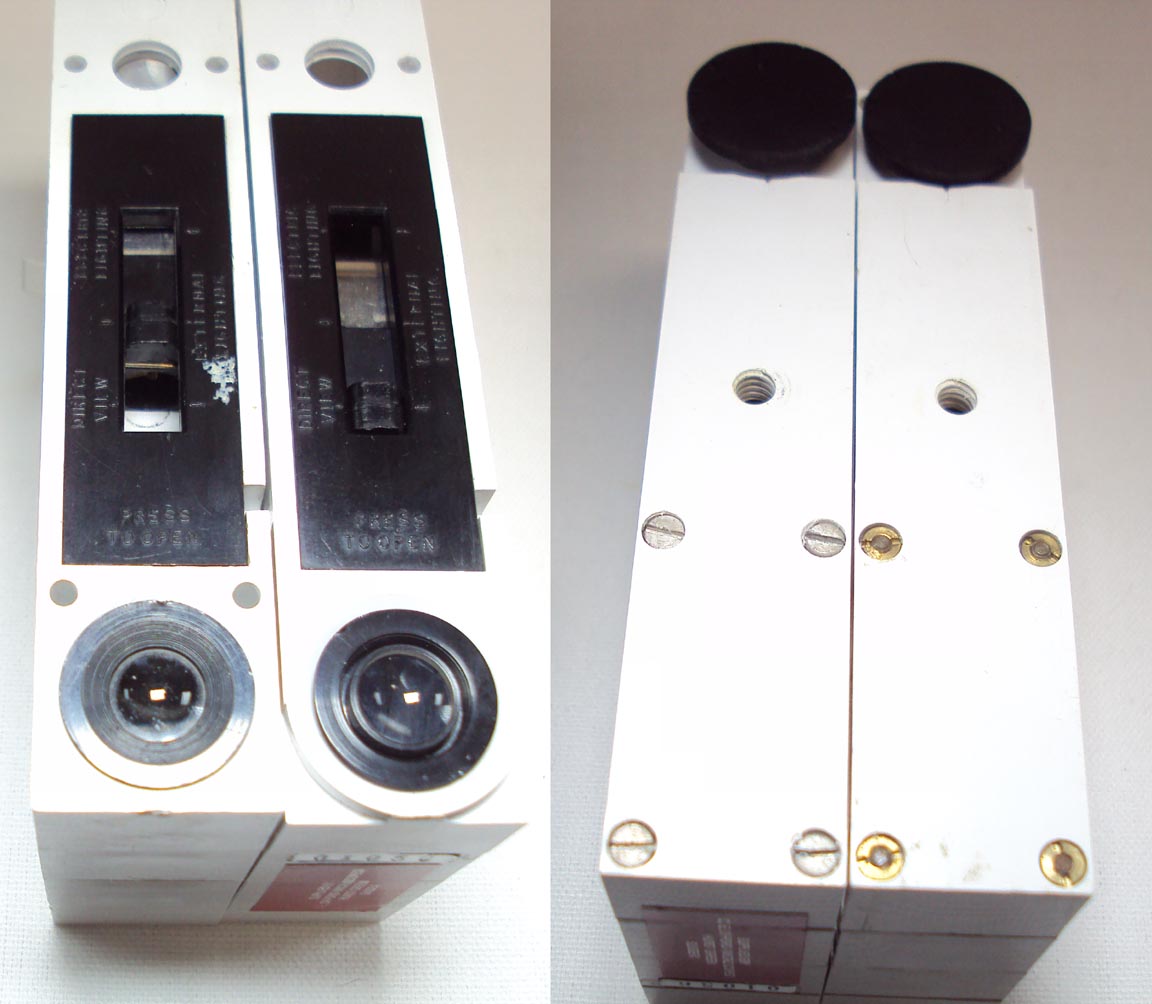 The patented combined illuminating
apparatus and switch was a new design as shown in the patent drawings. The three position control is marked in positions
from back to front, labelled 'direct view', 'external lighting' , and 'electric lighting'. Direct view, meant that one
could look through the condenser as one centered the specimen. A reflector moved into position for exterior lighting,
and pushing the switch, which contained the electric bulb, all the way forward placed the light above the condenser and
simultaneously completed the electric circuit as the contacts on the bulb receptacle came into contact with the contacts
projecting down from the switch cover. For some reason, the battery compartment is smaller in diameter than
standard AAA batteries and a bit larger than AAAA batteries-special batteries were apparently available for it when
produced. To use it today, requires an external wired powered source, a modification to the battery compartment,
dismantling modern 9-volt batteries to obtain the cells within, or putting in AAAA batteries with some space filler,
perhaps the easiest.
The patented combined illuminating
apparatus and switch was a new design as shown in the patent drawings. The three position control is marked in positions
from back to front, labelled 'direct view', 'external lighting' , and 'electric lighting'. Direct view, meant that one
could look through the condenser as one centered the specimen. A reflector moved into position for exterior lighting,
and pushing the switch, which contained the electric bulb, all the way forward placed the light above the condenser and
simultaneously completed the electric circuit as the contacts on the bulb receptacle came into contact with the contacts
projecting down from the switch cover. For some reason, the battery compartment is smaller in diameter than
standard AAA batteries and a bit larger than AAAA batteries-special batteries were apparently available for it when
produced. To use it today, requires an external wired powered source, a modification to the battery compartment,
dismantling modern 9-volt batteries to obtain the cells within, or putting in AAAA batteries with some space filler,
perhaps the easiest.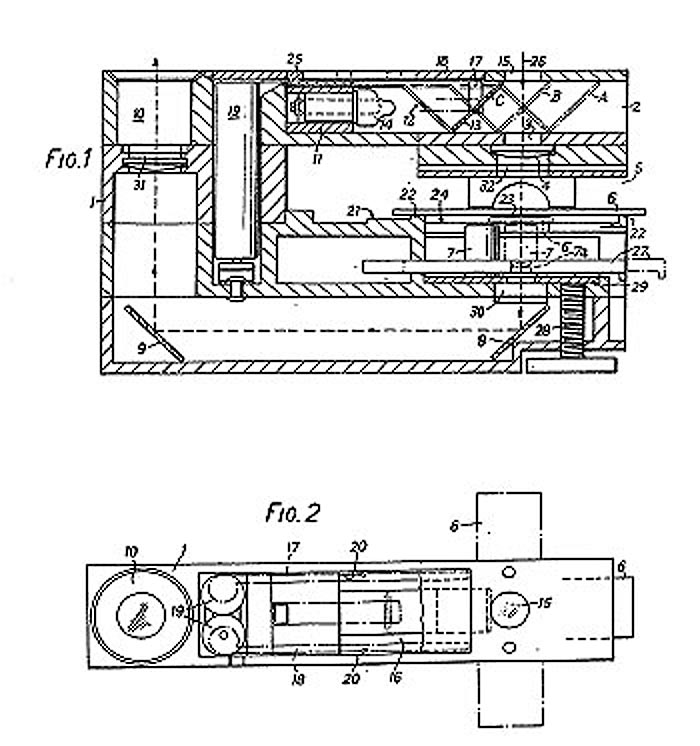 About 1971 the Open University in the U.K. needed many thousands of microscopes within a short period of time.
They needed to be
inexpensive to make, not prone to breakage, and easy to use. The two things most likely to go wrong with a microscope
in the rough
hands of young students, are failure or breakage of the rack and pinion of the coarse focus, or, in the course of focusing, racking
an objective through a slide, ruining both the slide and the objective. Mirrors are also prone to loss or damage. All of this was eliminated
with McArthur's new design. This design, patented by Dr McArthur, (application No. 19259/70, filed in April of 1970),
provided all this and more. The patent specifically addresses McArthur's newly designed illumination system as described
above, and also shown diagramatically in the patent drawings shown to the left. The drawings show how the lamp and reflector
can be moved into any of the three positions, the first allowing visualization of the location of the specimen throught the condenser, the
second allowing outside illumination to be reflected on the specimen, and the third which both moves the electric bulb into place and
simultaneously completes the electrical circuit.
There were three variations originally available, the usual form is seen above. Another with three objectives was also available as was
a polarized light version with a rotating stage attachement. The two-objective standard version, sold for £15.50. A three-objective version (with a 40x added) sold for £29. The polarizing version cost £38.80.
According to a 1972 Design Magazine publication quoting Dr McArthur
it was made by Scientific Optics Ltd of Hastings, England. This is confirmed on the box of several examples.
About 1971 the Open University in the U.K. needed many thousands of microscopes within a short period of time.
They needed to be
inexpensive to make, not prone to breakage, and easy to use. The two things most likely to go wrong with a microscope
in the rough
hands of young students, are failure or breakage of the rack and pinion of the coarse focus, or, in the course of focusing, racking
an objective through a slide, ruining both the slide and the objective. Mirrors are also prone to loss or damage. All of this was eliminated
with McArthur's new design. This design, patented by Dr McArthur, (application No. 19259/70, filed in April of 1970),
provided all this and more. The patent specifically addresses McArthur's newly designed illumination system as described
above, and also shown diagramatically in the patent drawings shown to the left. The drawings show how the lamp and reflector
can be moved into any of the three positions, the first allowing visualization of the location of the specimen throught the condenser, the
second allowing outside illumination to be reflected on the specimen, and the third which both moves the electric bulb into place and
simultaneously completes the electrical circuit.
There were three variations originally available, the usual form is seen above. Another with three objectives was also available as was
a polarized light version with a rotating stage attachement. The two-objective standard version, sold for £15.50. A three-objective version (with a 40x added) sold for £29. The polarizing version cost £38.80.
According to a 1972 Design Magazine publication quoting Dr McArthur
it was made by Scientific Optics Ltd of Hastings, England. This is confirmed on the box of several examples.