
Powell & Lealand, 170 Euston Road, Londonand also dated
1874
| INTRODUCTION | DESCRIPTION | ACCESSORIES | HISTORY |
Please Click On Any Picture for a Larger Version
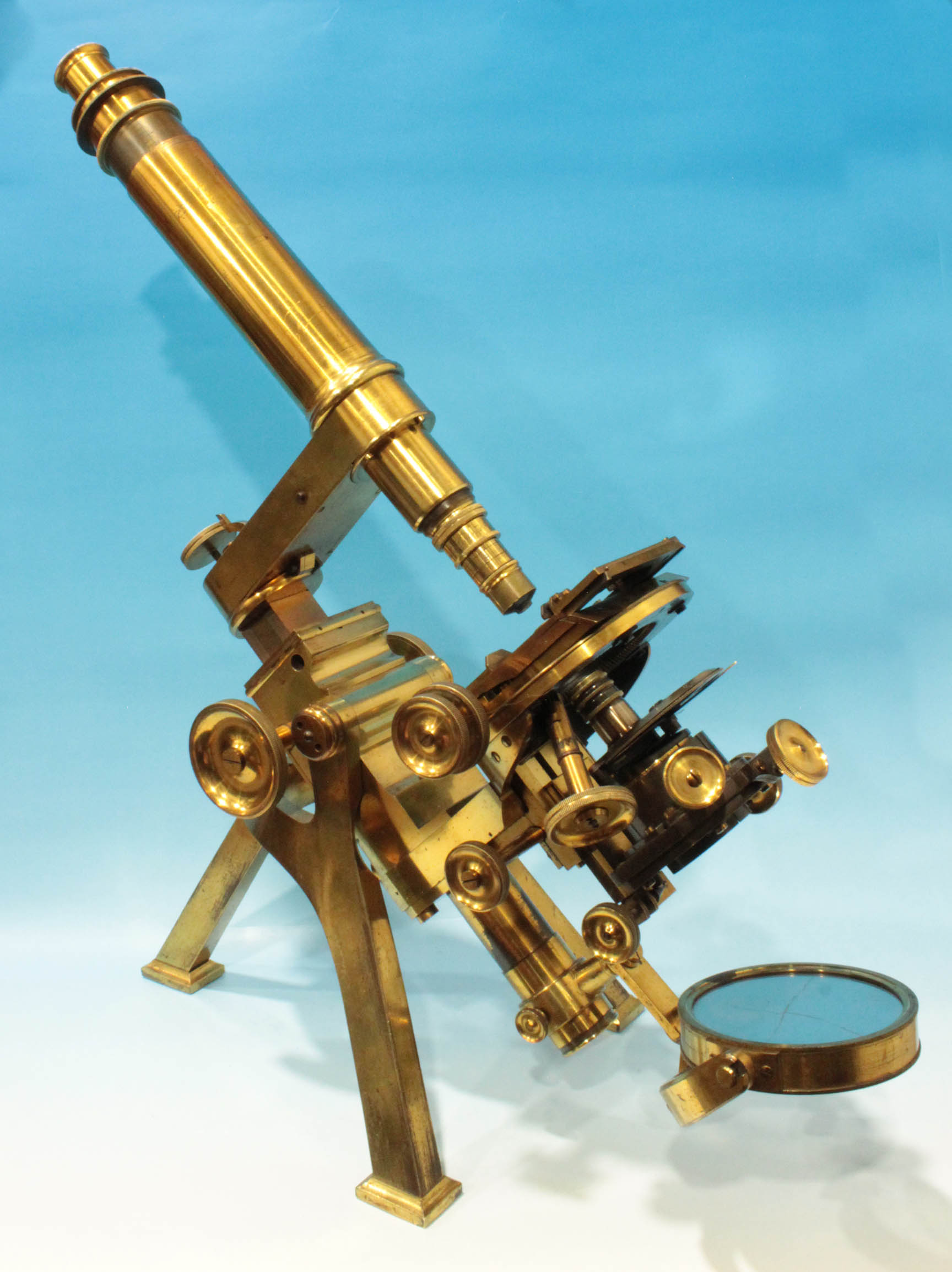
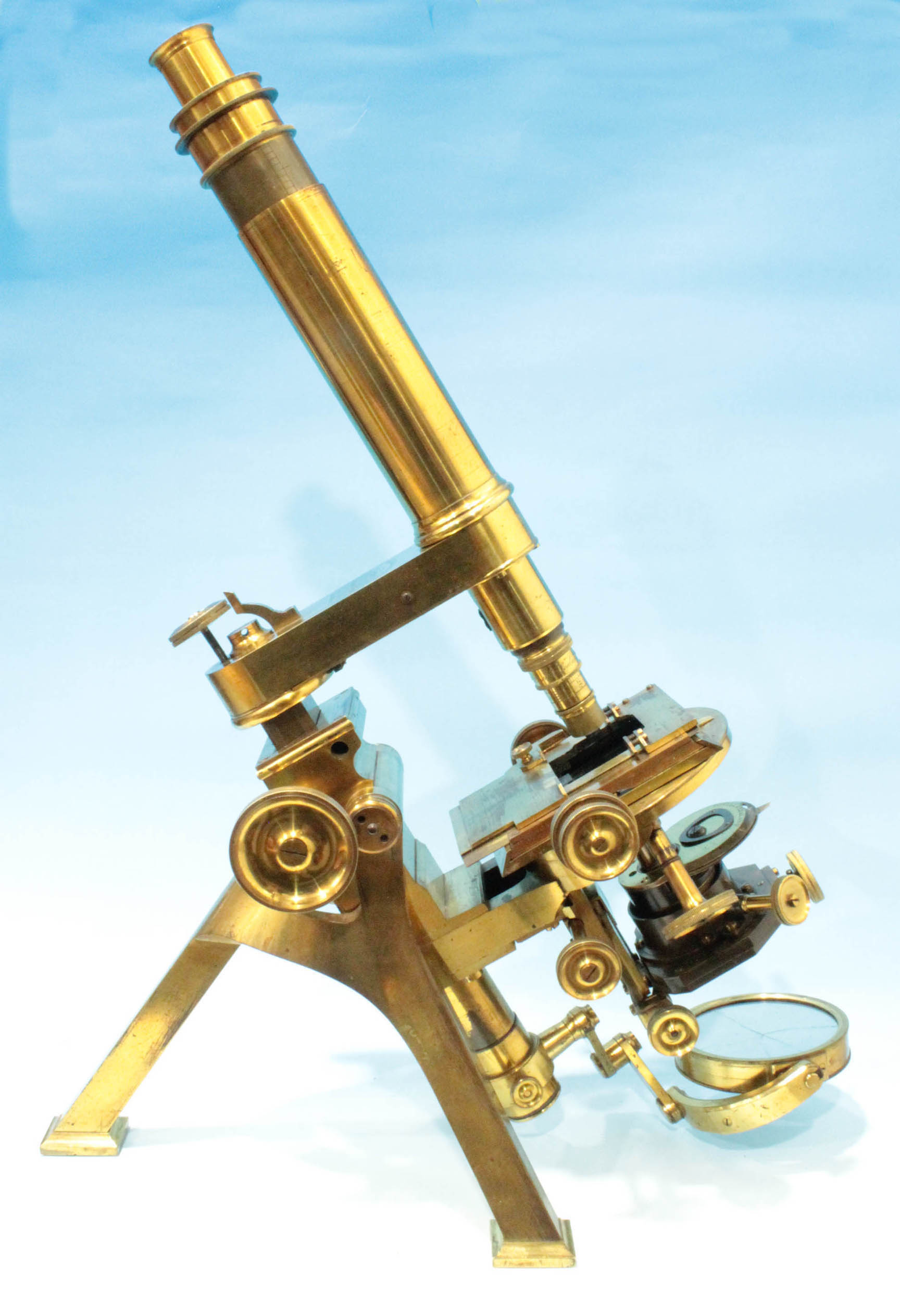
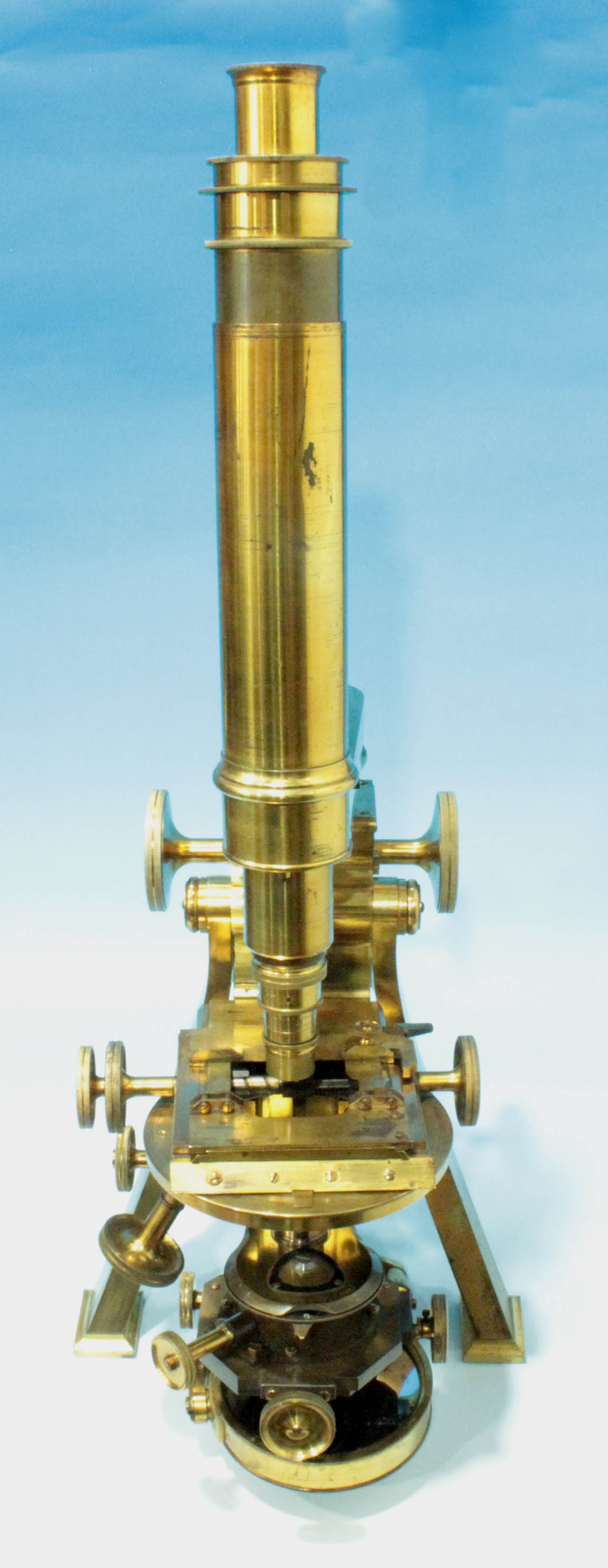
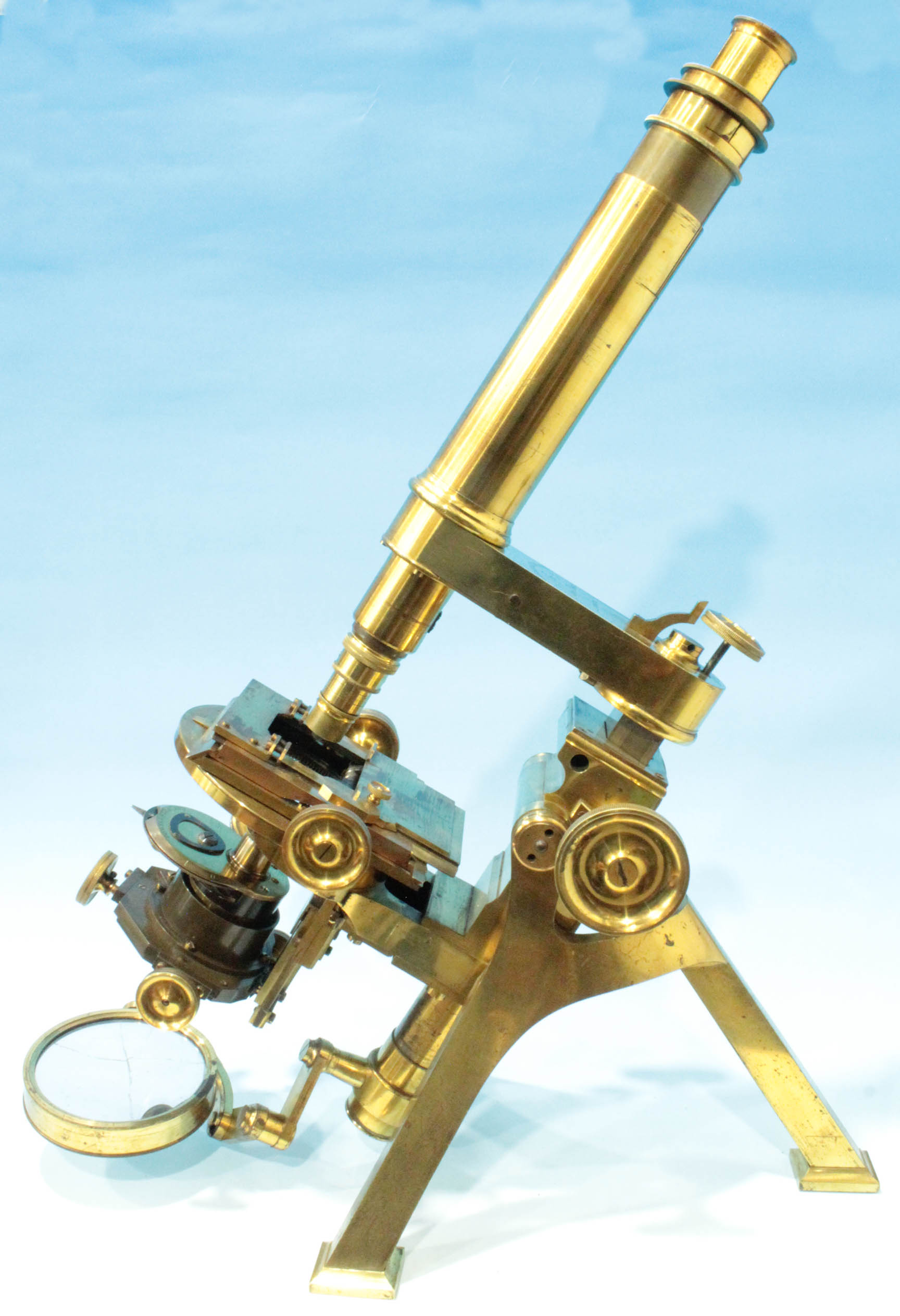
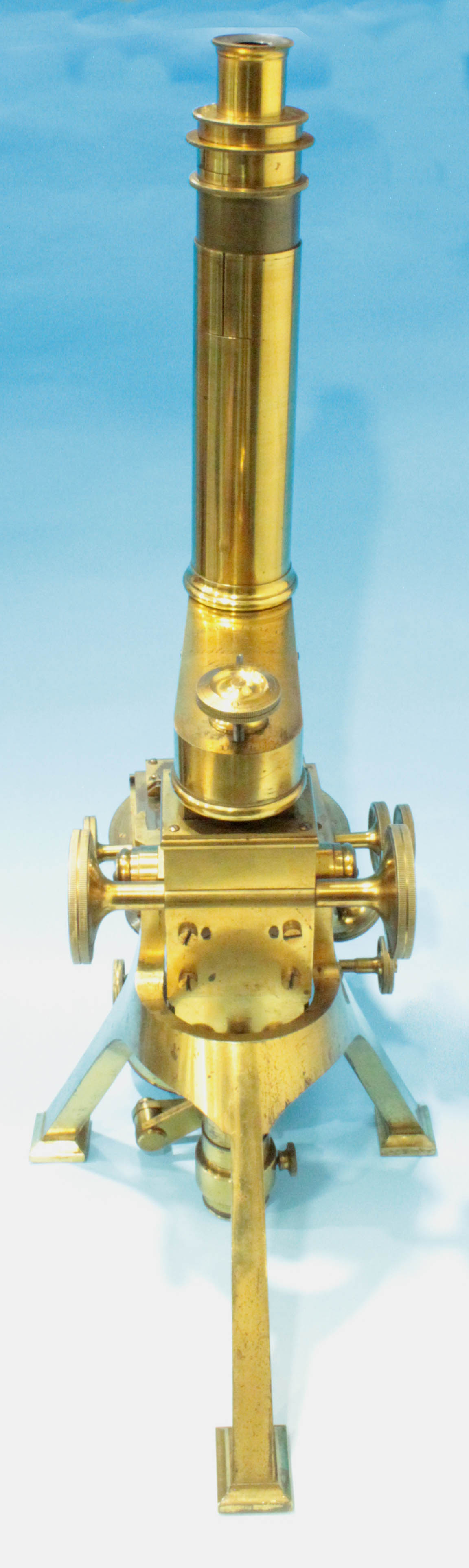
Aristocratof the Victorian period of
brass and glass.Even without the accessories, the P & L No.1 was so expensive, that only the wealthy could afford to buy one on their own. Although this example lacks many accessories and its case, there is a description of a binocular example, complete with case and accessories also on this site.
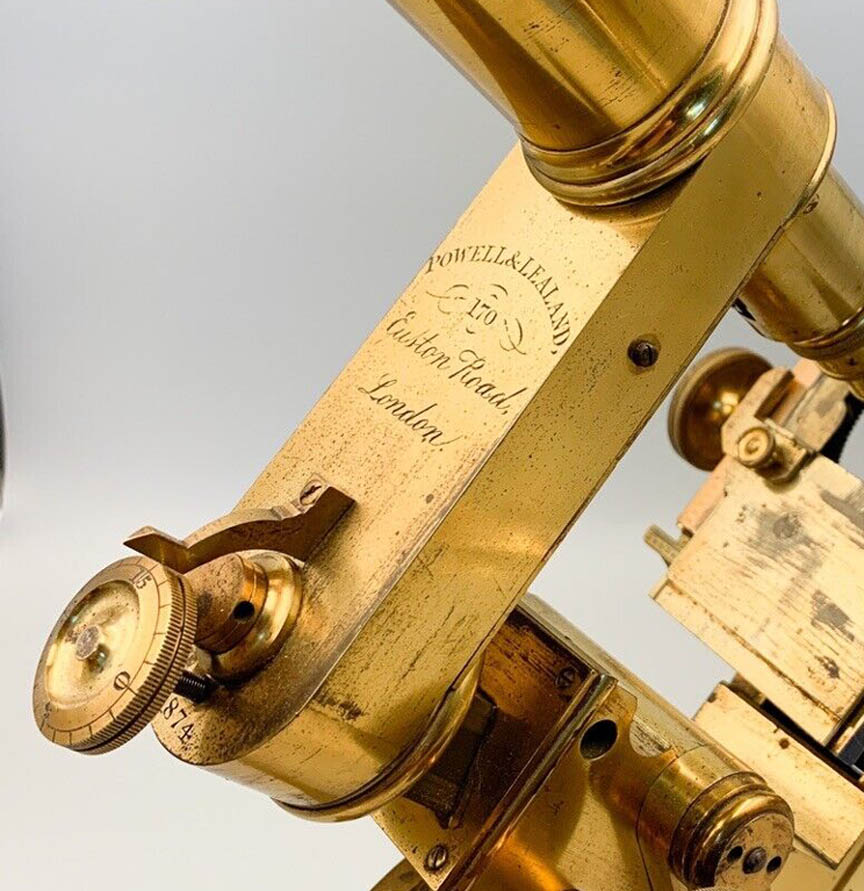
Powell & Lealand, 170, Euston Road, London, and dated just behind the fine adjustment screw,
1874
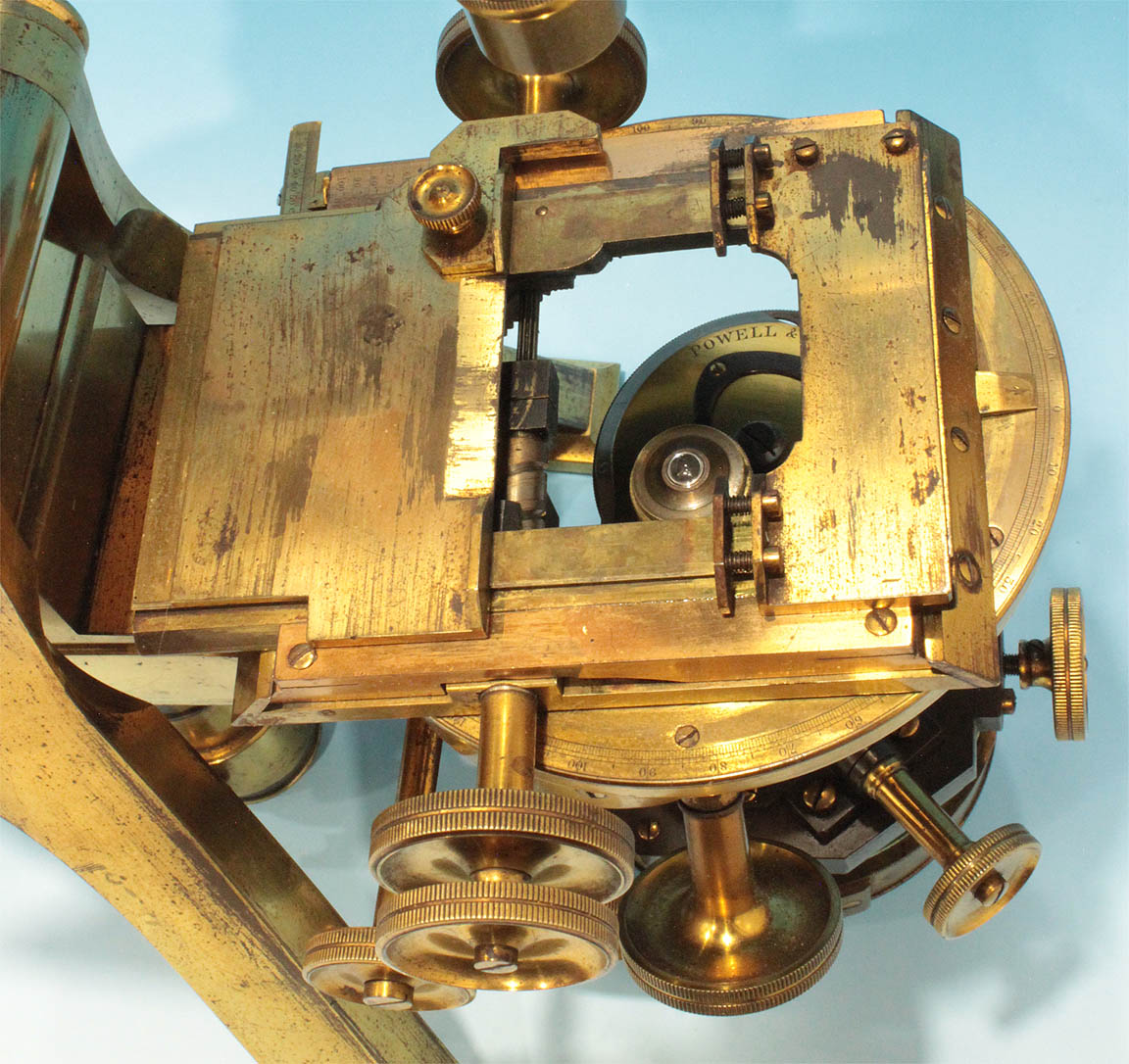
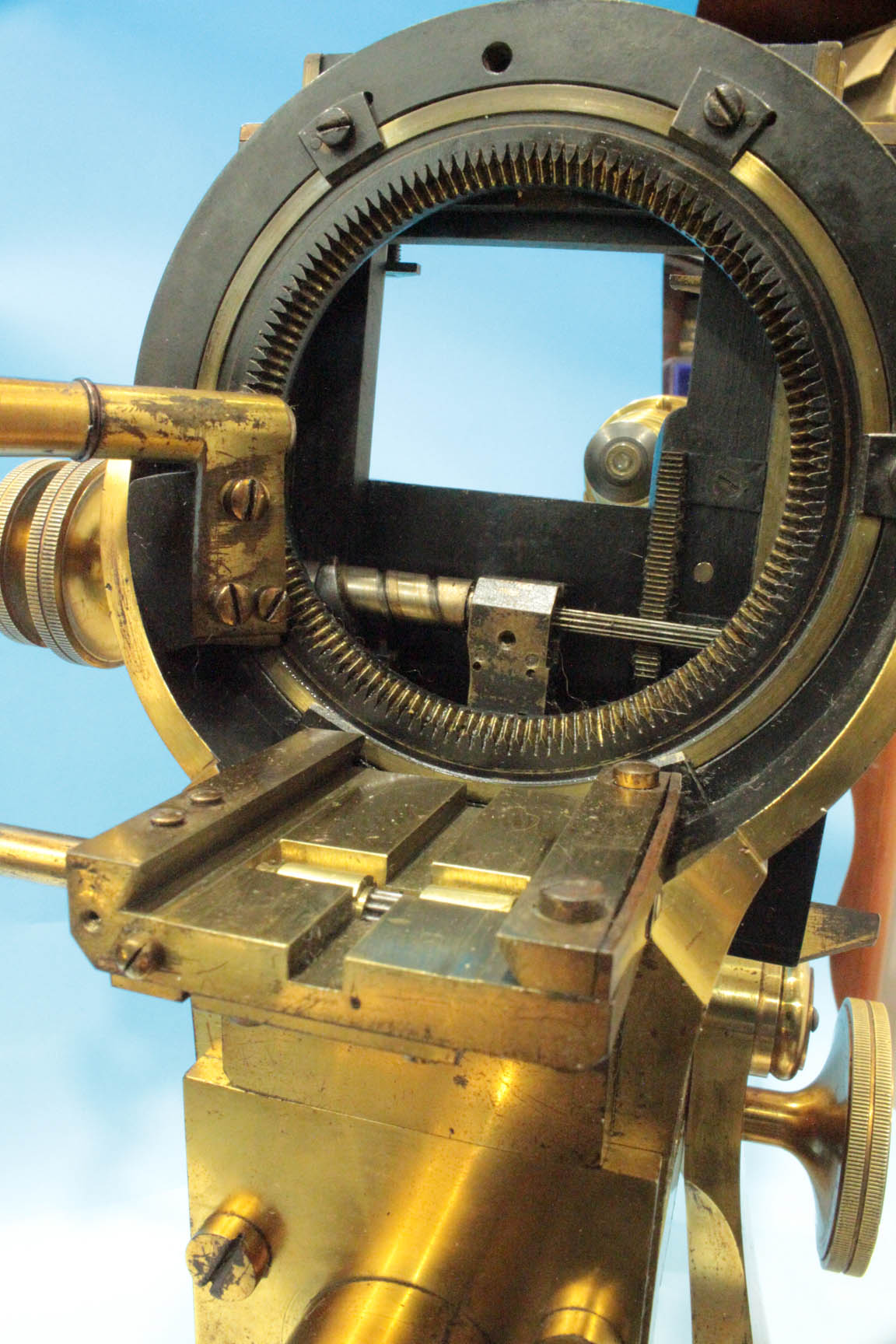
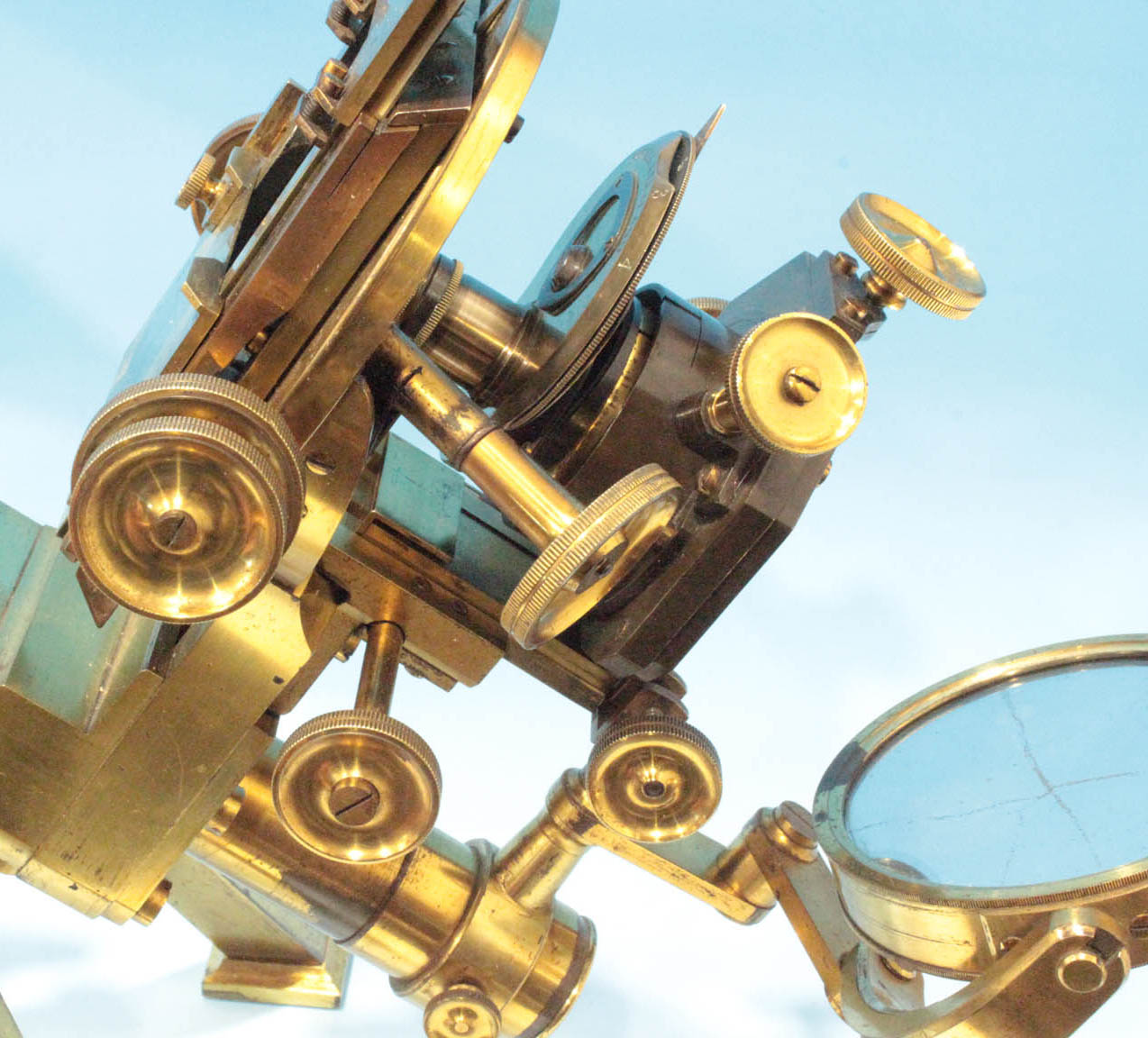
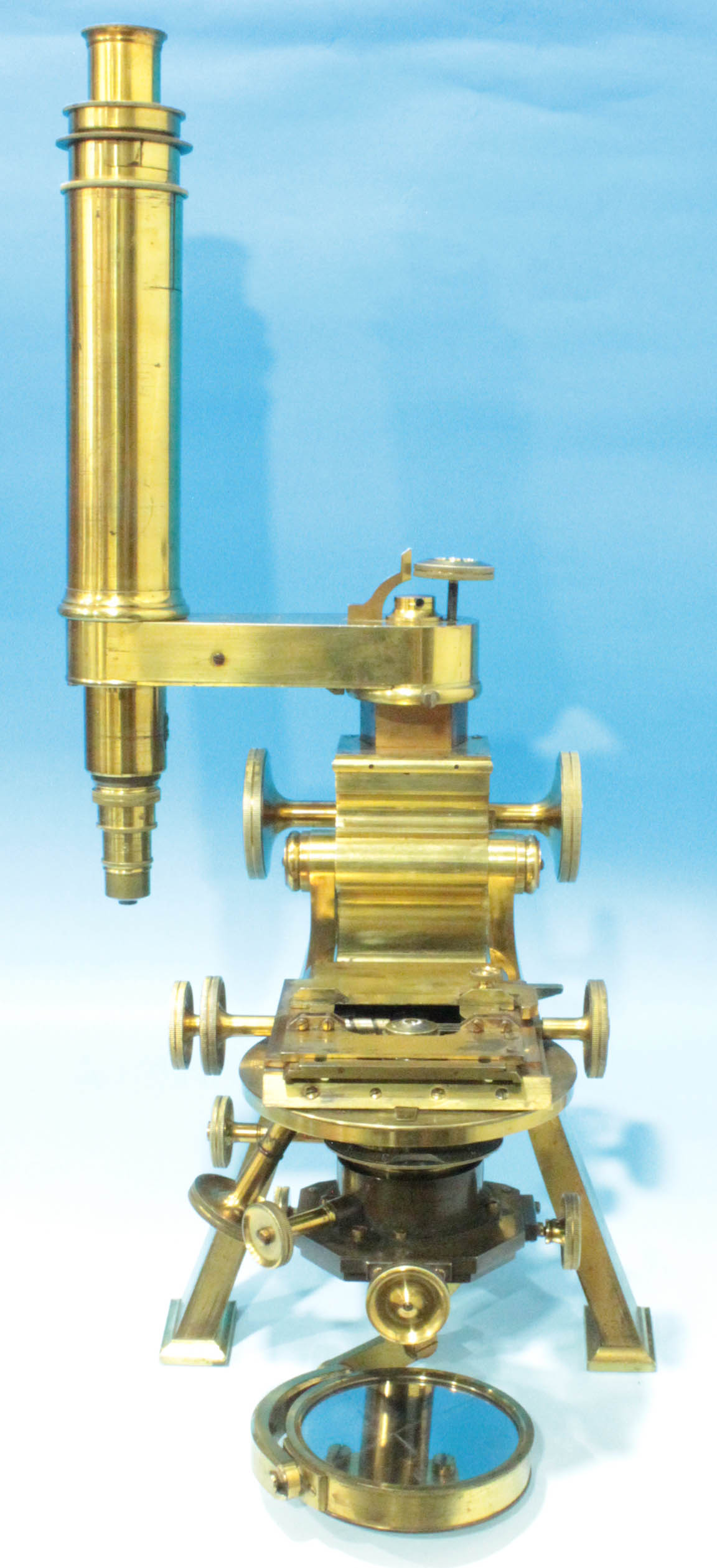
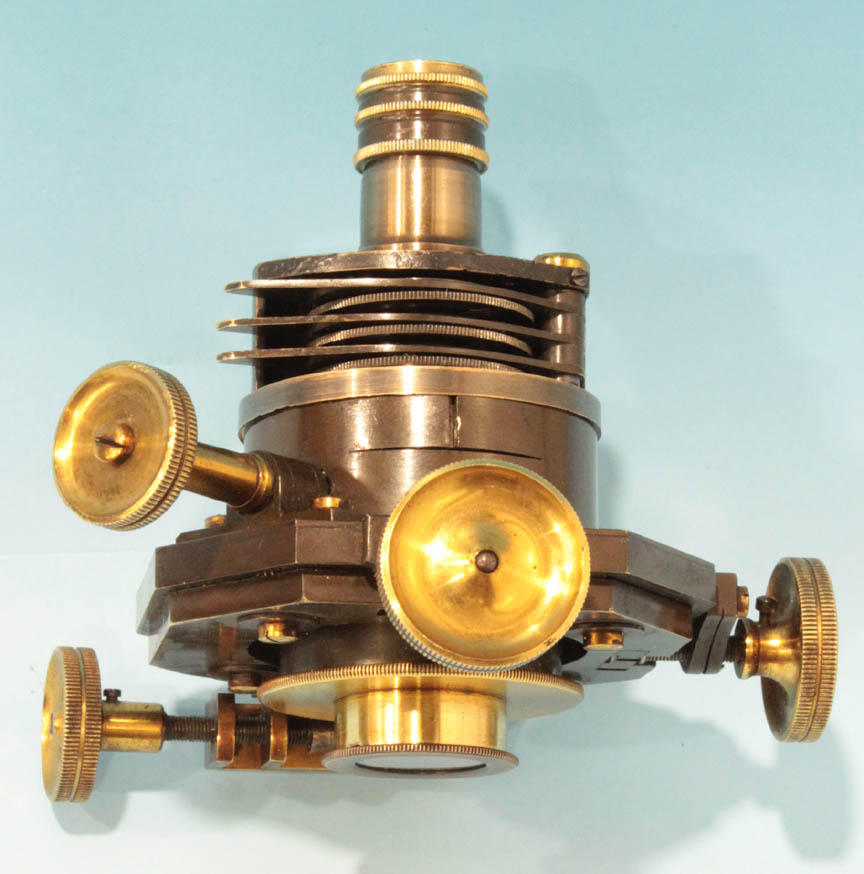
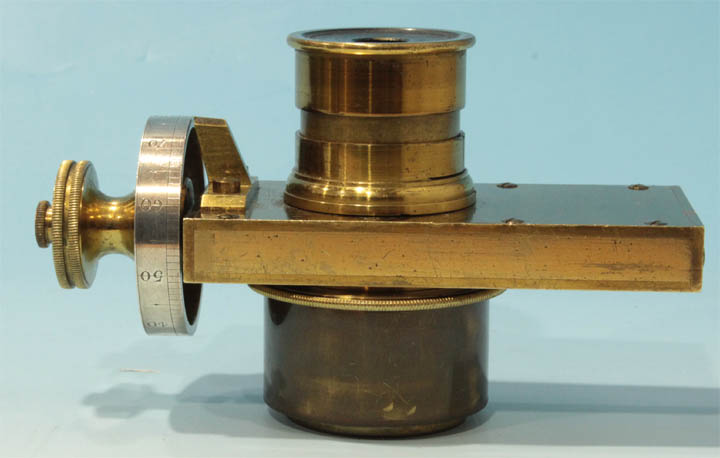
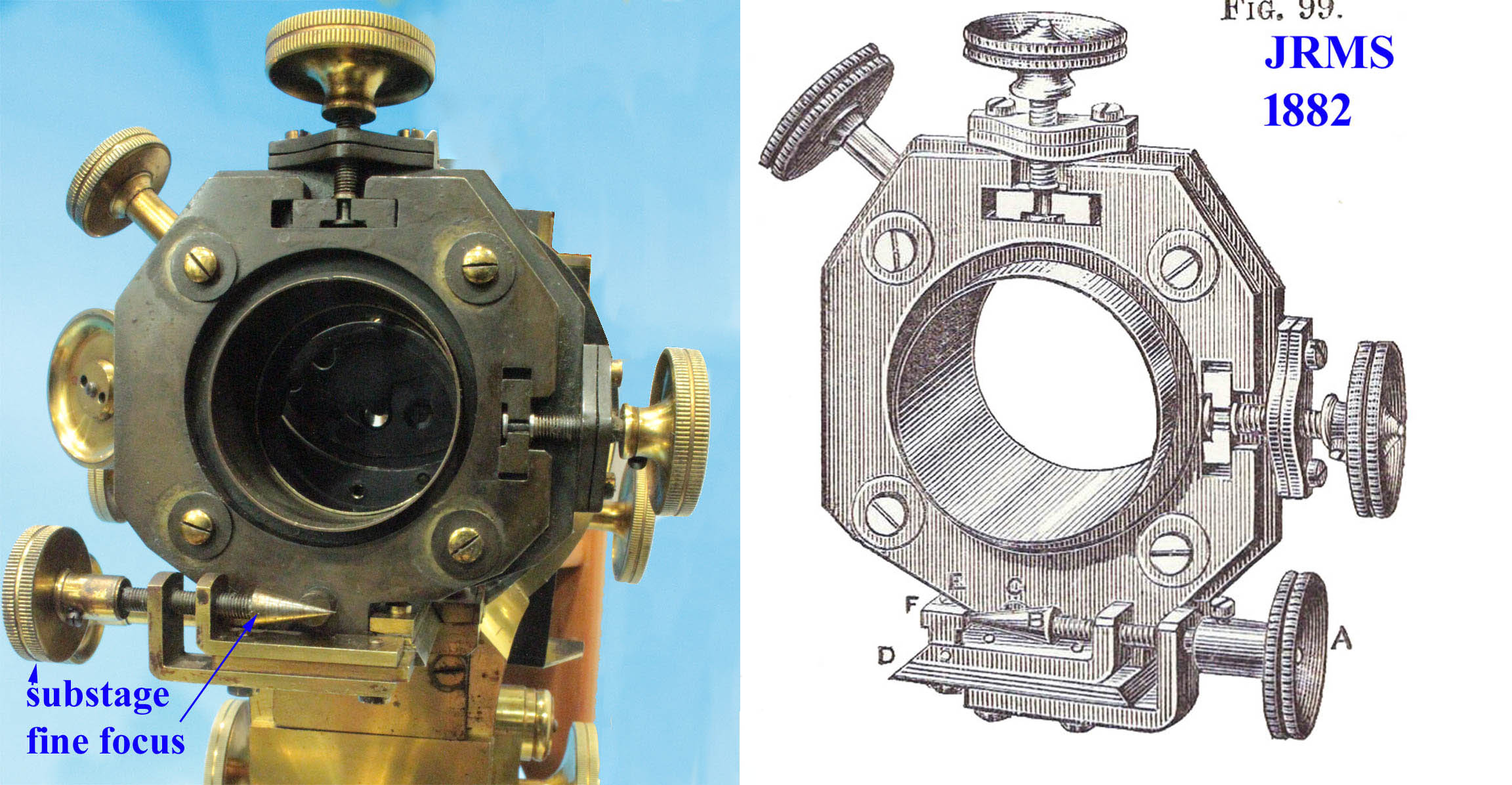 The substage mount(left), is focussed by rack and pinion, and can be centered by a pair of screws set at right angles (range about 3 mm for X and Y axes); it features full circular movement, activated by a diagonally placed knurled knob. It also has the addition of the substage fine focus(right), to facilitate precise focusing of the condenser at high power. This substage fine focus uses a cone to move the secondary vertical movement. This is an upgrade, (suggested by E. M. Nelson) added later, since this feature was not added to P & L's No 1 microscopes until 1882*.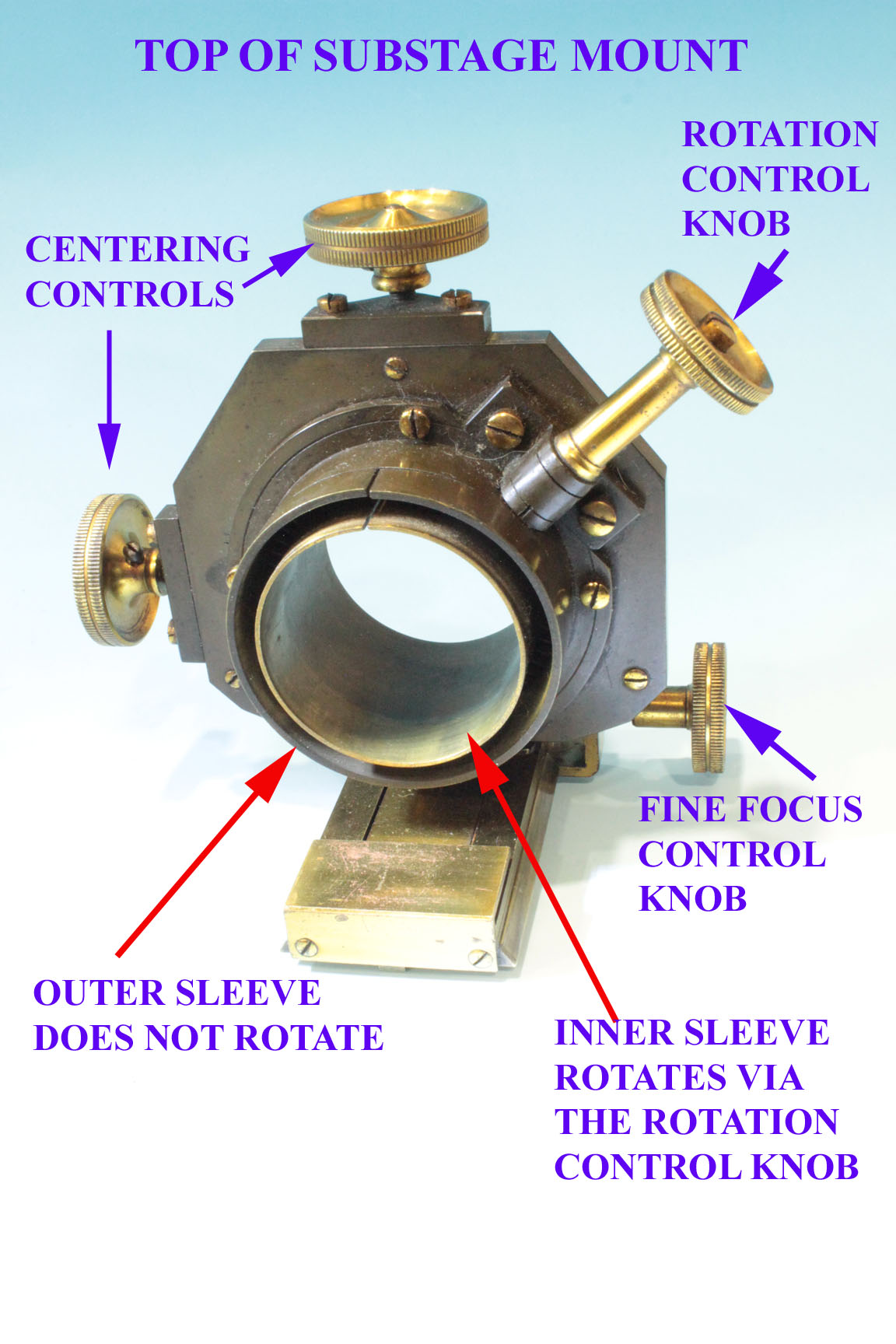
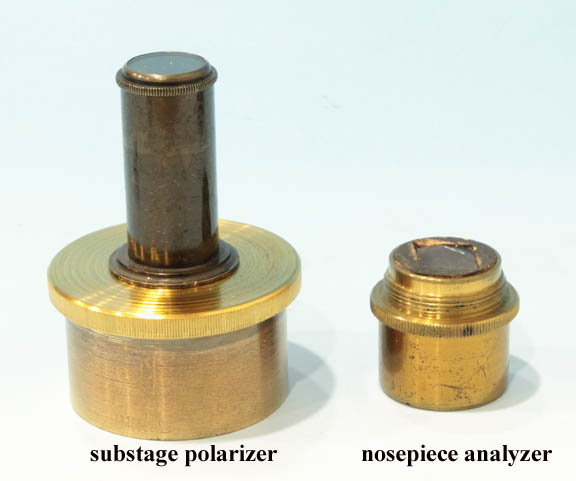
 The top of the substage housing(left) has two concentric sleeves. The inner sleeve rotation is activated by a knurled knob while the outer sleeve is fixed. A polarizer can fit into the inner sleeve either at the top or bottom.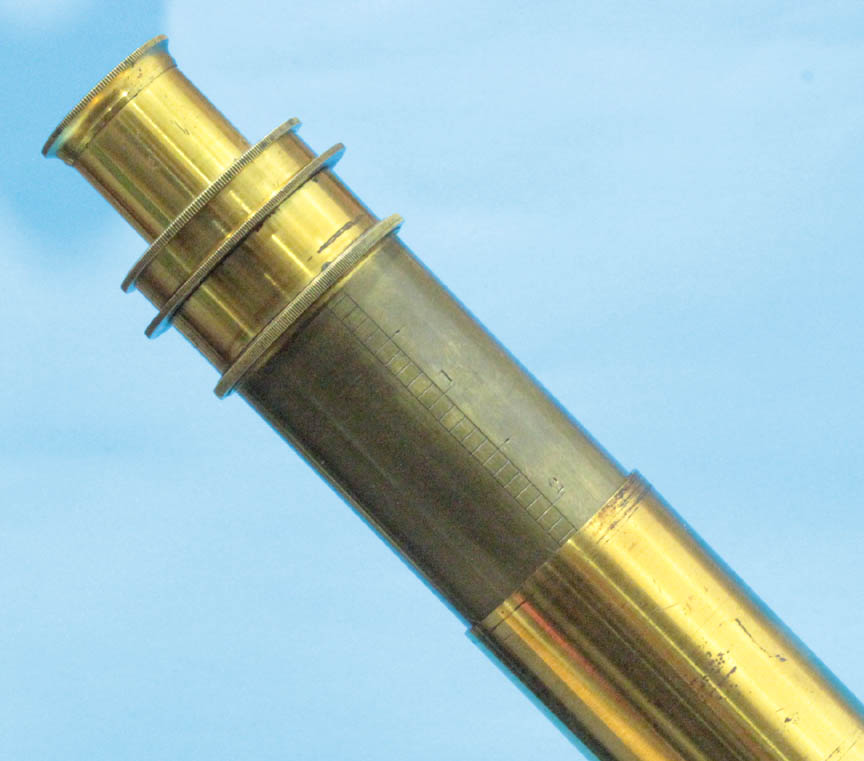
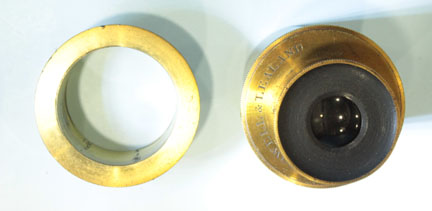
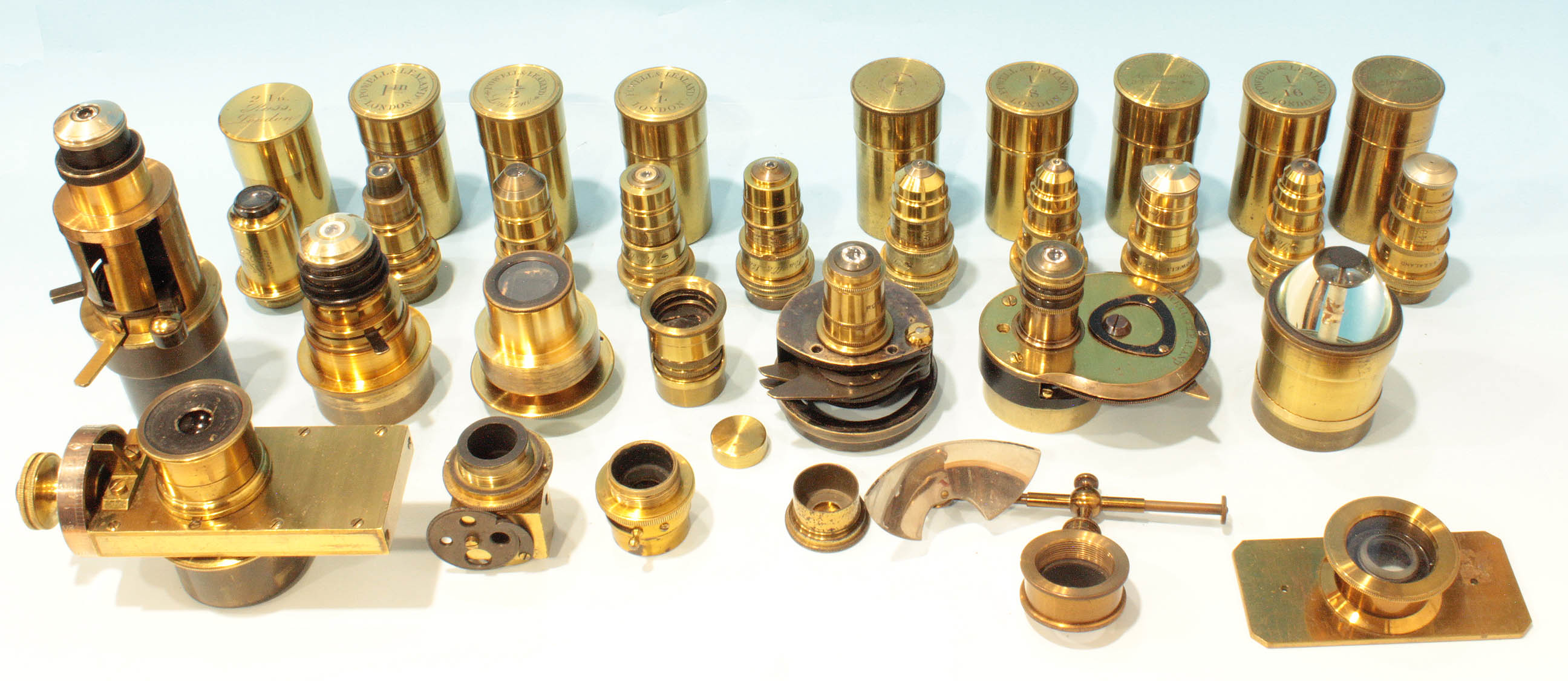
POWELL & LEALANDand with the number 5. This likely indicates it is a 5X eyepiece.
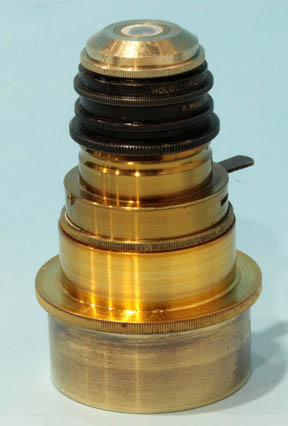
Powell & Lealand, with the exception of the one inch. The water immersion 1/4, the 1/12 apochromatic oil immersion, and the 1/50 all have their purported n.a. inscribed on them. Only the 1/50 has its focal length inscribed on the objective. The 1/50 has delamination of the rear elements. The 1/12 inch has delamination only at the edges of the rear elements. There is a P & L Lieberkuhn for the 1/4 inch P & L dry objective. The images taken through the objectives were taken on the P & L microscope using an adapter accepting the Omax 5MP microscope camera fitted to the top of the optical tube.
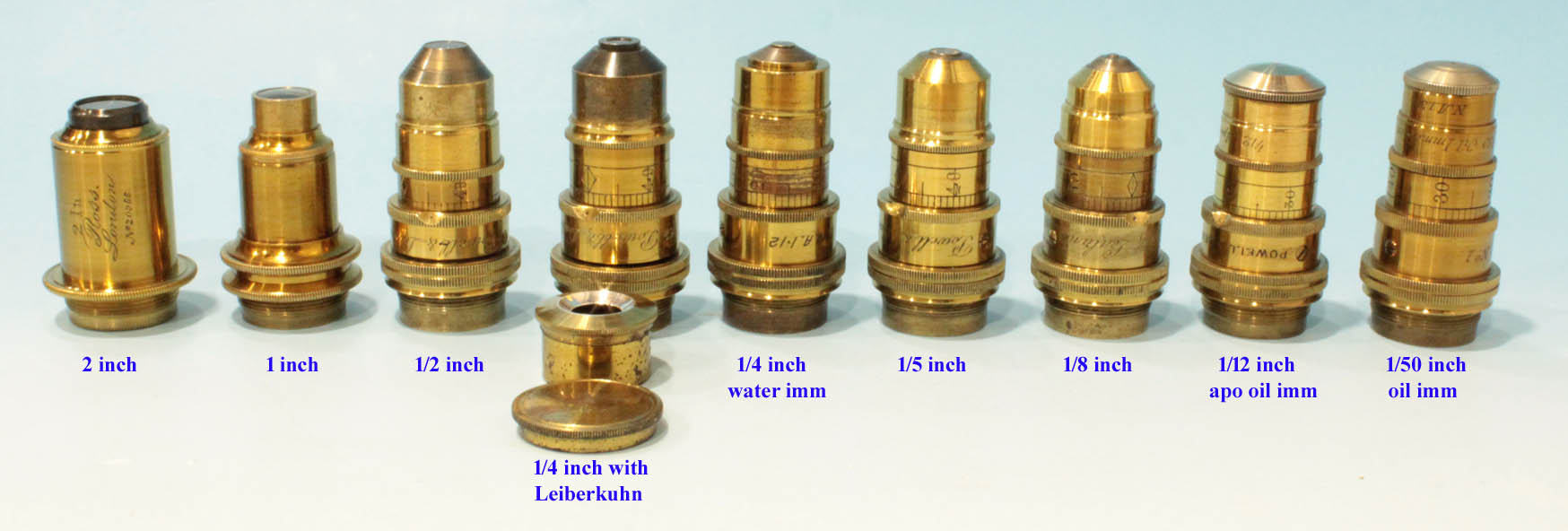
| FOCAL LENGTH(In.) | MAGNIFICATION | N.A. | ANGULAR APERTURE | COMMENTS |
|---|---|---|---|---|
| 2 INCH (ROSS) |
5 | 0.27 | 32o | 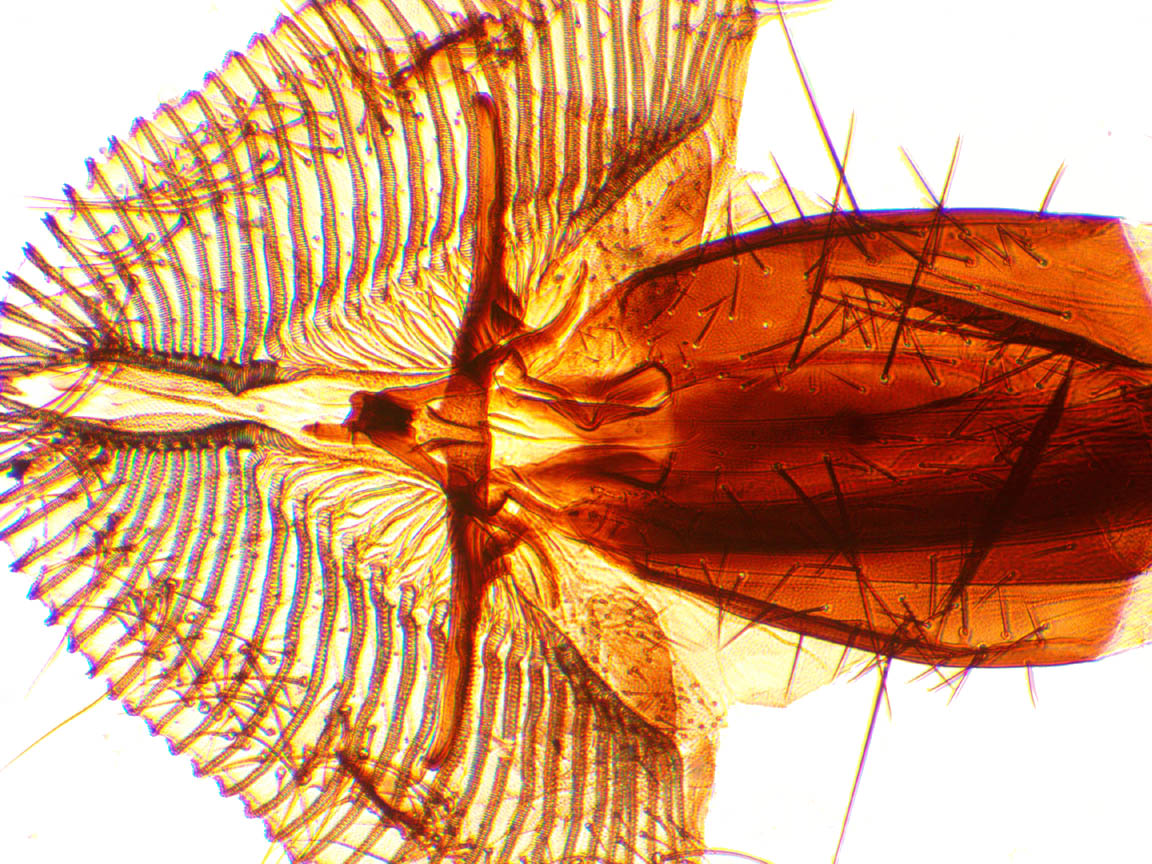 Proboscis of Blowfly |
| 1 INCH |
10 | 0.33 | 38o | 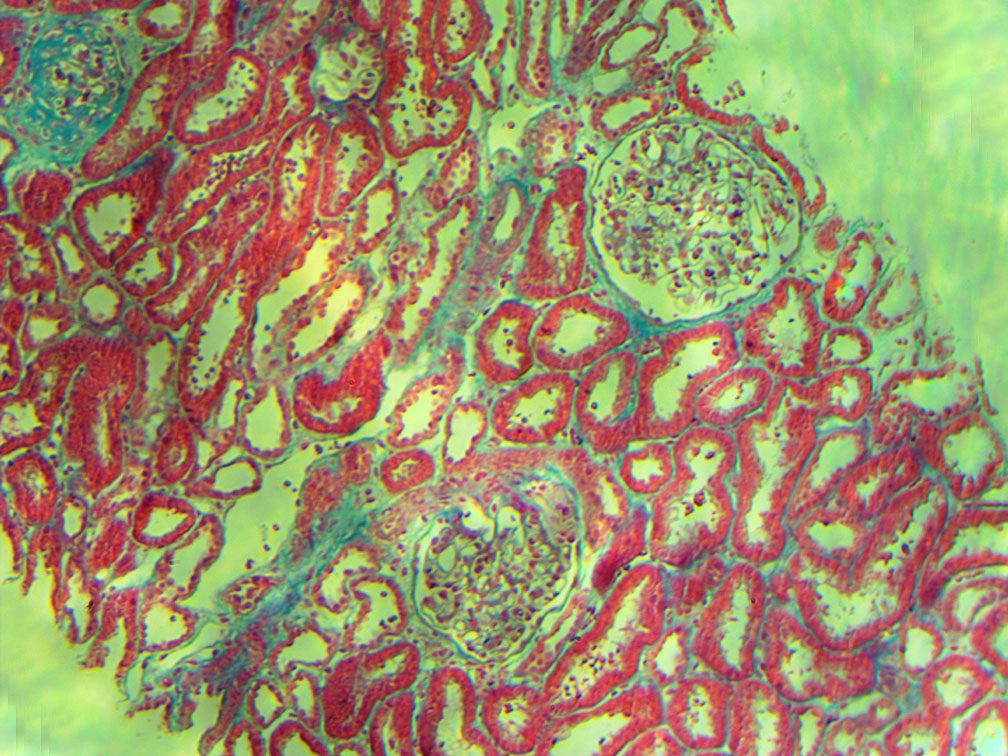 Trichrome stain, human kidney |
| 1/2 INCH IN ORIG. CAN |
22 | 0.50 | 60o | 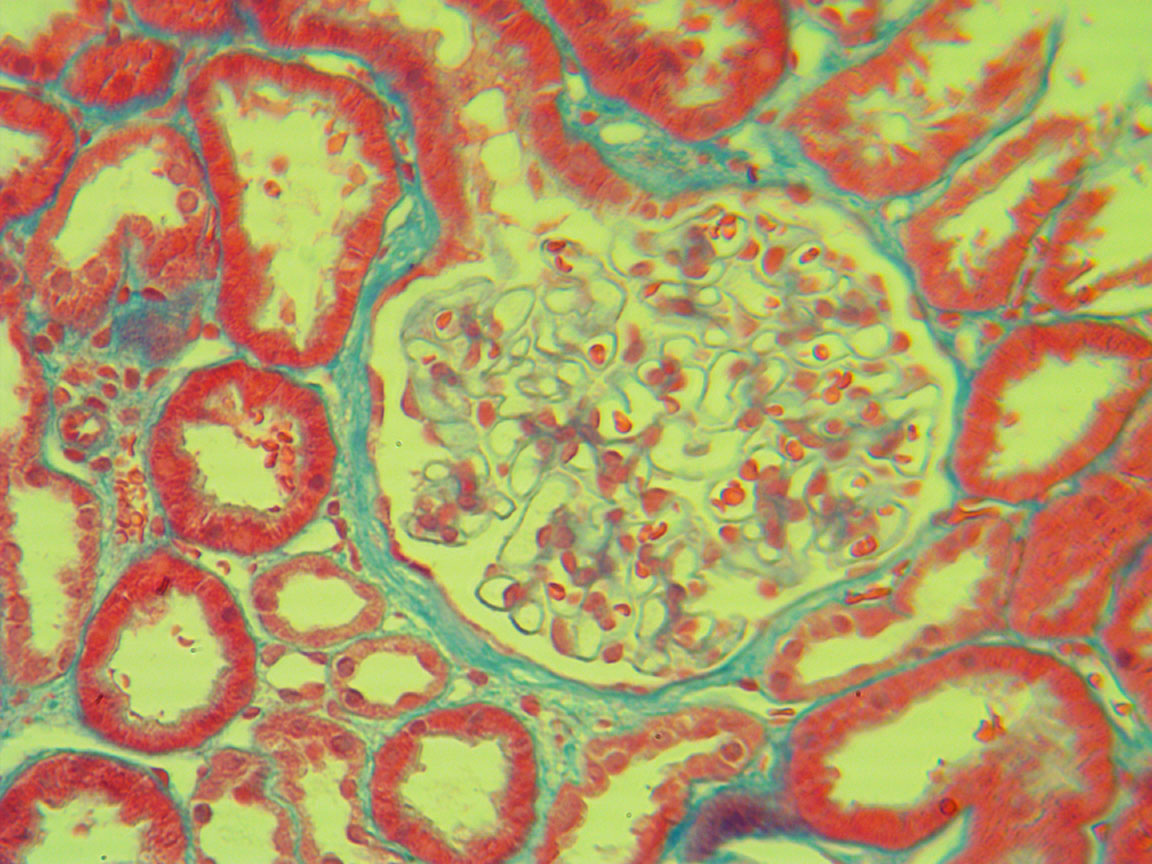 Trichrome stain, human kidney |
| 1/4 INCH IN ORIG. CAN |
40 | 0.63 | 78o | 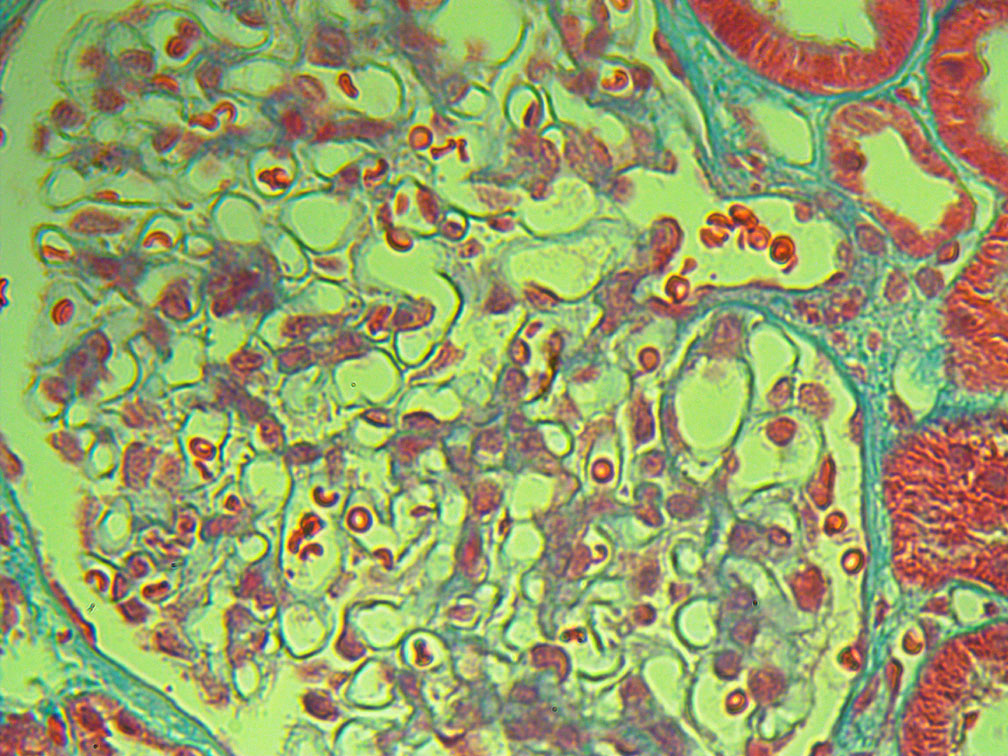 Trichrome stain, human kidney |
| 1/4 INCH WAT IMM |
40 | 1.0 (labelled 1.12) | 90o | 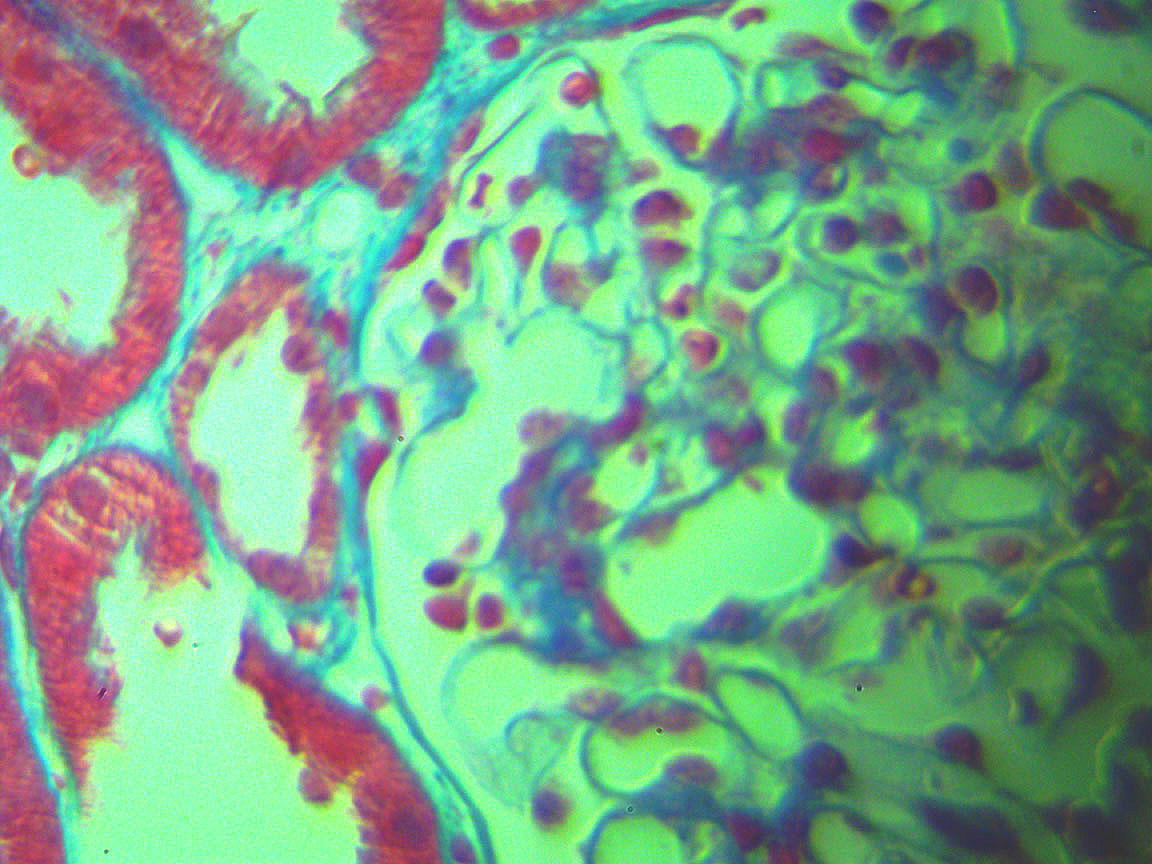 Trichrome stain, human kidney |
| 1/5 IN ORIG. CAN |
50 | 0.80 | 108o | 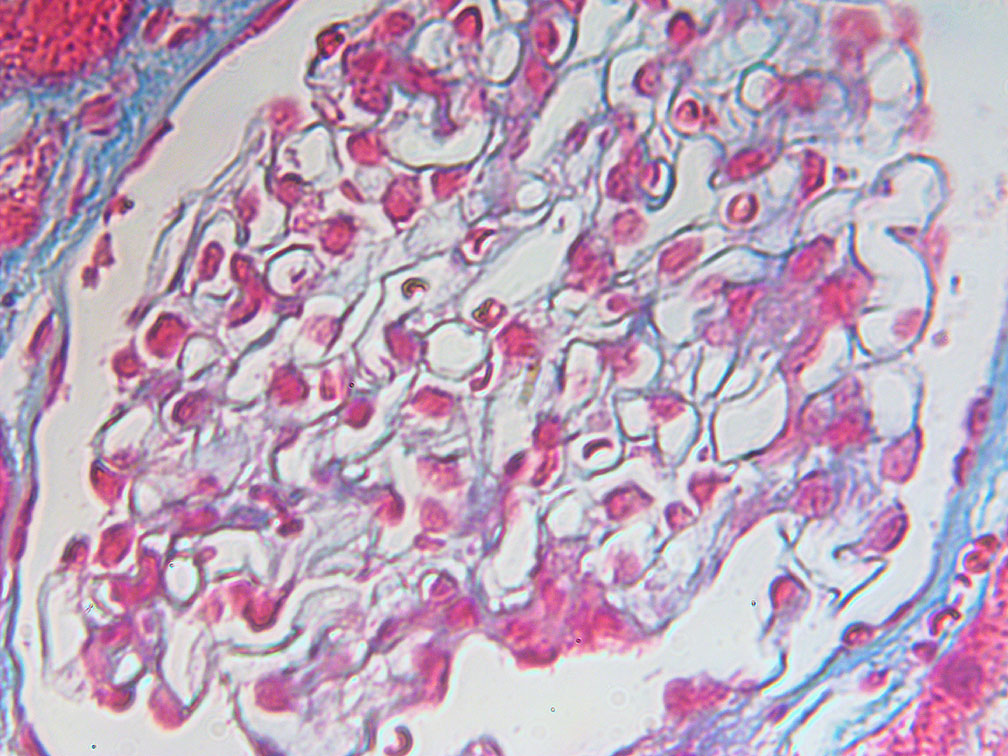 |
| 1/8IN ORIG. CAN | 96 | 0.9 | 130o | 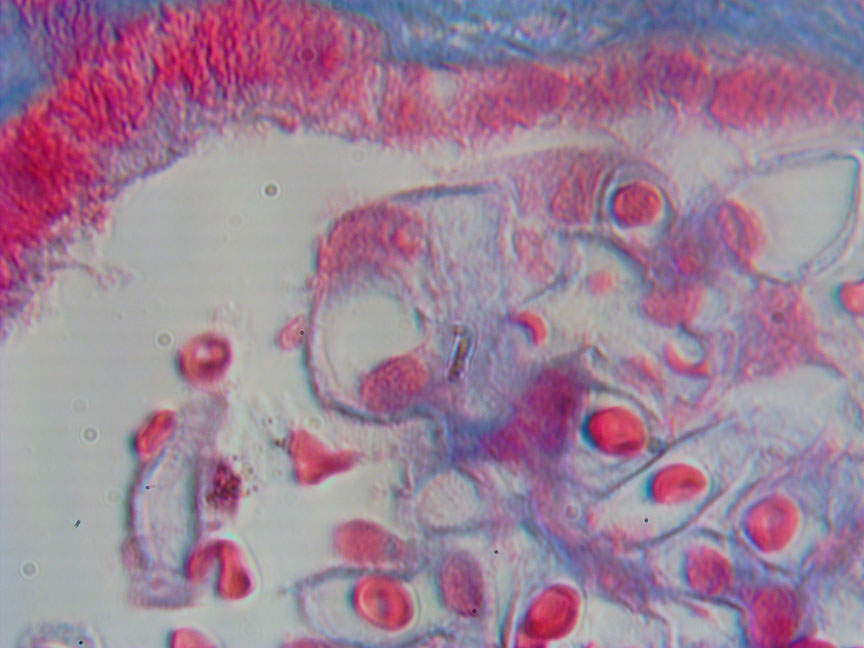 Trichrome stain, human kidney A high power dry objective with correction collar. |
| 1/12 IN ORIG. CAN |
120 | 1.40 |
137o | This objective and its can are both engraved with a n.a. of 1.40, the objective is serial numbered No98. This objective was noted to be Newin the December 1894 P & L catalog of Apochromatic Objectives, hence this example must date to after 1894. |
| 1/16 INCH IN ORIG. CAN |
160* | ? | o | |
| 1/50 INCH OIL IMMERSION IN ORIG. CAN |
500* | 1.38 |
134o | Serial number 1. c.1880 |
empty magnification
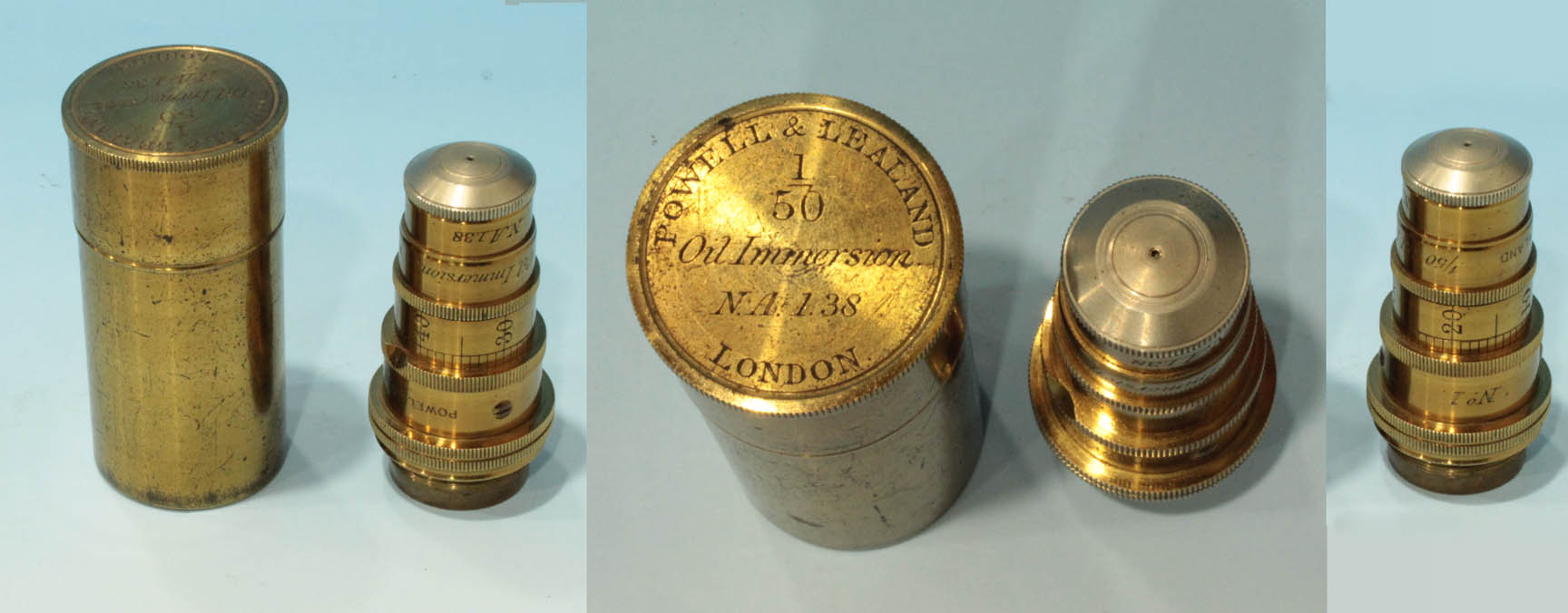
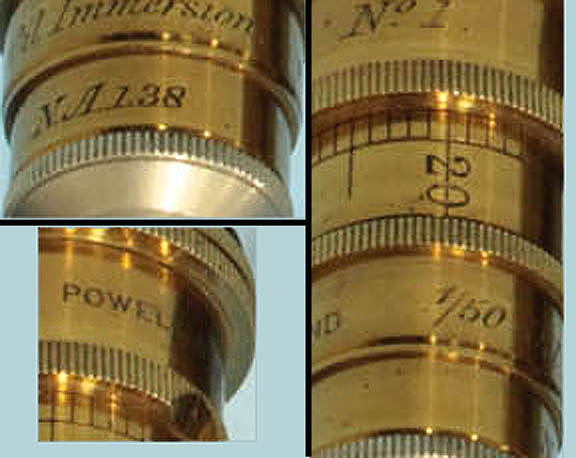 The 1/50 oil immersion objective is signed Powell & Lealand both on its proximal part as well as its distal part. It is also signed with its serial number of
 No 1and its n.a. of 1.38. The original can is also signed
Powell & Lealand, 1/50, Oil Immersion, N.A. 1.38, London. Unlike the other objectives, the signature on this objective is in block letters rather than script. According to Seville Bradbury this objective was first made in 1880. In the 1893 catalog, the 1/50th oil immersion achromat was priced at 80; in 2022 this would be over 11,426 or around $12,797 US. Its very short focal length would make using it very difficult. This example has severe delamination of its rear elements, making it unusable in any case.
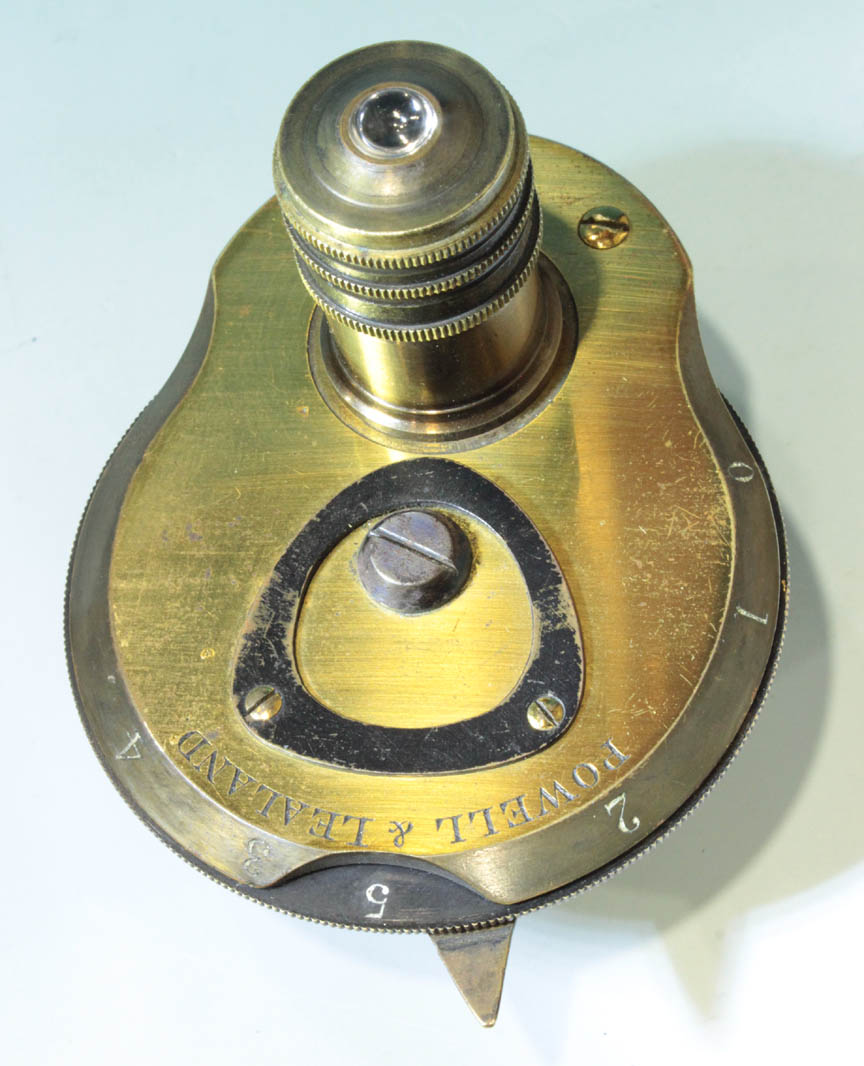
 The microscope includes Powell & Lealand s well known Improved High Power Achromatic Condenser, with a wheel of 11 apertures, and 4 darkground stops, as well as a round stop at the end of rotation that can be used to create variable amounts of oblique lighting. The aperture wheel and stop train are operated by separate arms and pointers, the stops recording positions from 0 to 4 on a dial. The different size apertures are indicated by numbers shown on the front of the condenser. The condenser can be used for high power with its top element on, or with the top element removed, as a moderate power condenser for objectives with focal lengths as long as one inch. This example has a reported angular aperture of 170o, and an n.a. of 0.99. It was NOT designed for use with oil immersion objectives, which did not exist when it was first designed. This type of condenser was quite popular and larger examples which fit the two inch substage of i.e. some Ross Microscopes, were also made by Powell & Lealand.
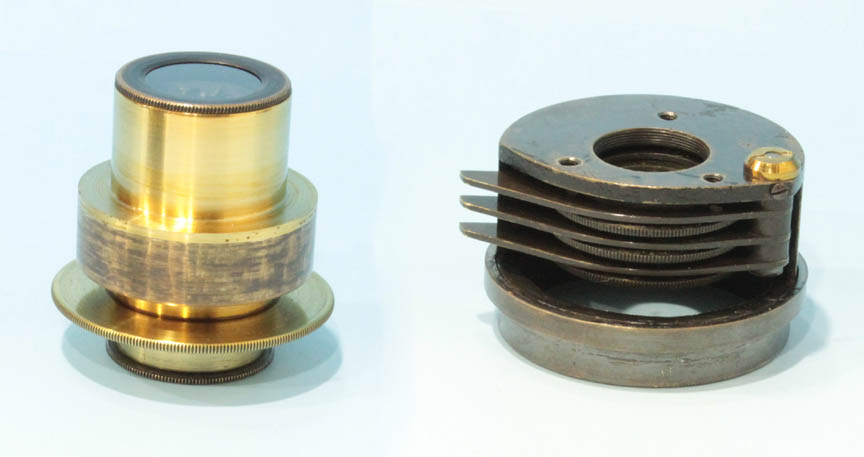
P|N, indicating its primary axis, and each is further labeled with its waveplate retardation:
1/4,
3/4or
9/4wavelengths, respectively. Each selenite may be rotated individually via a knurled edge on each of the three housings. The selenite housing is threaded on top to accept the Powell & Lealand the Apochromatic High Power Condenser optics or the Powell & Lealand achromatic Condenser Optics.
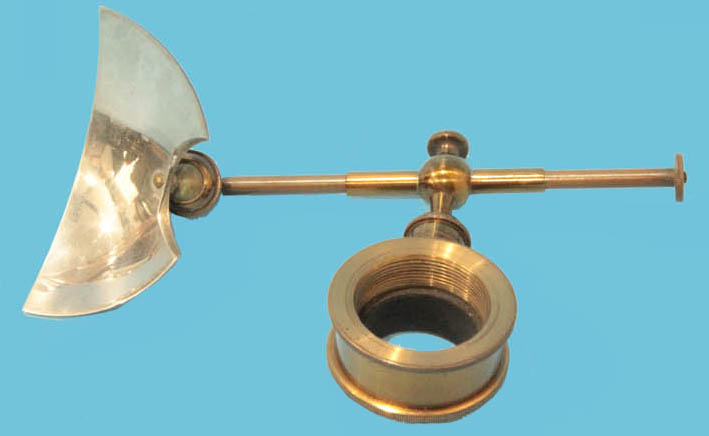 nosepiece-mounted side reflector, although unsigned, is the type sold by Swift.
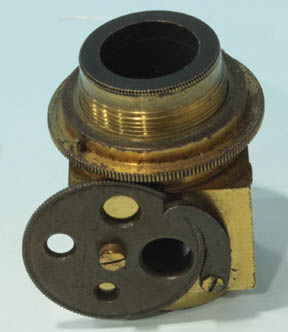
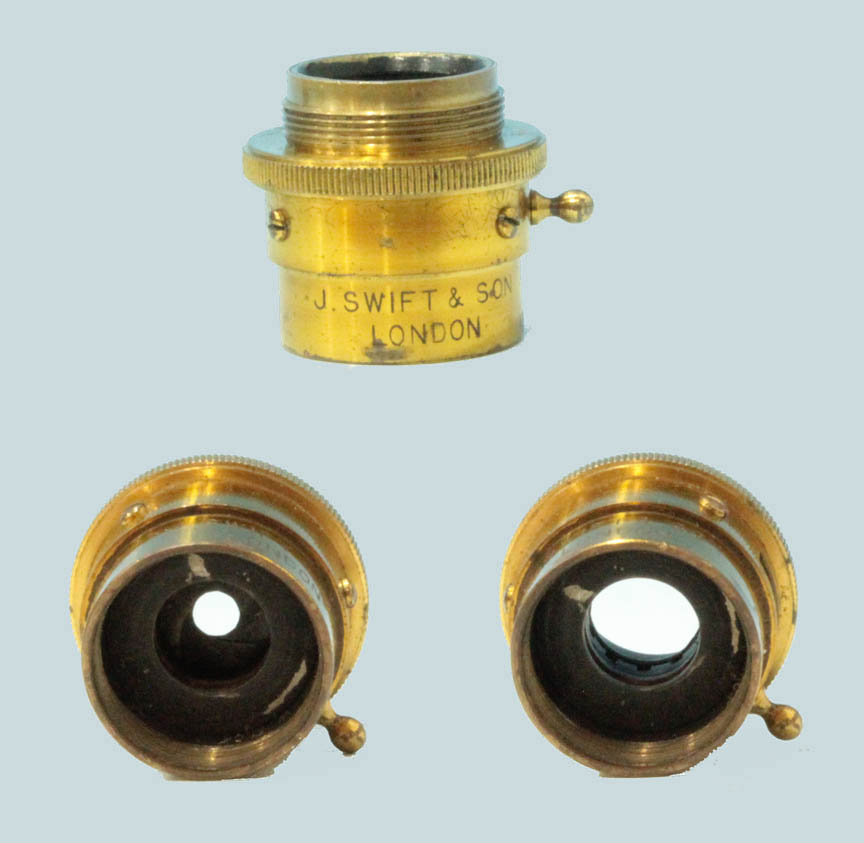
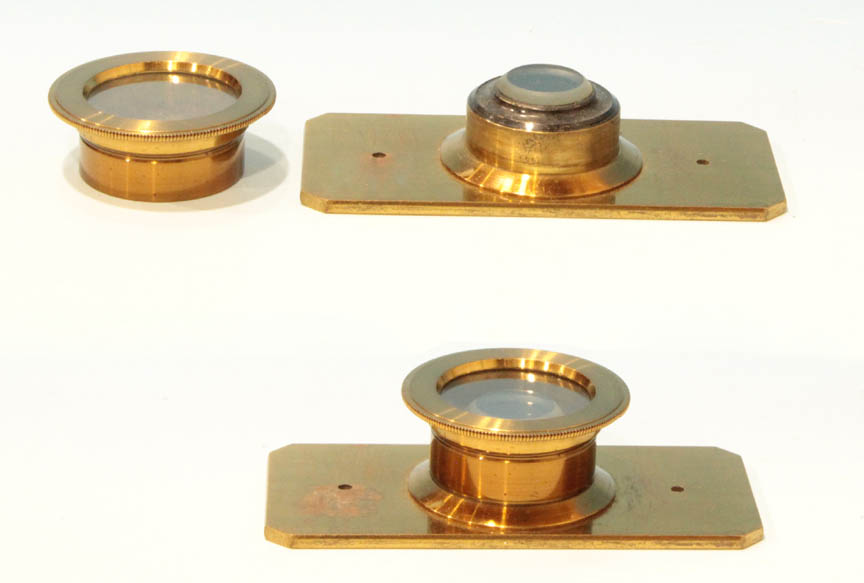 Another accessory is the Varley-type live box. This device provides a glass tablet upon which small microscopic lifeforms, e.g. in pondwater, may be viewed, covered with a cap which includes a glass cover. The Varley type of live box has a channel around the tablet which provides a reservoir of liquid which, by capillary action, can keep the subject moist.
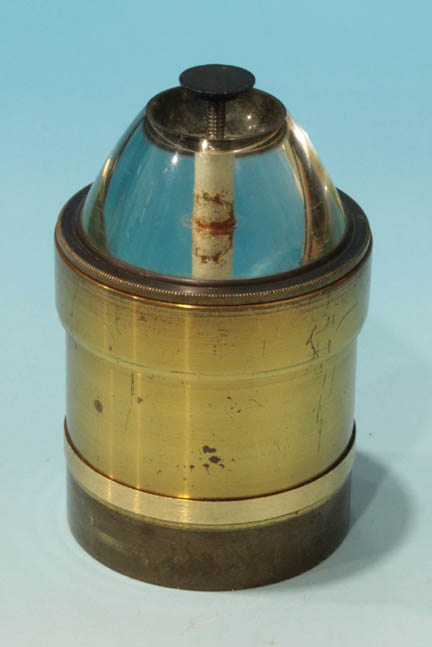
 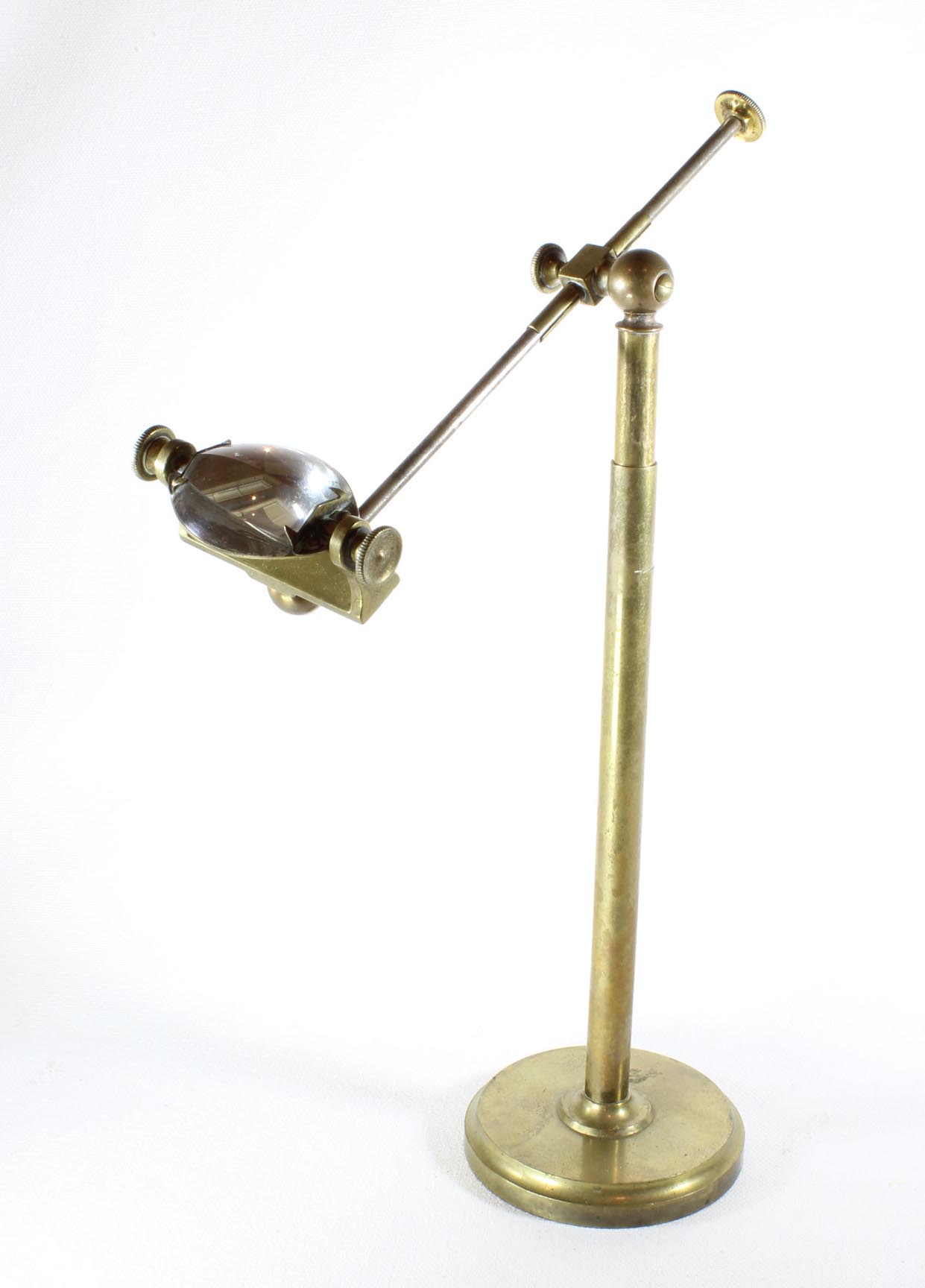 Amici Prism Lenticular illuminator on stand for substage oblique illumination.
 NEW. In both the 1893 and 1895 catalogs, the N.A. of the 1/50 is listed as 1.33, slightly lower than the 1.38 listed on the 1/50 oil objective seen on this page, and serial numbered 1. According to Seville Bradbury, the oil immersion 1/50 was first made in 1880, but so far, I have found no other reference that dates it, and it is apparently not mentioned in the JRMS.
magnificationthat do not have higher n.a.'s, will not provide any useful improvement in resolution over lower powered but equal n.a. objectives, and this may be the reason for the lack of discussion in the literature of these objectives such as the very rare 1/50th oil immersion achromatic objective mentioned above.