
| DESCRIPTION | HISTORY OF THE STEWARD FOLDING POCKET MICROSCOPES |
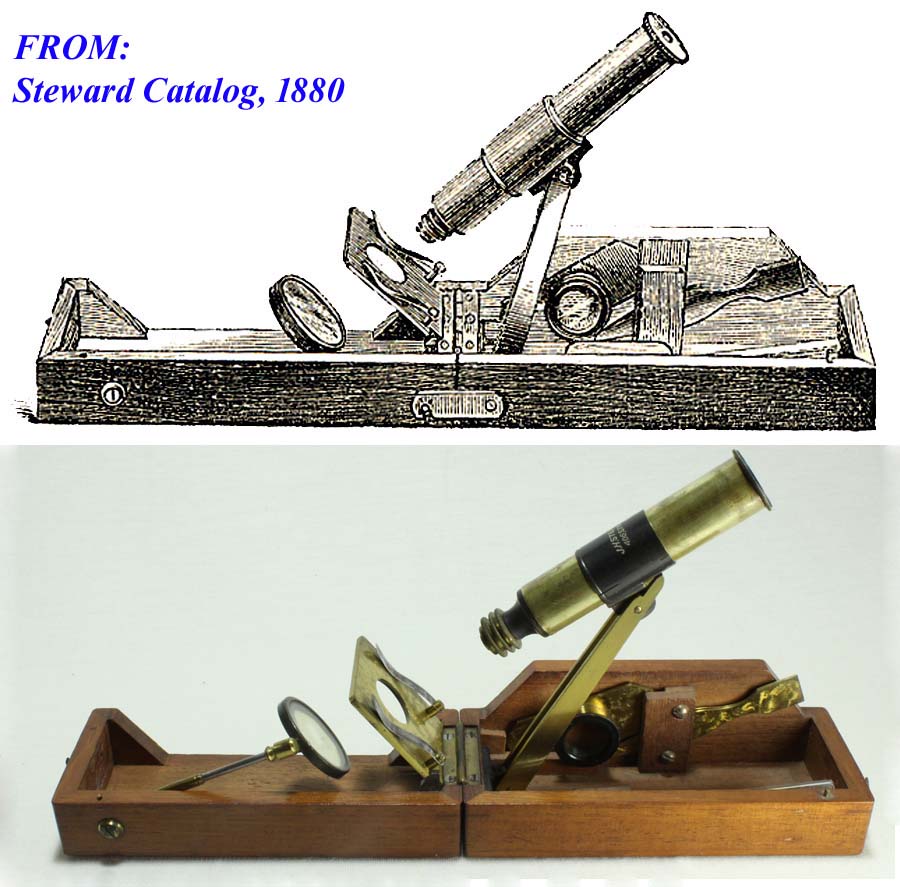
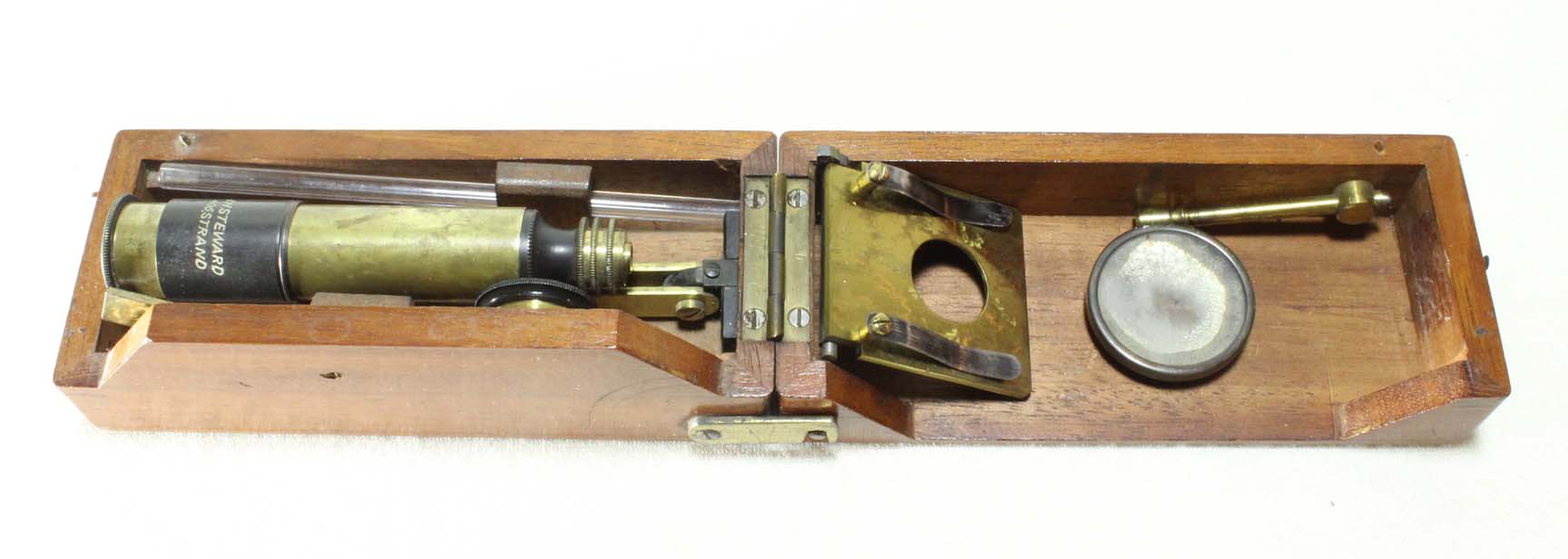
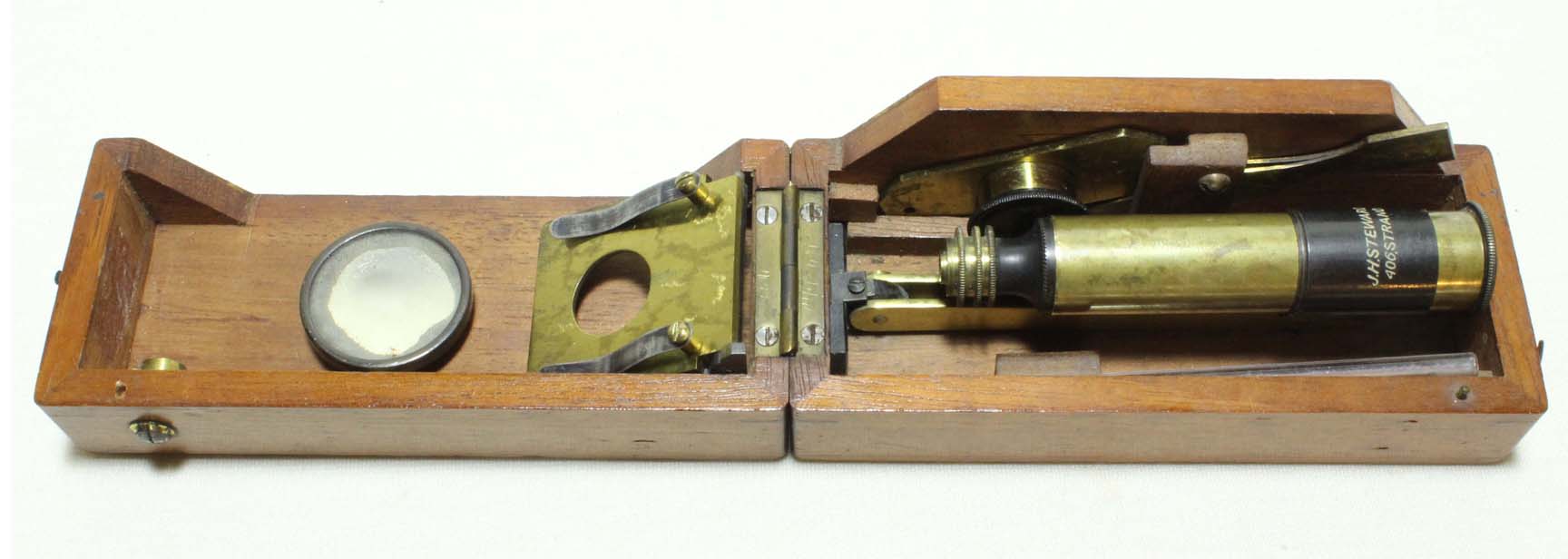
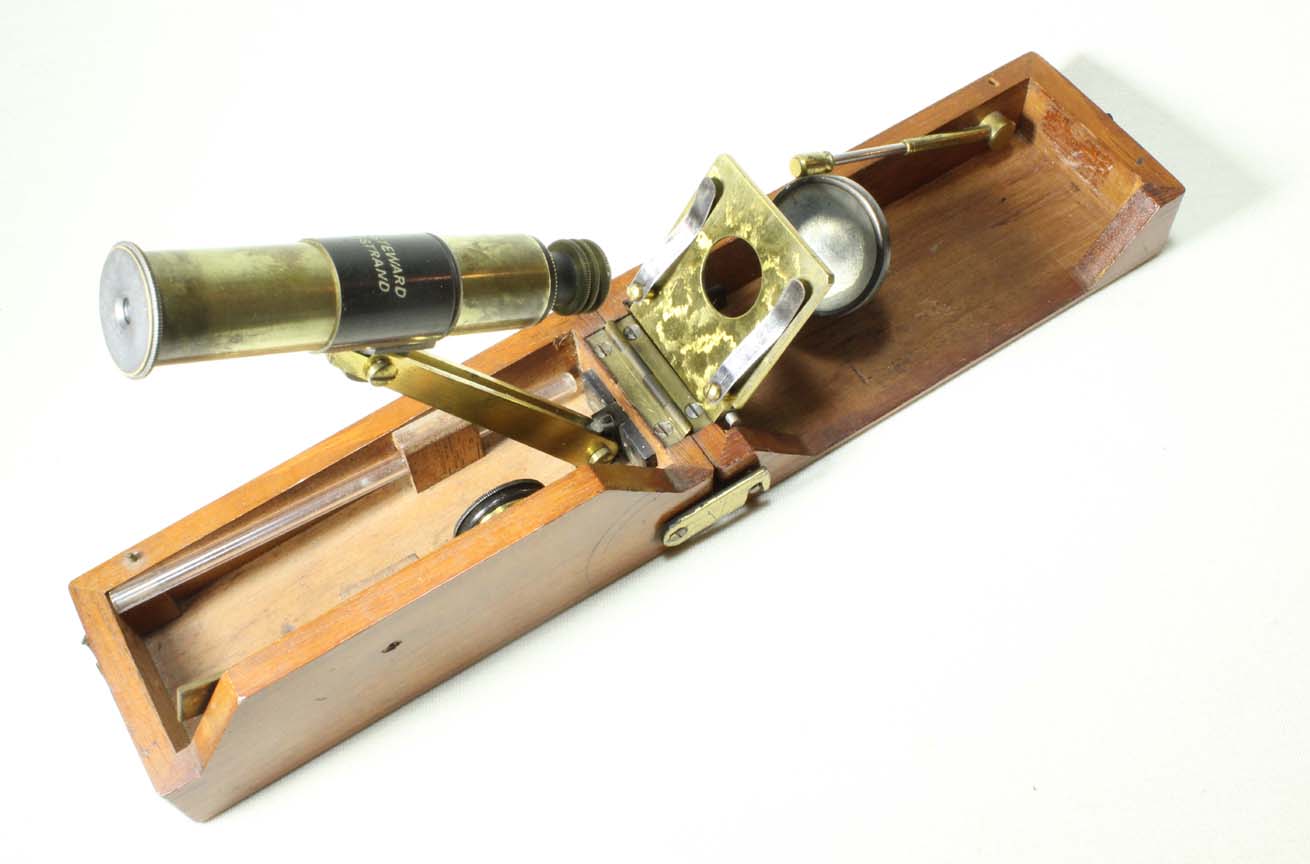
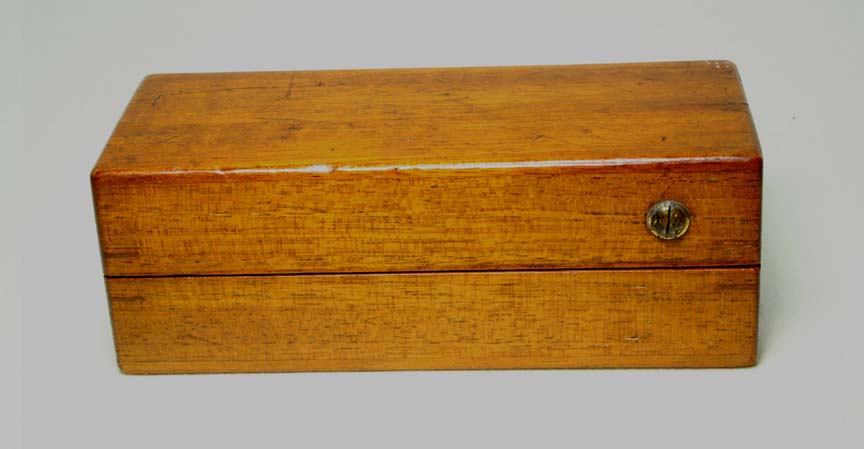
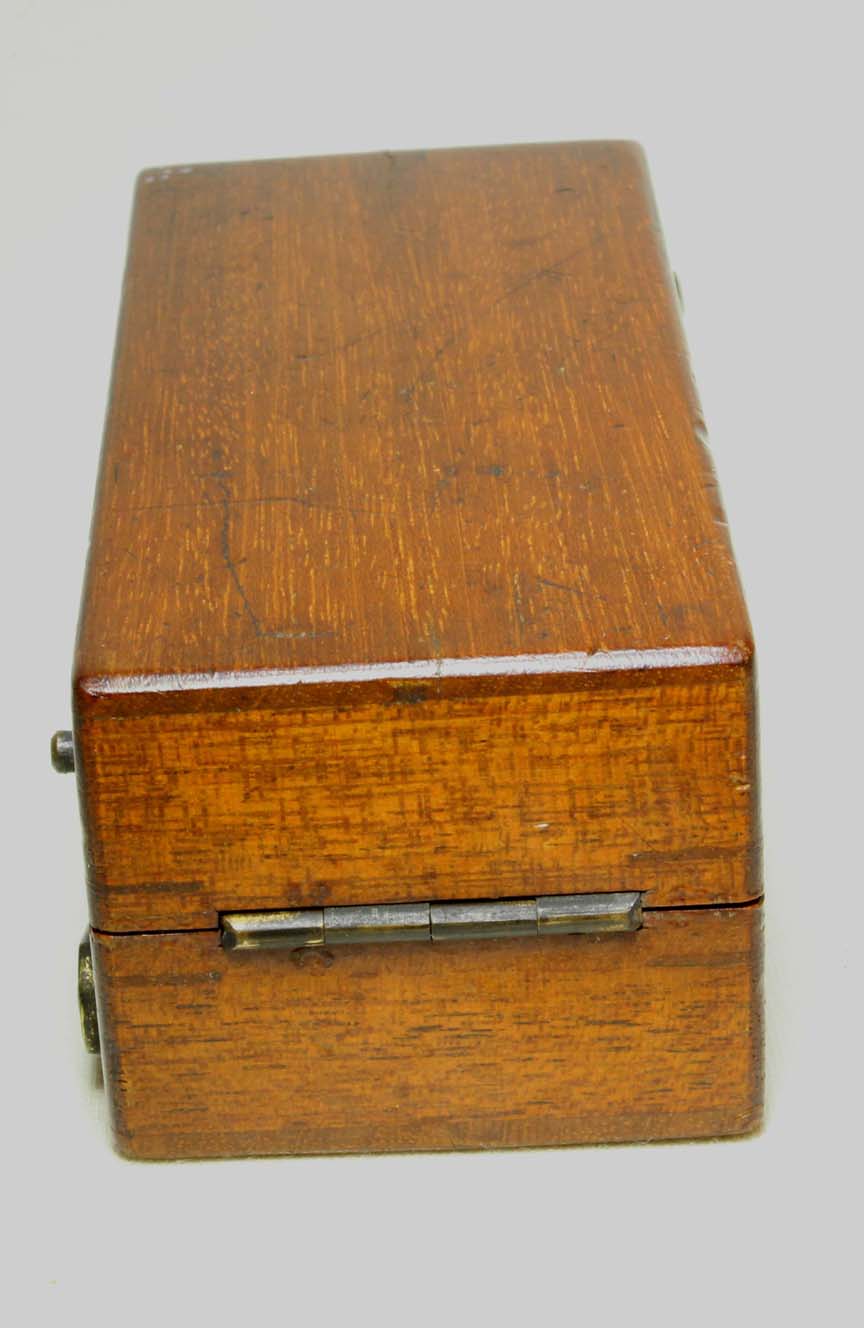
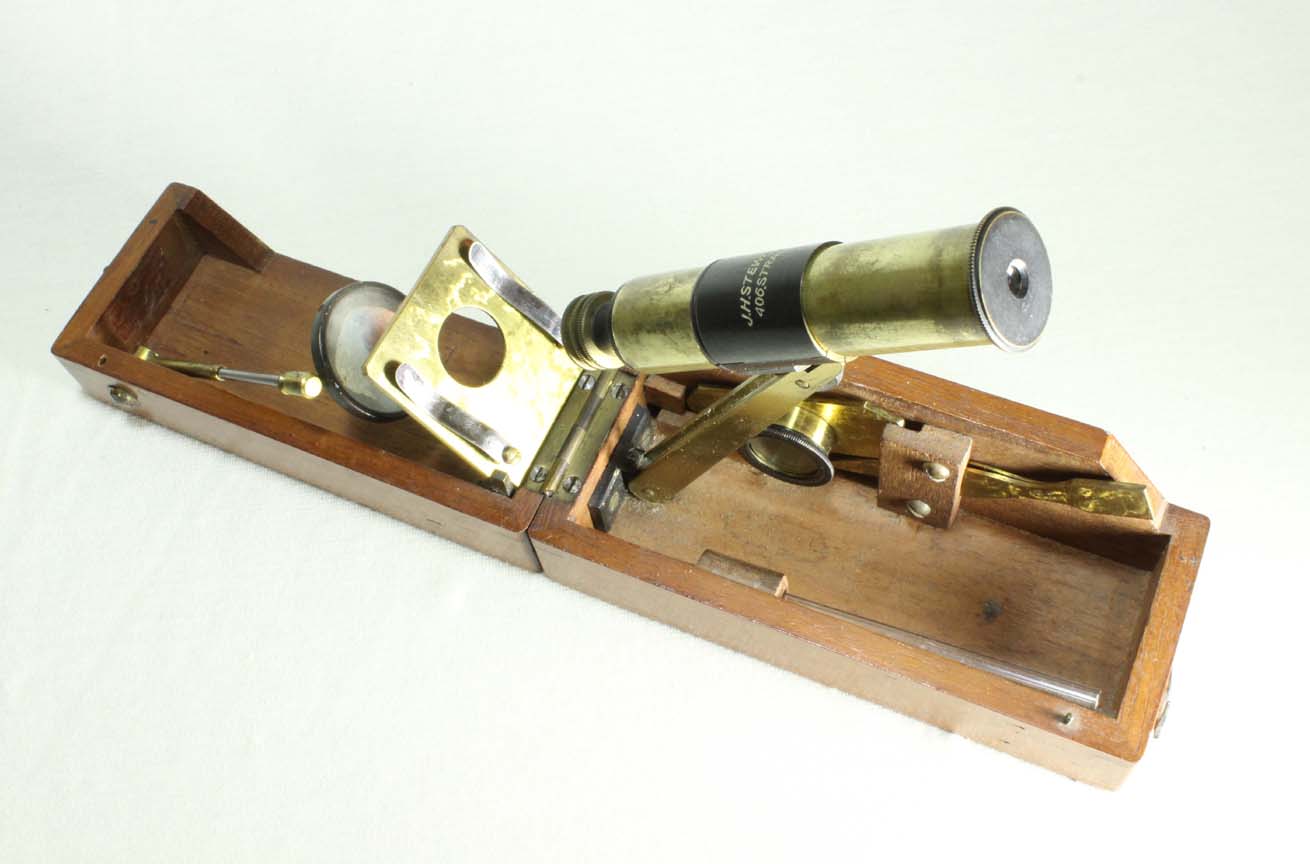
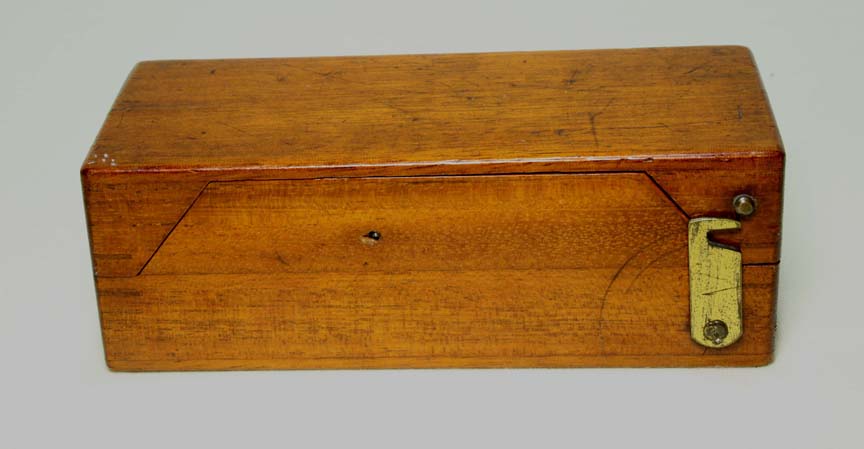
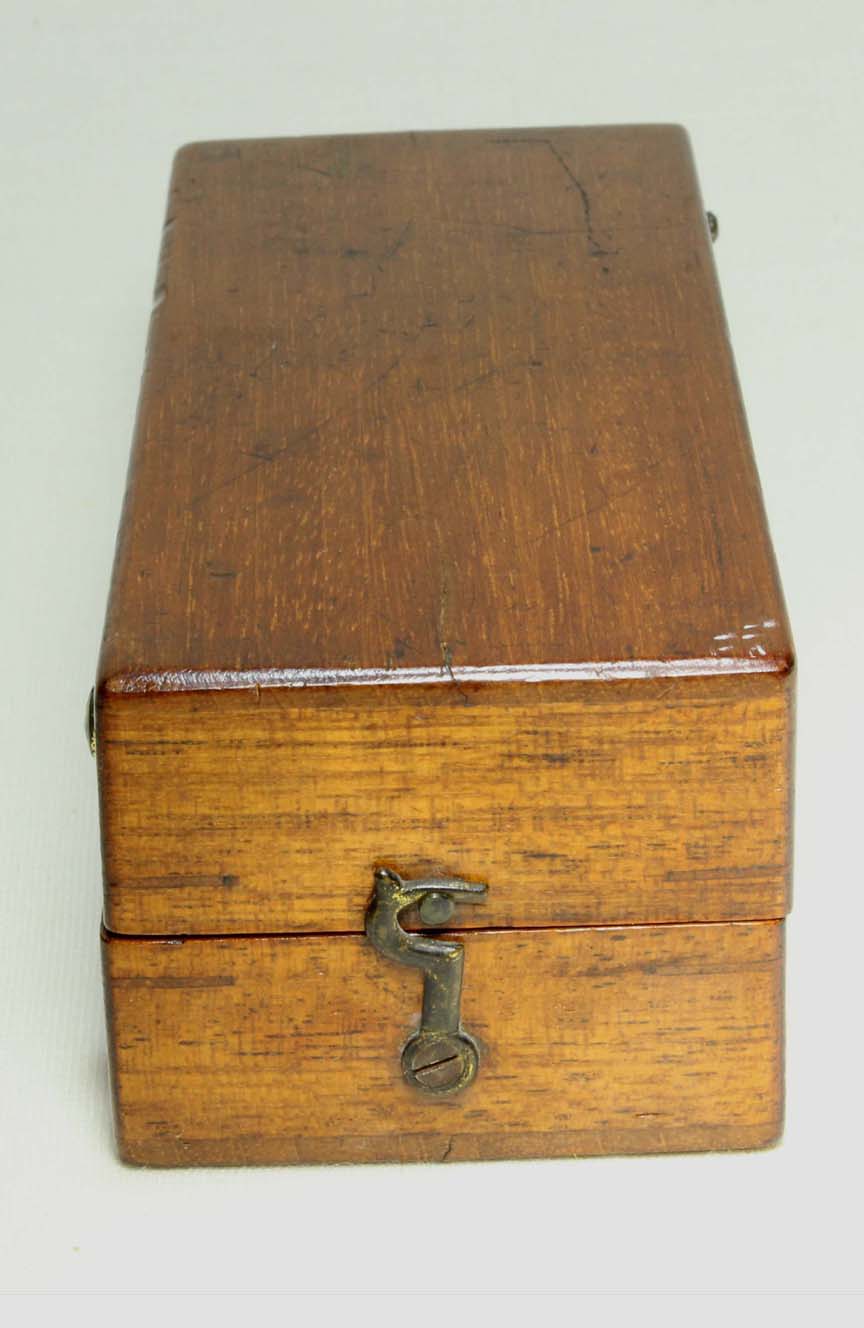
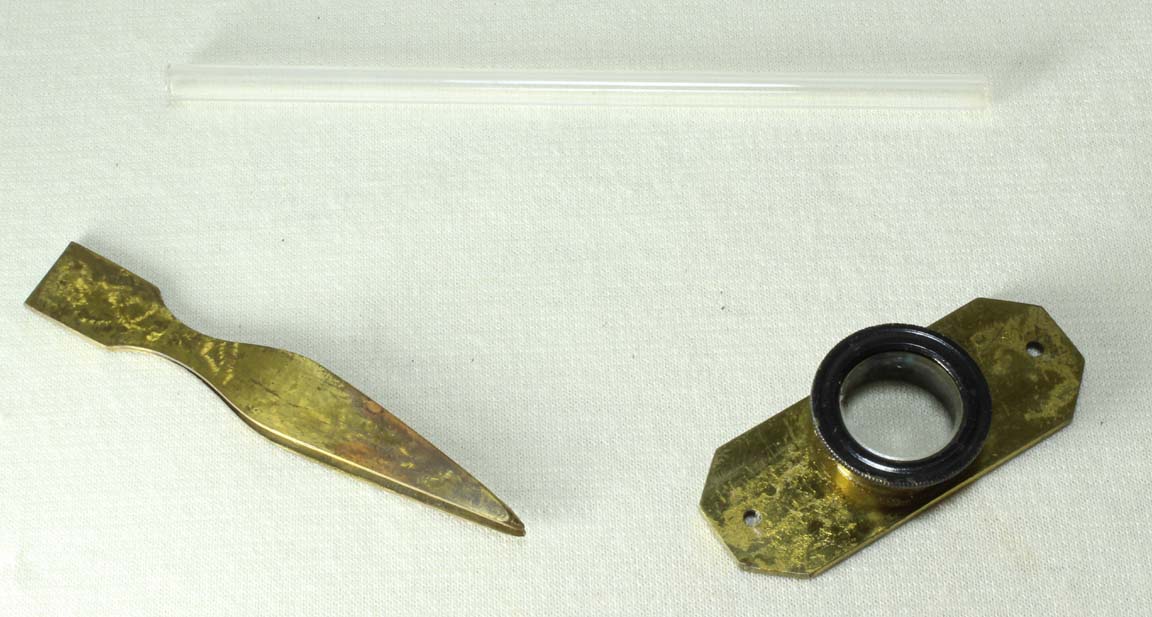 Signed 'J.H. STEWARD, 406 STRAND', this microscope is entirely contained in, and permanently attached to, the inside of mahogany case measuring 4 3/4 by 2 by 1 1/2 inches when closed. A catch on the end holds it closed. It is about twice the length when open. Upon opening, the body of the microscope is manually erected from its storage position, supported by two plates of brass which are hinged at the bottom and also to the sleeve carrying the body tube. This process is guided by built-in stops that ensure the correct position both of the brass plates and the sleeve. There is a single ocular and a three component divisible objective. The ocular has two optical parts, one of which is integrated into the inner ocular tube. The top part screws into the tube. The stage swivels up on a hinge and is limited at about 45 degrees. There are two spring-steel stage clips. A single sided concave mirror is supported on one side by a short brass rod which attaches to a polished steel rod which telescopes from inside an outer brass rod. This outer brass rod is attached at its bottom to the side of the case, held in place by a screw on which it swivels up or down. Accessories include a thin glass dipping tube, tiny brass live box, and small tweezers, all fitting into purpose-made compartments in the case. When in the open position, a brass catch holds to the two halves fully open.
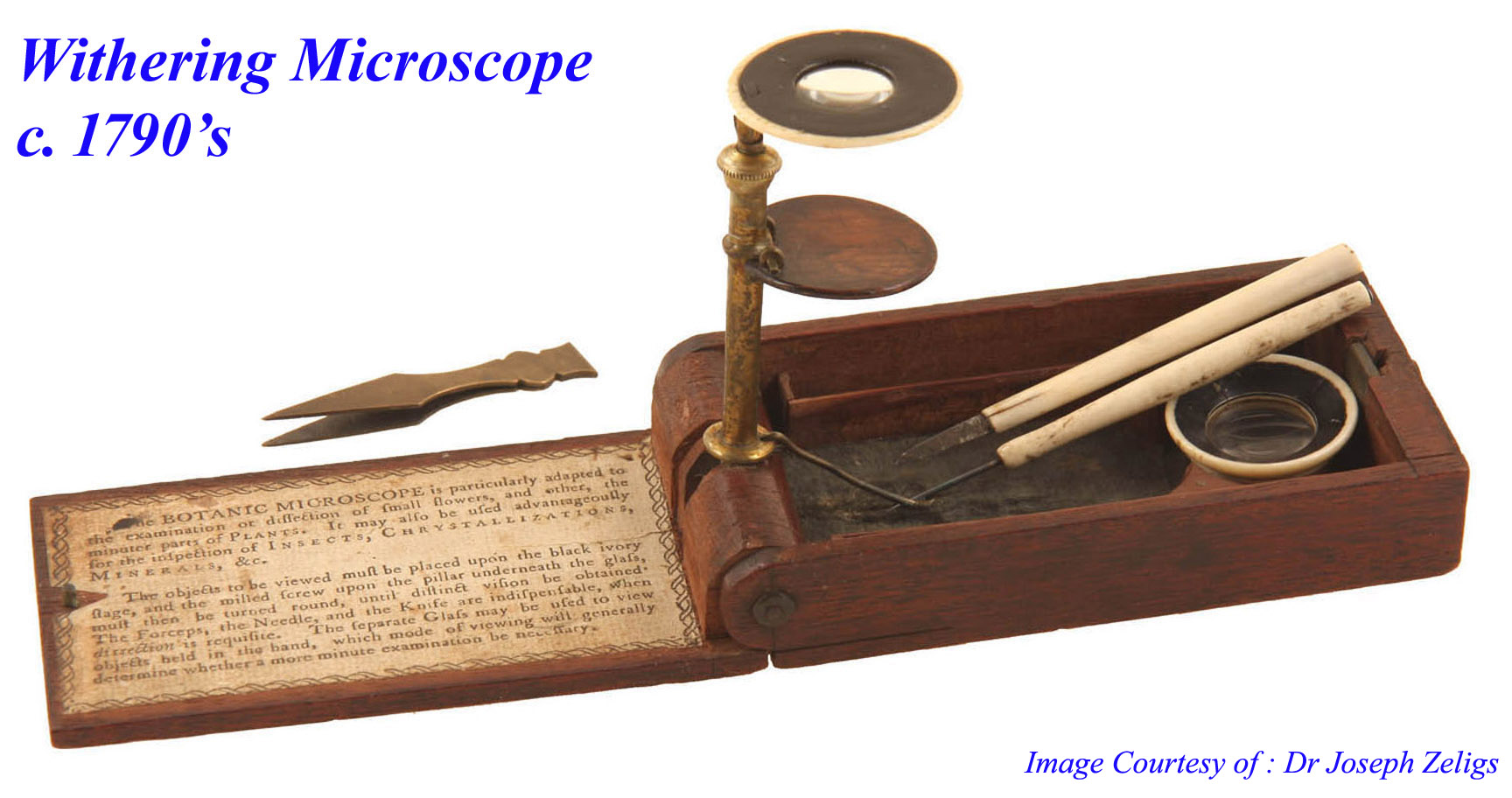 The idea of a pocket microscope is one that went on for hundreds of years with innumerable examples being produced. Relative few models which were permanently integrated into their wooden case were produced though. Perhaps the best known of these was the Folding Withering Botanical Microscope, a form which automatically erects itself into the operating position as the case is opened.
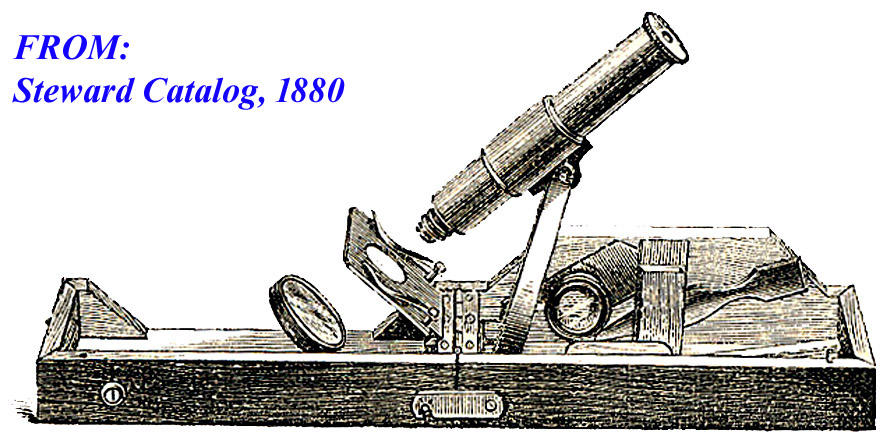 As can be seen from the 1880 catalog entry, the instrument shown here was at first called the 'New Portable Microscope' and it came equipped with precisely the complement of accessories that are with it now, including one eyepiece, a divisible objective, live box, tweezers, and glass dipping tube in a mahogany case.
 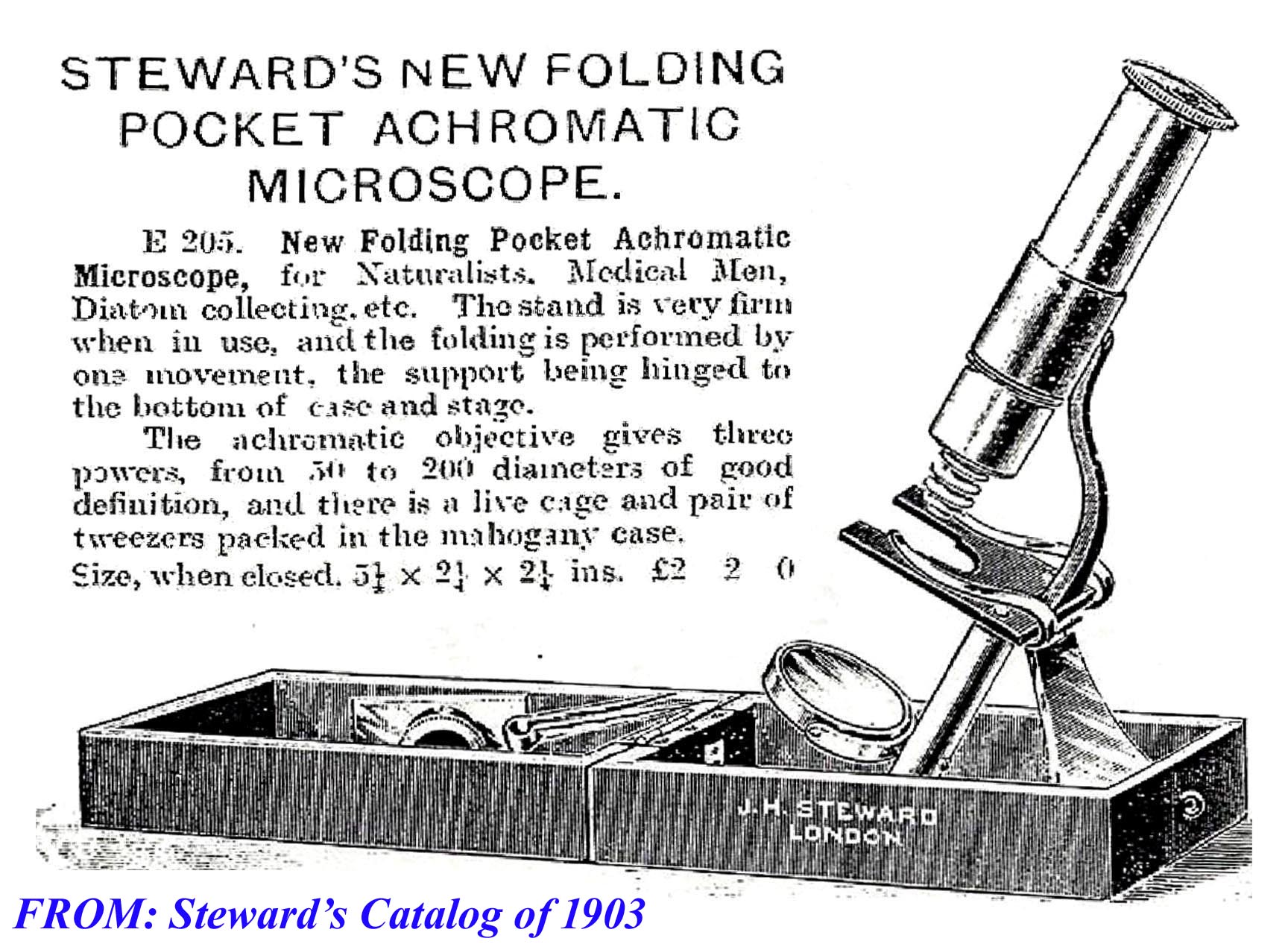 By the 1903 catalog, however, a slightly different design was adapted, and this time it was called 'Steward's Folding Achromatic Microscope.'
 Dixey, Brightonwas offered for sale on Ebay during April 2022. Another (unsigned) example is known that was sold at Christies South Kensington in 1990; that example had a rack and pinion focusing mechanism but was otherwise identical. Curiously, so far at least, I have not been able to locate any example of the newer model shown in Stewart's 1903 catalog.