
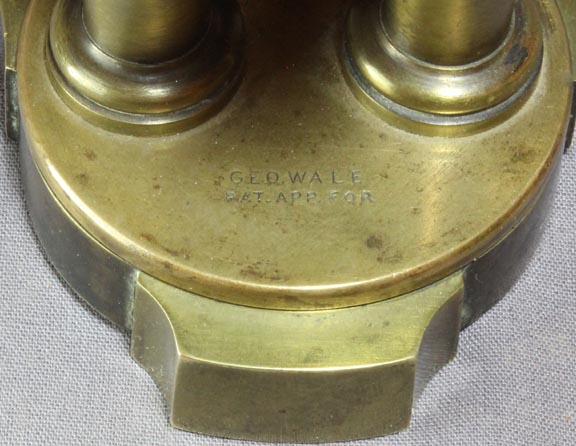
GEO.WALE, PAT.APP.FOR
| DESCRIPTION | HISTORY | RESTORATION |
Please Click On Any Picture for a Larger Version
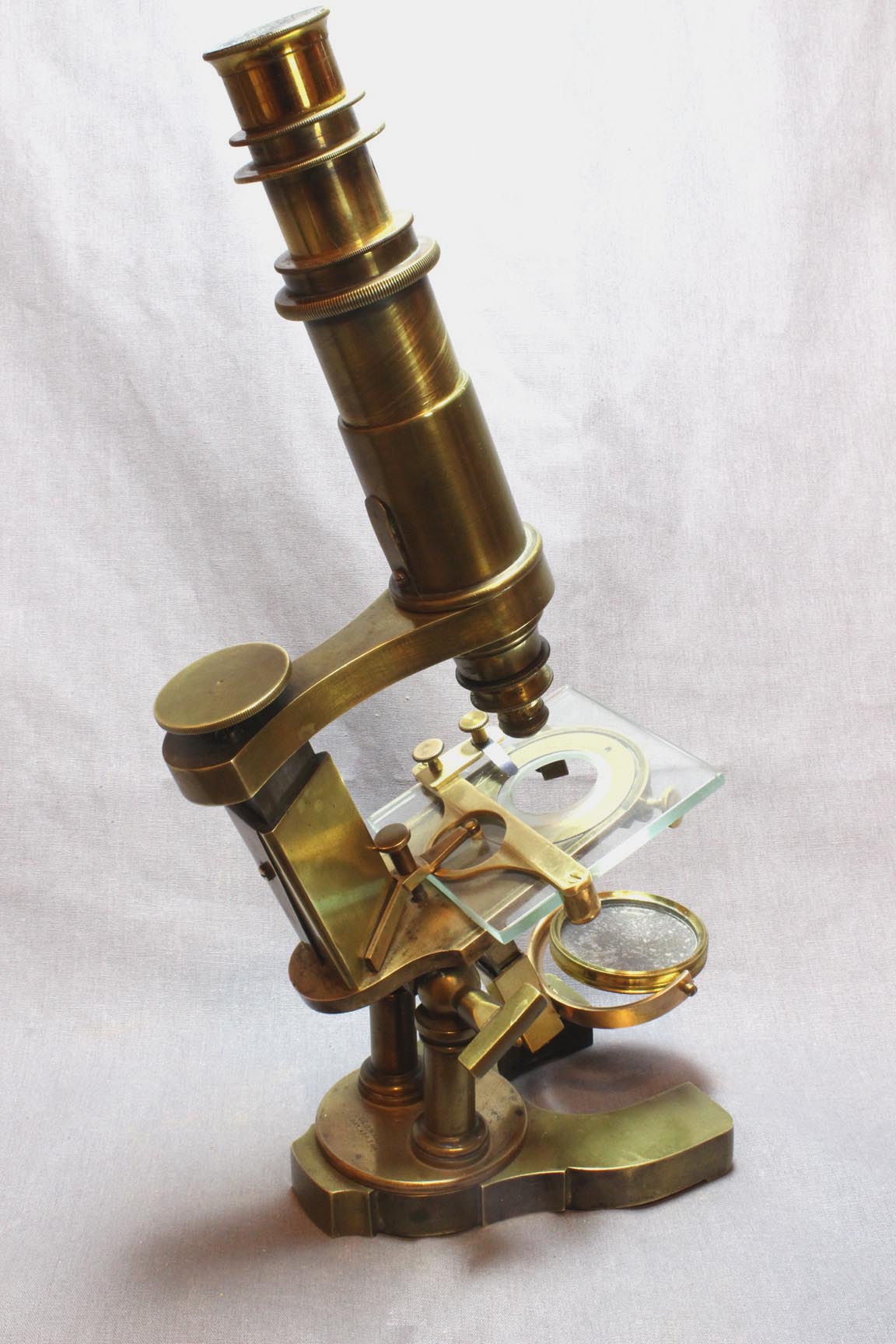
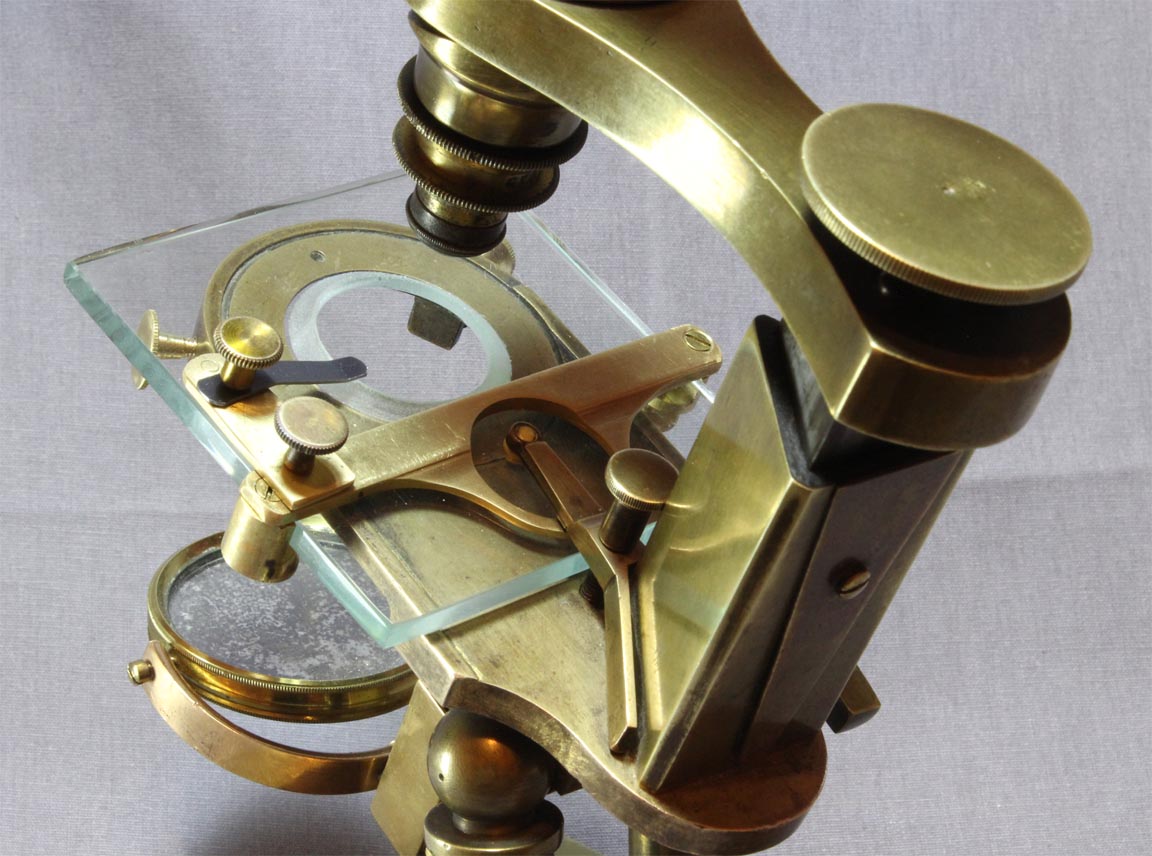
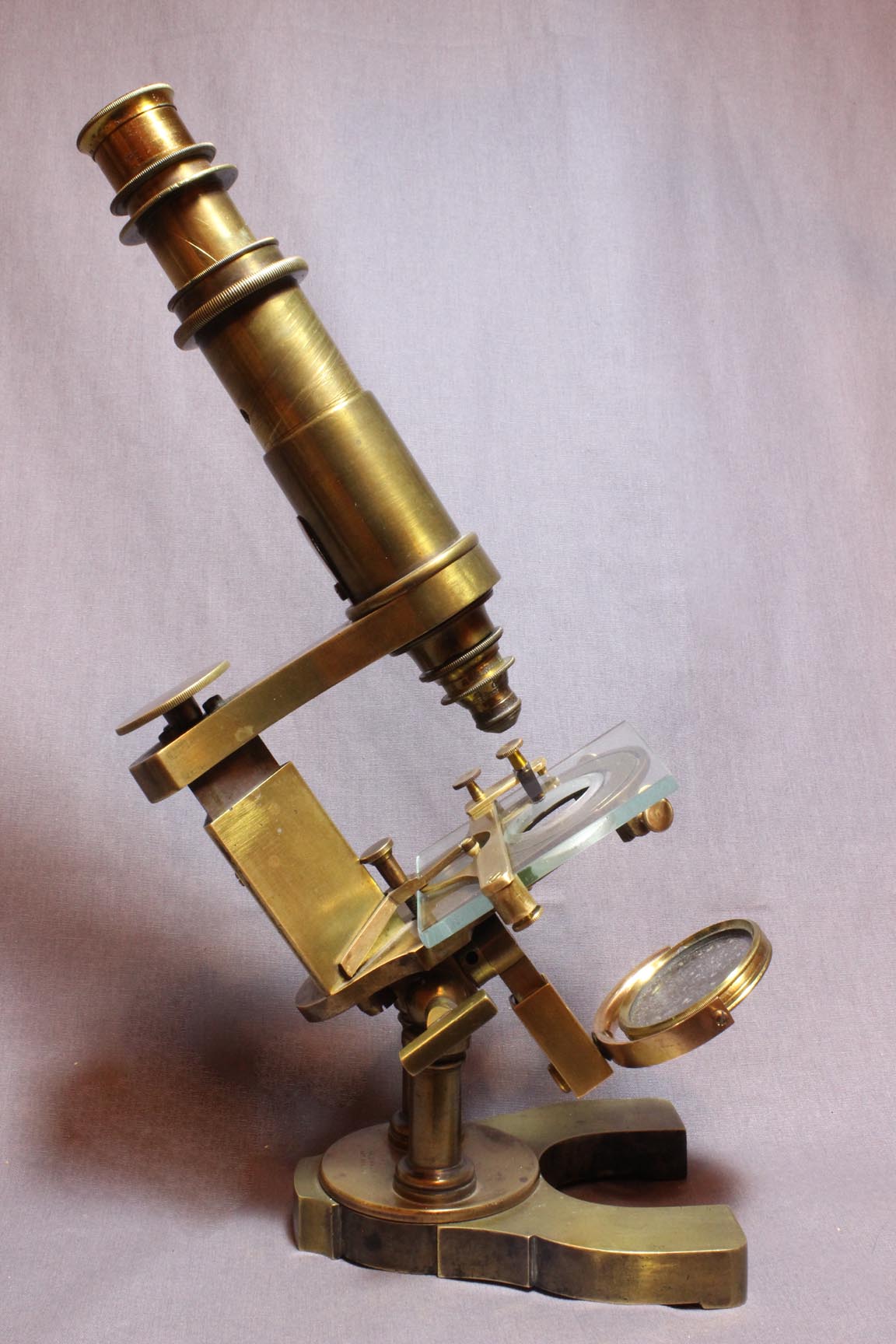

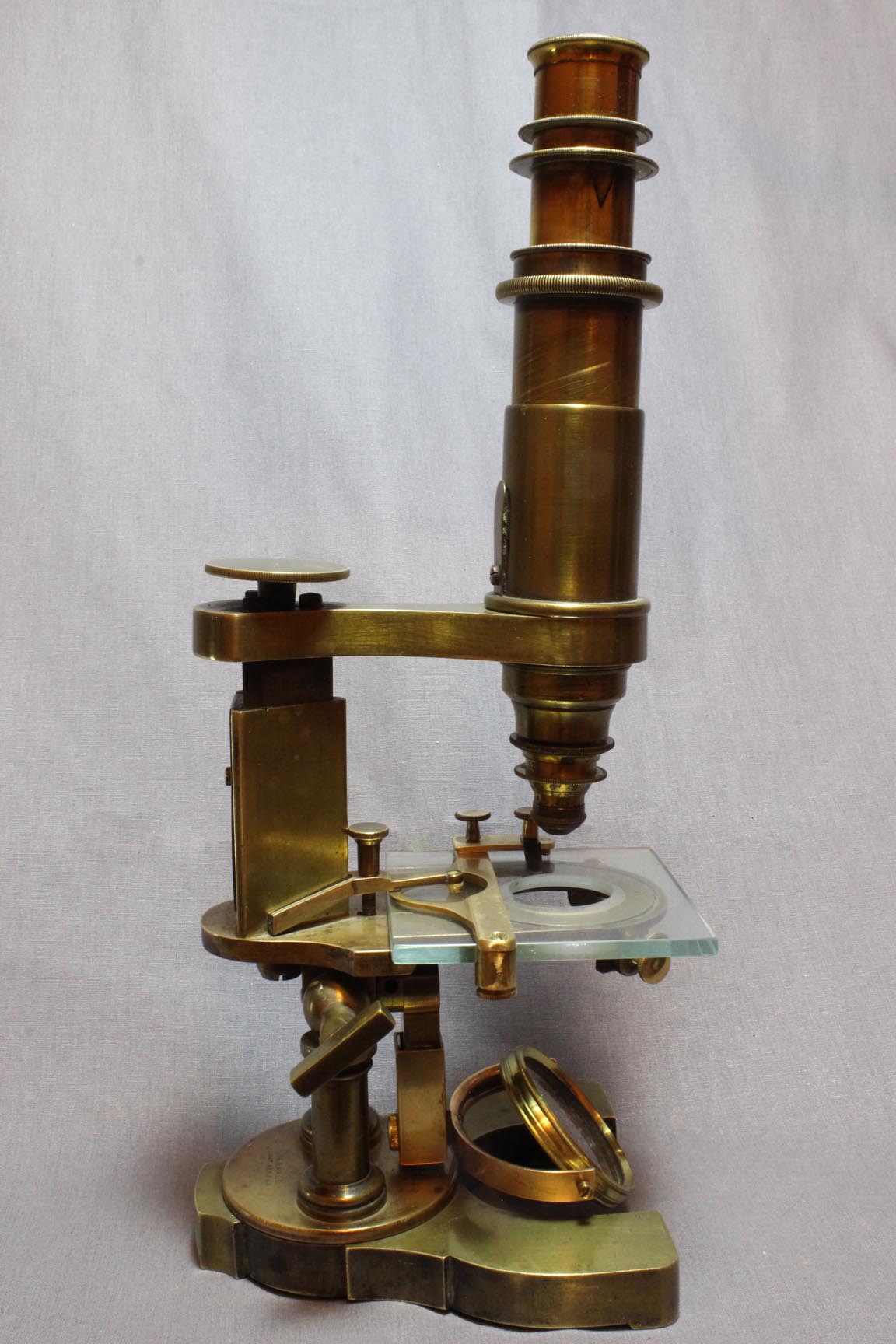
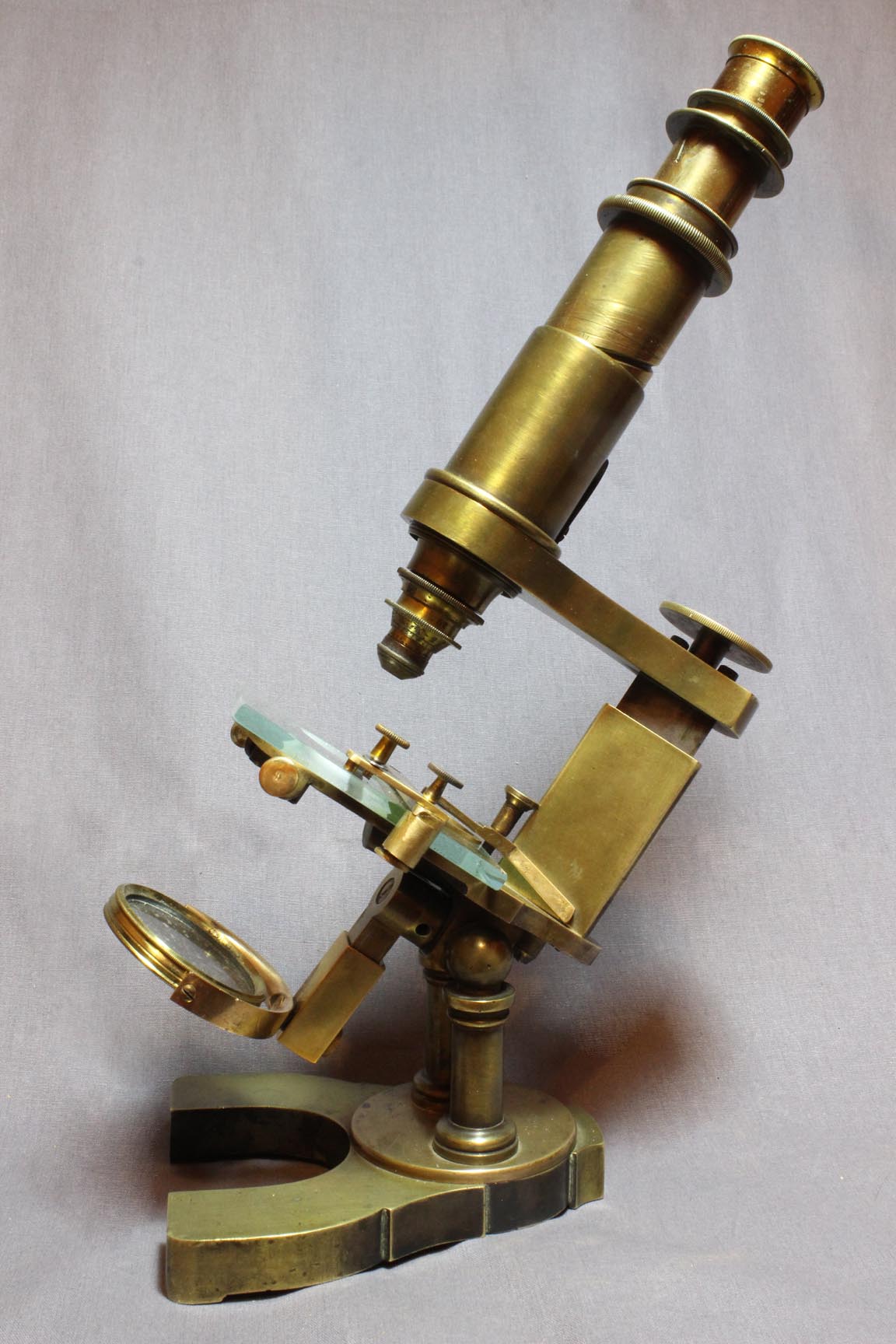
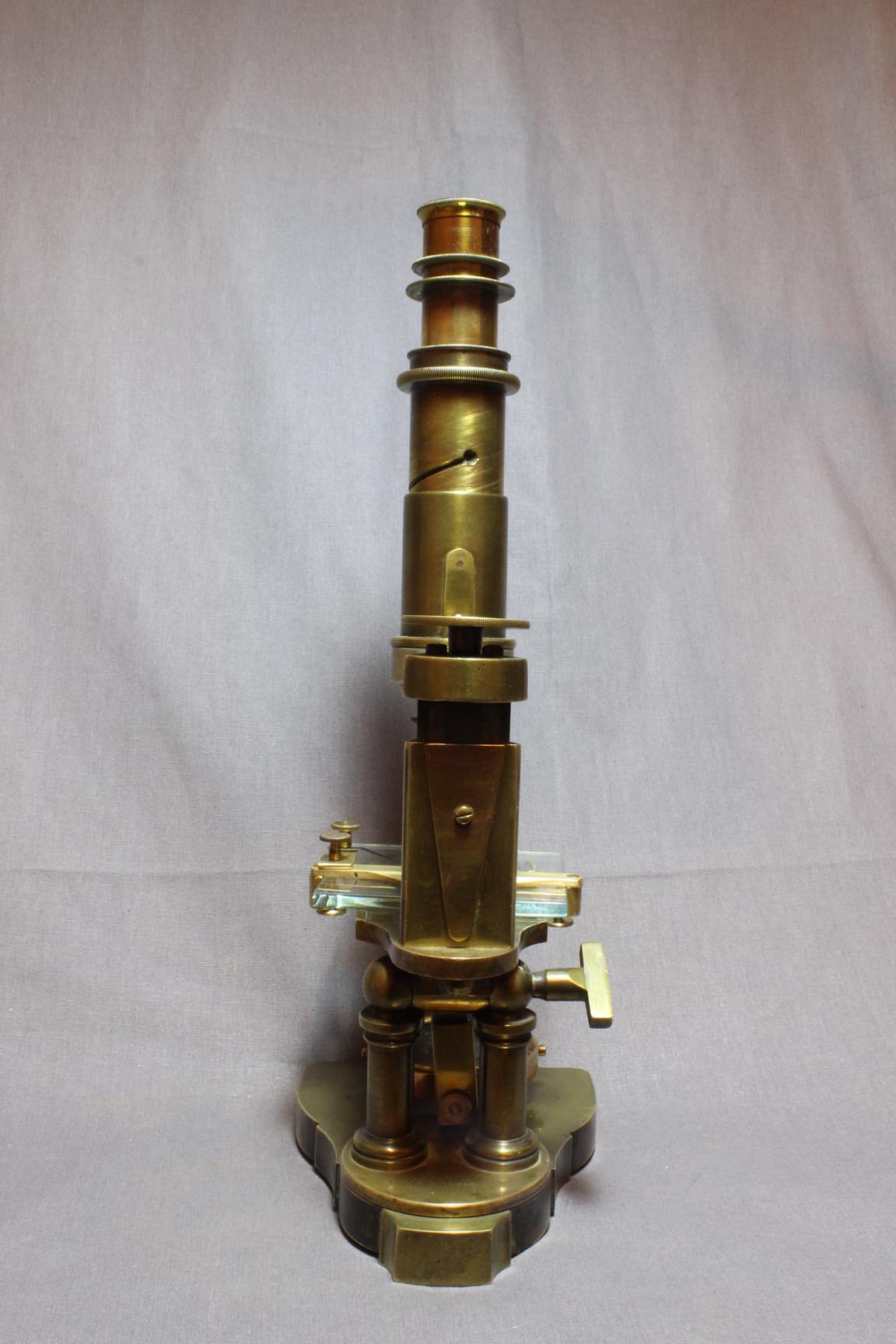
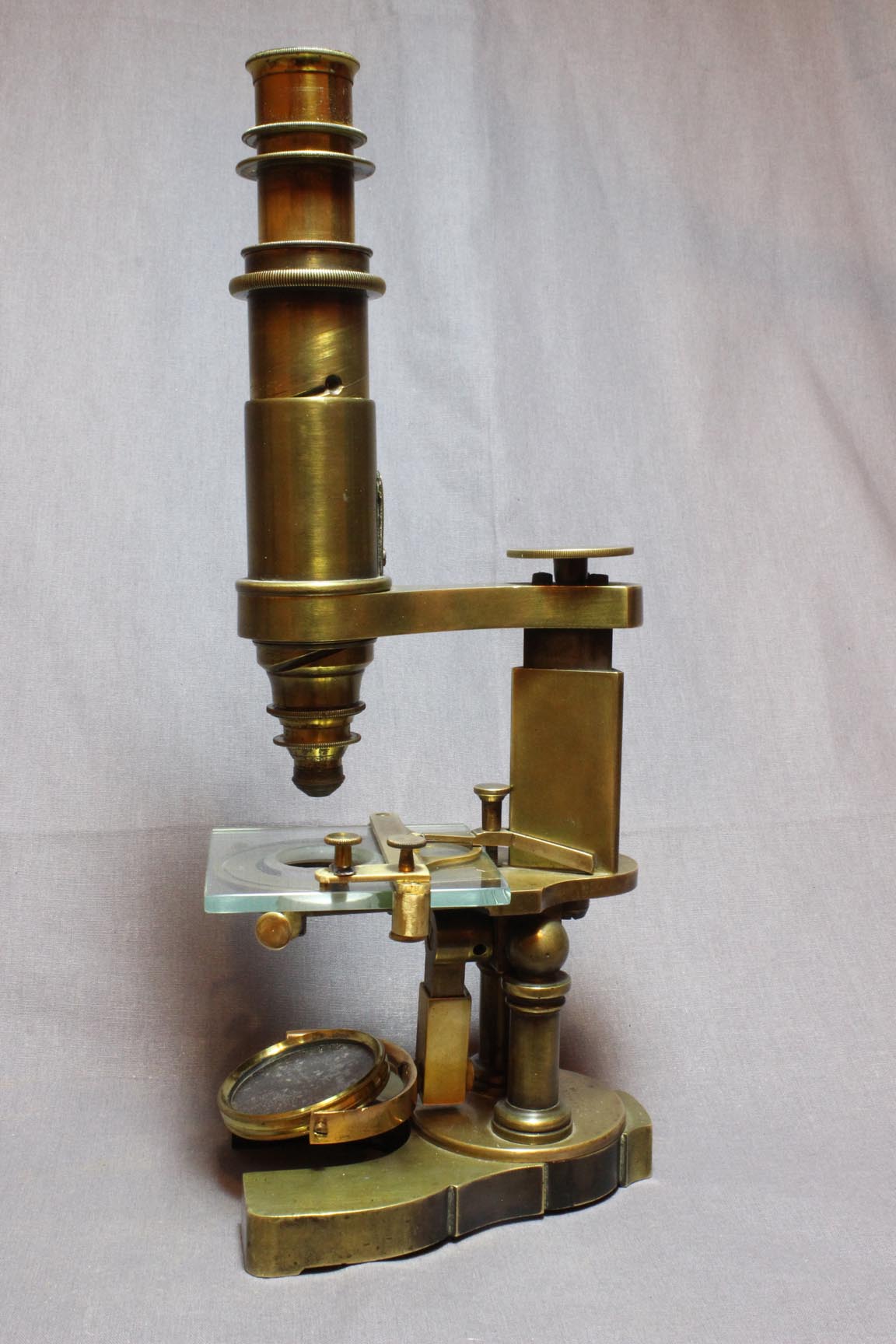
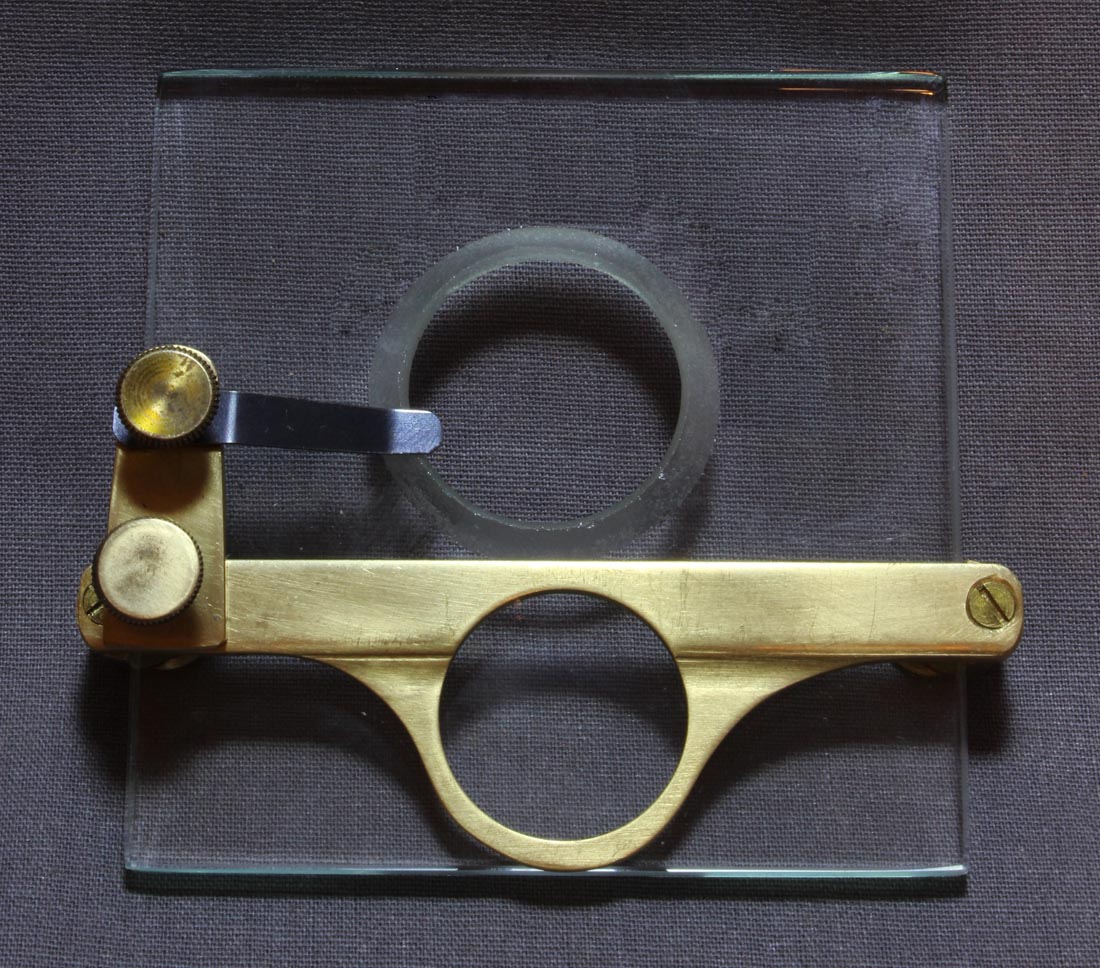
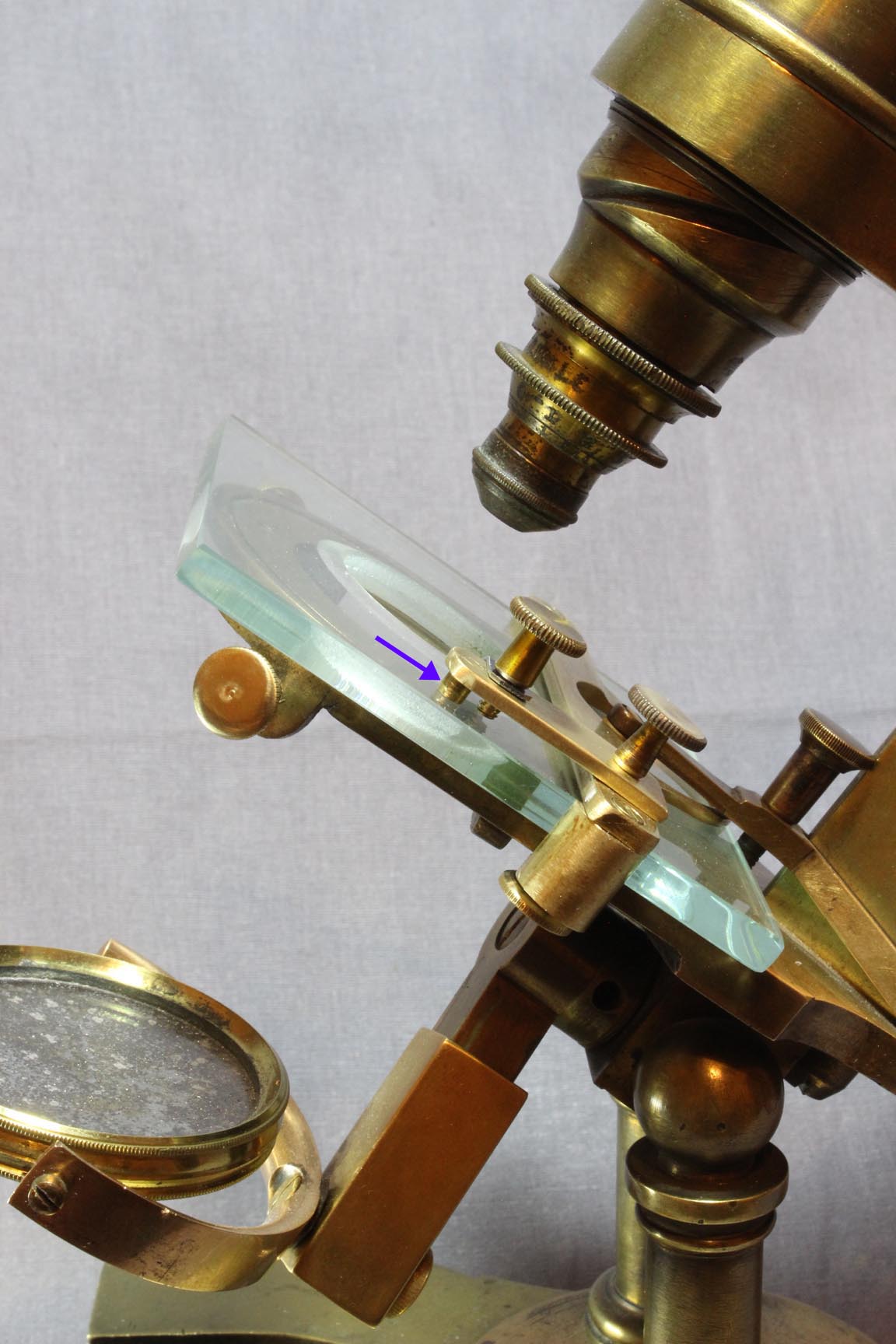 The microscope pictured here has a gliding stage, the type invented by Joseph Zentmayer but this one is made mainly of glass with a brass fitting held on to the glass by knobs on each side. This fitting has a cutout circular ring. The tip of a pressure fitting rides in this cutout, holding the glass plate in place; this fitting has adjustable
pressure. The slide rest on top of the glass has an unusual L-shaped fitting for holding the stage clip from the side. The piece of metal holding the clip has a small support rod (blue arrow) at its distal end which supports that end on the stage. Wale used this stage, or a similar one, on many of his microscopes. The gliding glass stage was very popular with physicians because it allows free movement of the slide in a controlled manner, yet allows
it to remain whereever moved without slipping even when the microscope is inclined. This type of stage was
supplied with Zentmayer's early 'Grand American' microscopes.
Zentmayer's was mainly made of brass and rode on two brass rails; the
glass version, seen here, and also on other maker's scopes, rests on a
rail which circles the entire stage. Bausch and lomb used a
modification of this design and it is also seen on the Beck
'Pathological' stand, as well as the Beck 'Ideal' model as an option.
The microscope pictured here has a gliding stage, the type invented by Joseph Zentmayer but this one is made mainly of glass with a brass fitting held on to the glass by knobs on each side. This fitting has a cutout circular ring. The tip of a pressure fitting rides in this cutout, holding the glass plate in place; this fitting has adjustable
pressure. The slide rest on top of the glass has an unusual L-shaped fitting for holding the stage clip from the side. The piece of metal holding the clip has a small support rod (blue arrow) at its distal end which supports that end on the stage. Wale used this stage, or a similar one, on many of his microscopes. The gliding glass stage was very popular with physicians because it allows free movement of the slide in a controlled manner, yet allows
it to remain whereever moved without slipping even when the microscope is inclined. This type of stage was
supplied with Zentmayer's early 'Grand American' microscopes.
Zentmayer's was mainly made of brass and rode on two brass rails; the
glass version, seen here, and also on other maker's scopes, rests on a
rail which circles the entire stage. Bausch and lomb used a
modification of this design and it is also seen on the Beck
'Pathological' stand, as well as the Beck 'Ideal' model as an option. 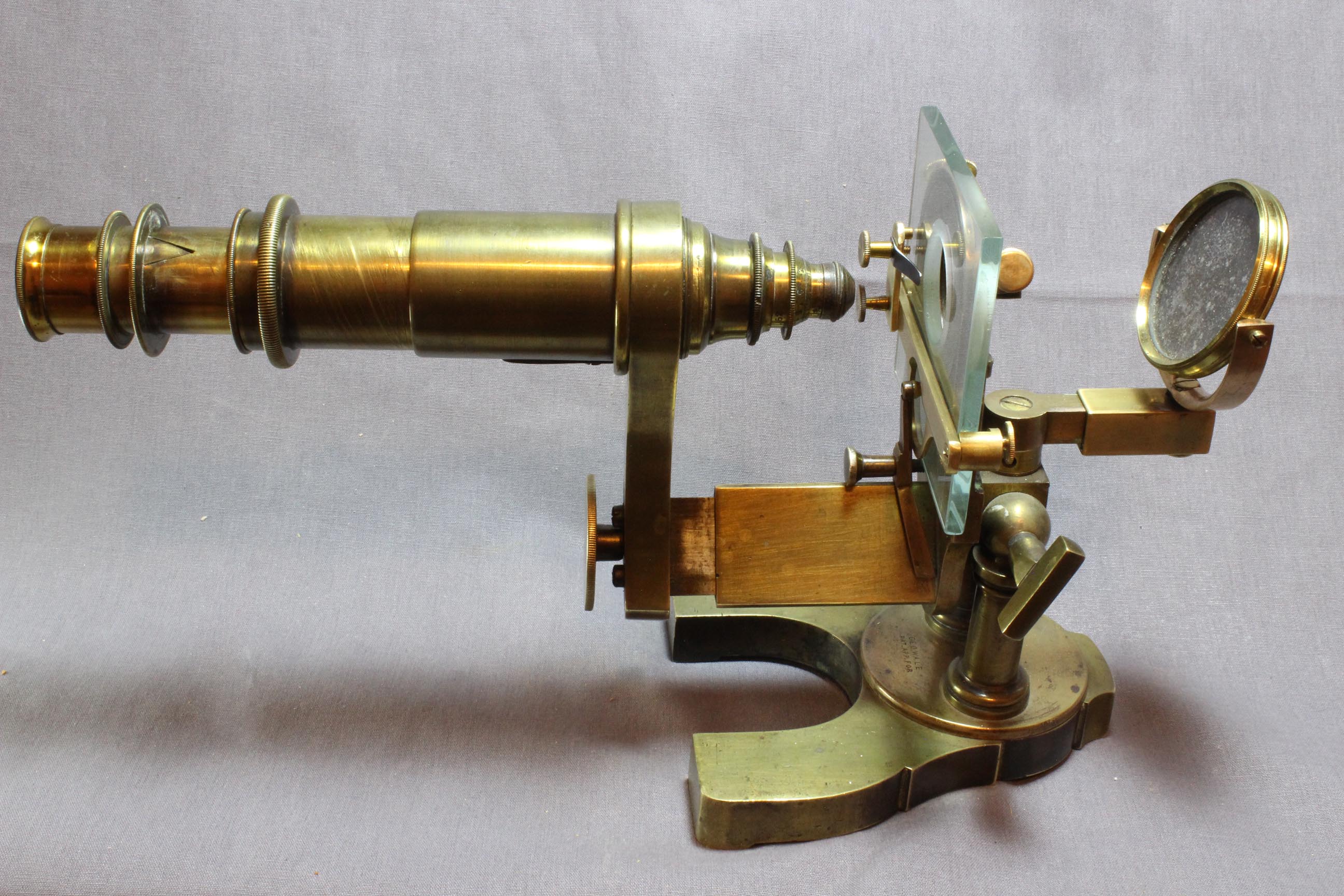
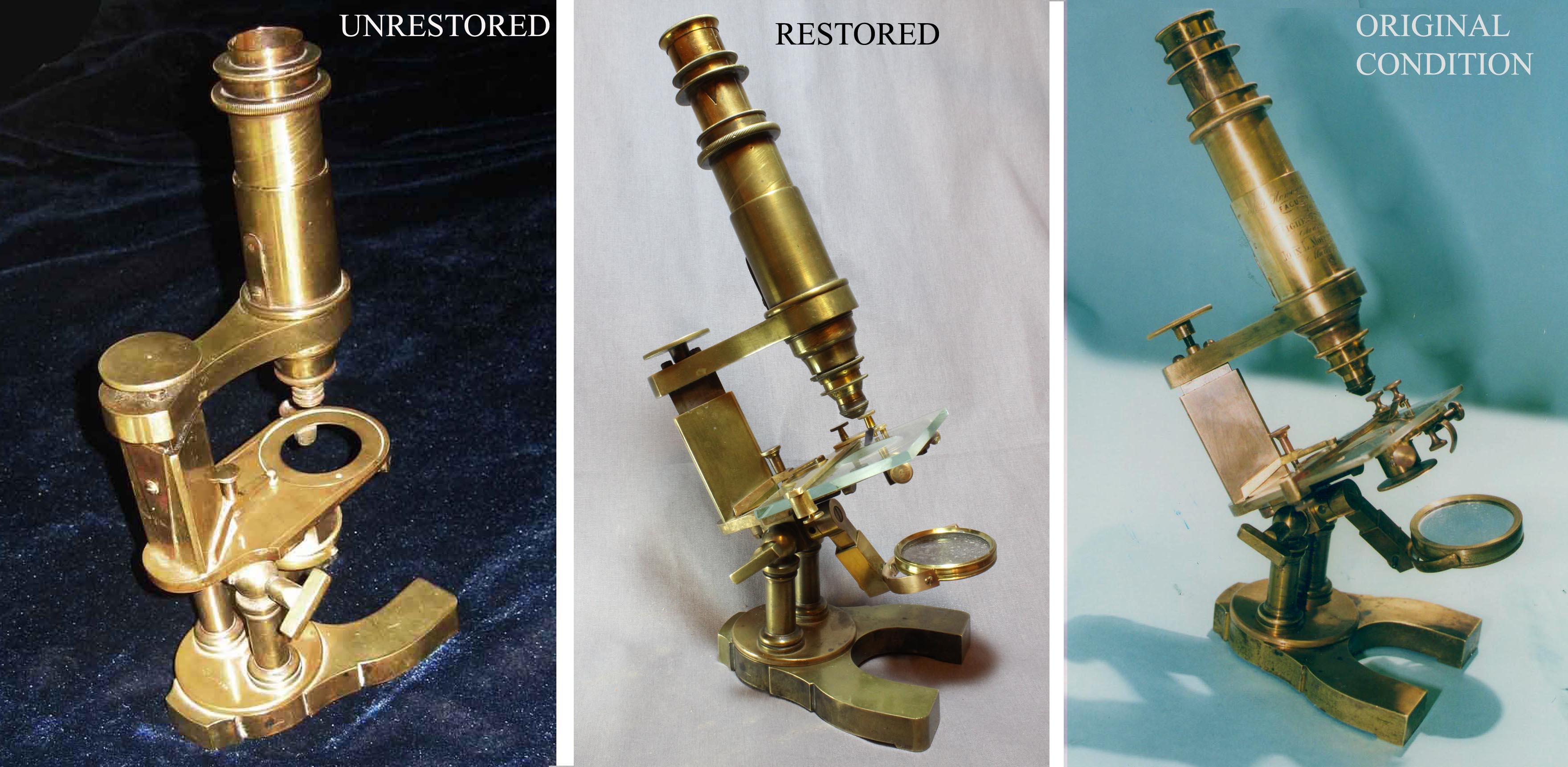
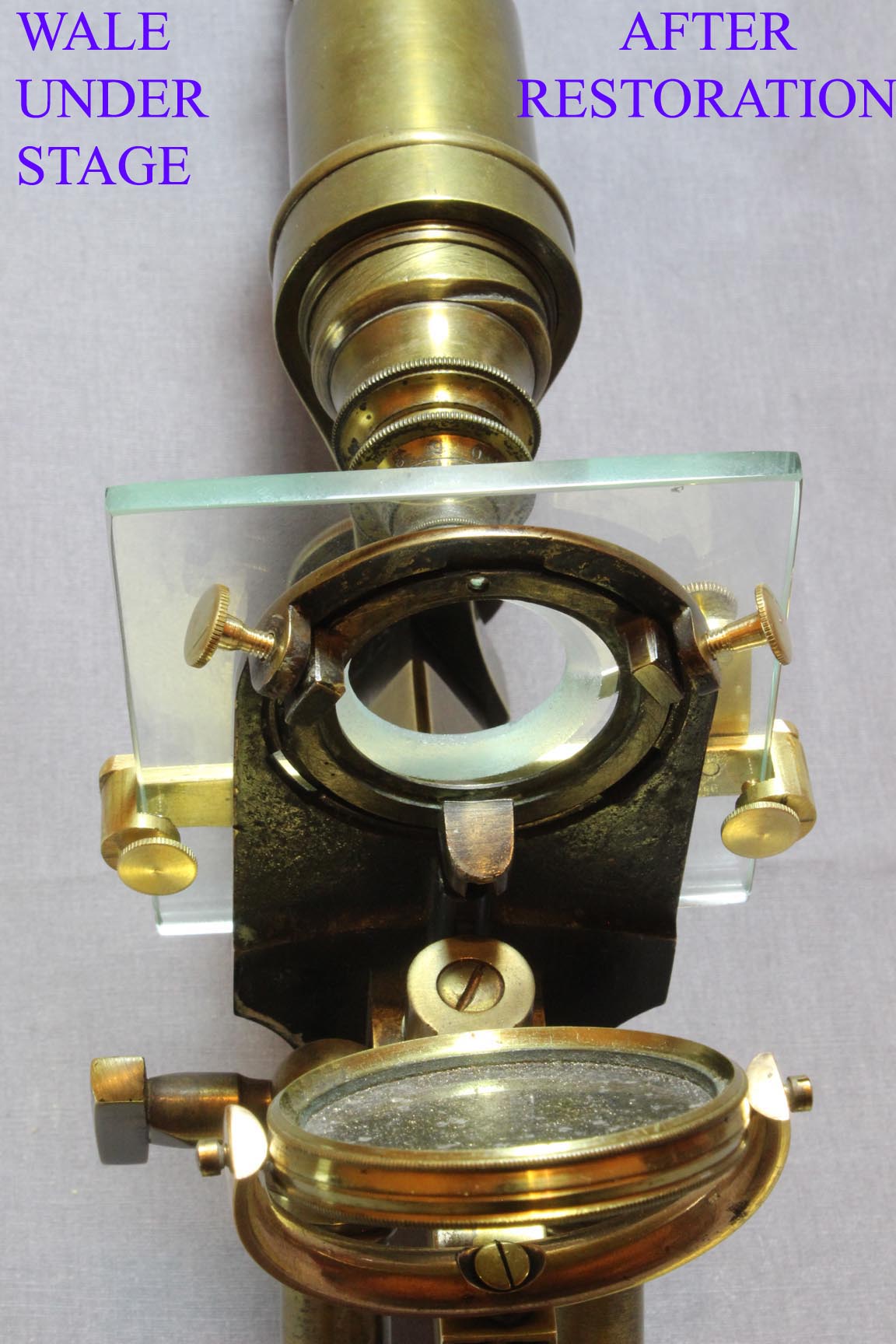
 When I obtained this microscope on Ebay in 2017, it was missing many parts and some of its parts were inappropriate replacements. It had a forceably fitted French button objective instead of a Wale objective. It had no eyepiece. The glass glide stage was lacking. The centering knob for the substage had been broken off on one side and was damaged on the other. The tailpiece was incomplete, lacking its outer square sleeve, and the mirror was a modern replacement painted with gold paint to appear to be brass. The mirror was attached to the tailpiece with a modern zinc alloy screw. All in all, this was not much like the original. Fortunately, I had previously owned an example of this model which is still shown on this site. This allowed me to fabricate, replace, or adapt many of the missing parts. Luckily I had an original Wale objective just like the original, so this was the easiest piece to replace. The eyepiece has an unusual diameter and so I had to piece together parts of more than one eyepiece to get the look just right. The square tubing which fits over the tailpiece is not made in the exact dimension needed, but it is made with a close fit. After cutting it to the proper length, I soldered a thin sheet of brass to the inside to create a proper fit. It is soldered on only one end so it acts like a spring to allow the tubing to slide up and down as needed, yet stays in the position it is in. I replaced the modern mirror with a 19th century mirror I had, and made the appropriate brass screw and knob to attach it. My local glass shop made the glass part of the glide stage just like the original. I made the brass parts which attach to the glass mainly from scratch. I also had to make new centering knobs for the substage. I made the stage clip out of old clock spring metal to attach to the slide rest on the glass stage. With these replacements and adaptations, the microscope now closely resembles the original, though it lacks the substage diaphragm and has no case or additional accessories. I also had to overhaul the base-rotation mechanism which was a bit sloppy when I received it. This restoration project probably took about three full days, realizing that I did not lacquer any parts. I avoided relacquering to try to match the patina of the parts of the original. For another example of a restoration on this site see the original 'New Working' Wale limb microscope.
 American Concentric. One of Swift's models, also seen on this site, was closer in general form to the original, although of much higher quality construction with the 'radial' slot finely machined, rather than just cast as in Wale's original. Later, in the 20th century, Swift used this radial inclination on a more modern stand called the 'Symposium' Model, also seen on this site.